
Key Takeaways
- Choose the right bits: Always use carbide-tipped masonry bits for concrete and brick to maintain optimal hammer drill performance.
- Control speed and pressure: Let the hammer drill do the work—apply steady, moderate pressure at the correct RPM for your material.
- Maintain regularly: Clean air vents, check brushes, and lubricate moving parts every 50 hours of use to prevent performance loss.
- Manage battery health: For cordless models, keep batteries cool and charge them before they drop below 20% to extend runtime.
- Use proper technique: Pull the bit out periodically to clear dust and prevent overheating during deep drilling operations.
- Safety first: Always wear eye protection and secure your workpiece to maintain control and achieve cleaner holes.
Introduction: Unlock Your Hammer Drill’s Full Potential
You’ve invested in a hammer drill for those tough concrete and masonry jobs, but are you getting the most from your tool? Many DIYers and even seasoned pros miss out on simple techniques that dramatically improve hammer drill performance. This comprehensive guide will teach you everything from basic operation to advanced tricks that save time, extend tool life, and deliver professional-quality results.
Whether you’re hanging shelves, installing anchors, or tackling a major renovation, these hammer drill performance tips will transform how you work. We’ll cover speed settings, bit selection, maintenance secrets, and troubleshooting solutions that solve 95% of common problems. Let’s dive in and make your hammer drill work smarter, not harder.
Understanding Your Hammer Drill’s Capabilities
How Hammer Drills Work Differently
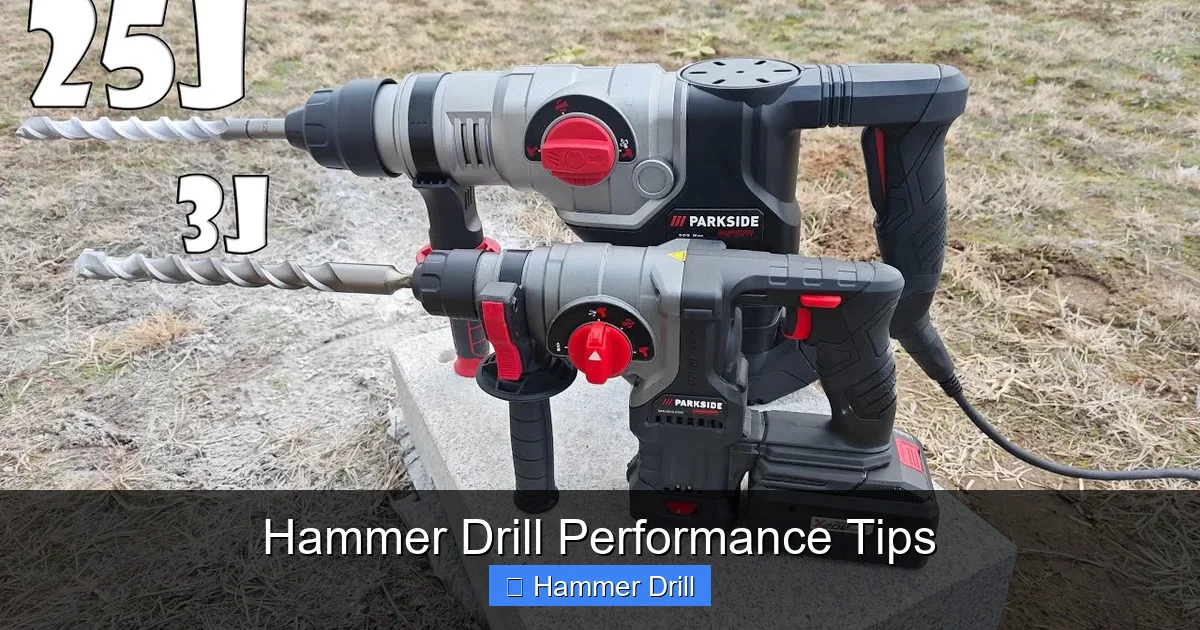
Before we explore performance tips, you need to understand what makes a hammer drill unique. Unlike regular drills, hammer drills combine rotational force with a rapid hammering action. This dual motion pulverizes concrete and brick while the spiral flutes remove debris. The hammering mechanism typically operates at 20,000 to 50,000 blows per minute, creating the crushing action that makes these tools so effective.
Visual guide about Hammer Drill Performance Tips
Image source: i.ytimg.com
Knowing this helps you appreciate why certain techniques work better. The hammering action is what does the real work, not your muscle power. Many users confuse hammer drills with regular drills, leading to poor performance and damaged materials. Your hammer drill is specifically engineered for masonry—respect that design and you’ll see immediate improvements.
Knowing Your Tool’s Limits
Every hammer drill has its sweet spot. Most models perform best between 500-1,200 RPM in hammer mode. Exceeding this range causes excessive wear without improving speed. Check your manual for the manufacturer’s recommended specifications. Exceeding these limits strains the motor and hammer mechanism, causing premature failure.
Also consider your drill’s impact energy rating, measured in joules. Light-duty models (1-2 joules) handle anchors and small holes. Medium-duty (2-4 joules) tackles most DIY projects. Heavy-duty hammer drills (4+ joules) are for professional concrete work. Using a light-duty tool for heavy work is like using a compact car to haul a trailer—it will fail quickly.
Corded vs Cordless Considerations
Corded hammer drills deliver consistent power without fade, making them ideal for extended concrete drilling sessions. Cordless models offer freedom but require smart battery management. Modern lithium-ion batteries provide excellent performance, but they still have limitations. For cordless hammer drills, always keep a spare battery charged and rotate them during long projects.
If you’re in the market for a new tool, check out our guide on the best cordless drills to understand what features matter most for hammer drilling applications.
Choosing the Right Bits and Accessories
Masonry Bits for Concrete and Brick
The wrong bit will destroy your hammer drill’s performance. Always use carbide-tipped masonry bits for concrete, brick, and stone. These bits feature a hardened carbide head that withstands the hammering action. Look for bits with a 4-flute design—they remove debris faster and last longer than 2-flute versions.
Visual guide about Hammer Drill Performance Tips
Image source: protoolreviews.com
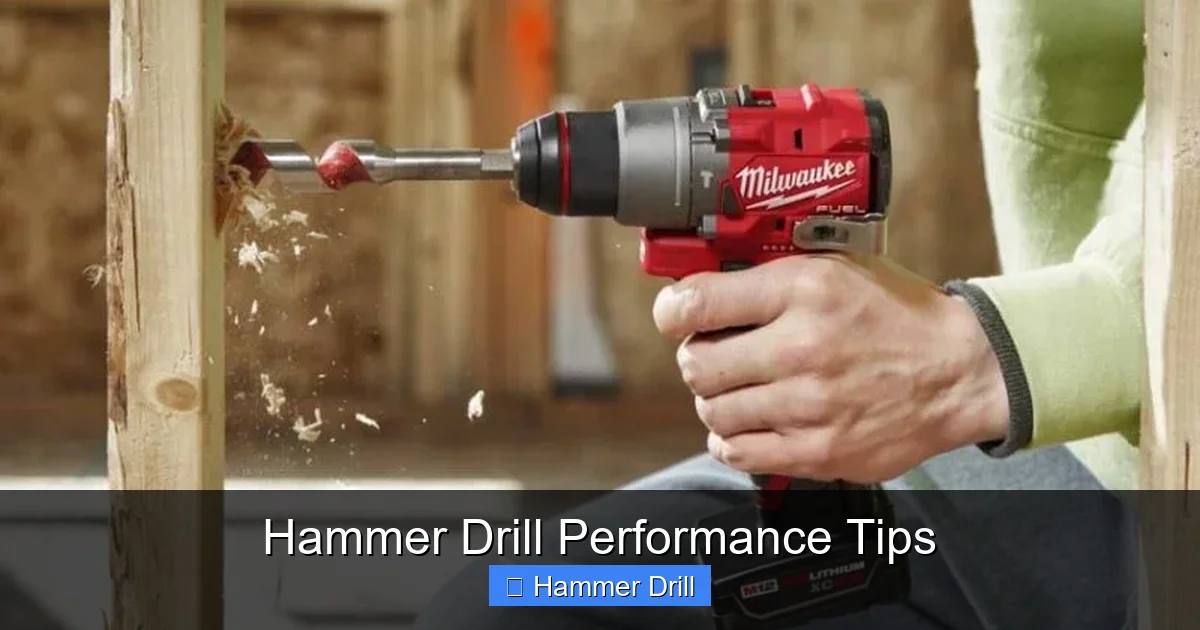
For holes larger than 1/2 inch, use a stepped bit or spade bit designed for hammer drills. These specialized bits reduce strain on your tool and produce cleaner holes. Never use regular drill bits in hammer mode—they will shatter instantly and can damage your drill’s chuck.
Wood and Metal Bits: When to Switch Modes
Your hammer drill can handle wood and metal, but you must disable hammer mode first. Using hammer action on wood creates splintered, messy holes. For metal, it can damage both the bit and workpiece. Switch to standard drill mode and use high-speed steel bits for metal or brad-point bits for wood.
Keep a variety of bits organized in a case with clear labels. This prevents accidental misuse and saves time on the job. A quick reference guide on your tool belt helps you grab the right bit without thinking twice.
Specialty Accessories That Boost Performance
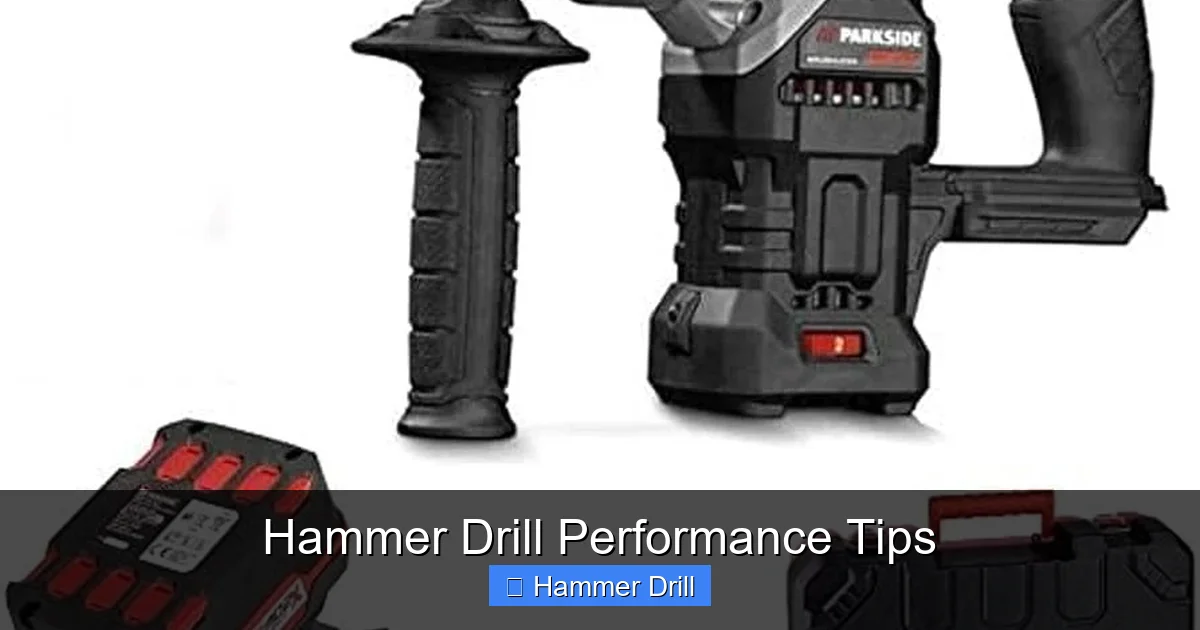
Consider investing in a depth stop rod. This simple accessory prevents drilling too deep and ensures consistent hole depths for anchors. A side handle is essential for control during heavy hammering—it reduces vibration and improves accuracy. For overhead work, a right-angle chuck adapter lets you drill comfortably without awkward arm positions.
Dust collection attachments are game-changers. They connect to your drill and capture concrete dust at the source, keeping your workspace clean and making it easier to see your mark. Plus, less dust means less cleanup time and better health protection.
Mastering Speed and Pressure Control
Finding the Sweet Spot for Each Material
Successful hammer drill performance depends on matching speed to material. For concrete, start at 500-800 RPM. Brick needs slightly higher speeds, around 800-1,000 RPM. For stone, reduce to 400-600 RPM to prevent cracking. Your drill’s variable speed trigger gives you fine control—practice feathering it to find the perfect pace.
Visual guide about Hammer Drill Performance Tips
Image source: m.media-amazon.com
Listen to your drill. If it bogs down or makes a grinding noise, slow down. If it spins too fast without cutting, increase pressure slightly. The goal is a steady, rhythmic hammering sound with consistent forward progress. Think of it like a heartbeat—steady and reliable beats get the job done.
Letting the Tool Do the Work
Here’s the biggest mistake users make: pushing too hard. Your hammer drill’s mechanism is designed to deliver impacts at a specific rate. Excessive force only slows the hammering action and strains the motor. Apply enough pressure to keep the bit engaged, but let the hammering do the crushing. Imagine you’re guiding a powerful partner rather than forcing a stubborn tool.
For deep holes, use the “peck drilling” technique. Drill for 2-3 seconds, then pull the bit out to clear dust. Repeat this cycle until you reach depth. This prevents bit jamming and overheating, extending both bit and drill life while maintaining peak performance.
Adjusting for Material Density
Not all concrete is created equal. Older concrete is often softer and drills easily. Newer, high-density concrete requires slower speeds and sharper bits. Reinforced concrete with rebar needs special care—use a rebar detector first, then switch to a lower speed when you hit steel reinforcement.
Brick varies too. Soft, porous bricks drill quickly at higher speeds. Hard, dense bricks need slower speeds to prevent bit wandering. Always test in an inconspicuous area first to dial in your settings. This small step prevents ruined materials and frustration.
Optimizing Battery Life and Power Management
Battery Care for Cordless Hammer Drills
Cordless hammer drill performance drops dramatically as batteries deplete. To maximize runtime, store batteries at room temperature and avoid leaving them in hot vehicles. Cold batteries deliver less power, so keep spares warm in your pocket during winter work.
Charge batteries before they drop below 20%. Deep discharging shortens battery life significantly. Most modern drills have fuel gauges—use them. When the battery indicator shows two bars, swap it out. This practice maintains consistent performance and extends overall battery lifespan by up to 40%.
Power Management During Extended Use
For long drilling sessions, rotate between two or three batteries. This keeps each battery cooler and prevents power fade. Keep used batteries in a shaded area or insulated pouch to slow heat buildup. A battery cooling wrap can add 15-20% more runtime on hot days.
If you’re using a corded model, ensure your extension cord is adequate. For 15-amp drills, use at least 14-gauge cord for runs under 25 feet. Undersized cords cause voltage drop, reducing performance and potentially damaging the motor over time.
Essential Maintenance for Peak Performance
Cleaning Your Hammer Drill Regularly
Dust is your hammer drill’s worst enemy. After every use, blow compressed air through the air vents to remove concrete dust. Pay special attention to the chuck area where debris collects. A small brush helps dislodge stubborn particles. Never use water or solvents—they can damage internal components.
For deep cleaning, remove the chuck and clean the spindle every 50 hours of use. Use a mild degreaser and a rag to wipe away old lubricant and grime. This simple step prevents chuck slippage and maintains consistent power transfer.
Lubrication and Care
Lubricate the chuck spline and spindle with high-temperature grease every 100 hours. This prevents seizing and ensures smooth operation. Apply grease sparingly—too much attracts dust and creates a messy buildup. A small tube of grease lasts years and costs just a few dollars.
Check the carbon brushes every 50 hours. These wear parts conduct electricity to the motor. If they’re shorter than 1/4 inch, replace them immediately. Worn brushes cause power loss and can damage the motor commutator, leading to expensive repairs.
Regular Inspection Routine
Before each use, inspect your hammer drill for damage. Check the power cord for fraying, examine the chuck for cracks, and ensure the trigger moves smoothly. Look for loose screws or housing pieces. Catching problems early prevents performance issues and safety hazards.
Test the hammer mechanism by switching modes. The transition should be smooth and positive. If you hear grinding or feel resistance, stop using the drill and investigate. Continuing to use a malfunctioning tool risks injury and further damage.
Safety Tips for Better Results
Personal Protective Equipment
Always wear safety glasses with side shields. Concrete chips fly in unpredictable directions and can cause serious eye injury. A dust mask or respirator is essential—concrete dust contains silica, which is hazardous when inhaled. For extended work, consider hearing protection as hammer drills can exceed 90 decibels.
Wear snug-fitting clothing that won’t catch in the drill. Roll up long sleeves and remove loose jewelry. Sturdy work boots protect your feet from falling debris, and gloves improve your grip while reducing vibration fatigue.
Work Area Setup and Technique
Secure your workpiece firmly with clamps or a vise. A moving workpiece ruins hole accuracy and can cause injury. Mark your drilling spot with a nail punch or awl to prevent the bit from wandering. For overhead work, use a sturdy platform rather than standing on tiptoes—this gives you better control and reduces fatigue.
Maintain a stable stance with feet shoulder-width apart. Hold the drill with both hands—one on the main handle and one on the side handle. This two-handed grip absorbs vibration and provides maximum control during tough drilling operations.
Troubleshooting Common Performance Issues
Overheating Problems
If your hammer drill overheats, stop immediately. Let it cool for 15-20 minutes before resuming. Overheating usually means you’re pushing too hard or the air vents are blocked. Check for dust buildup in the vents and clean them thoroughly. Working in direct sunlight or hot environments accelerates overheating—shade your work area when possible.
Persistent overheating could indicate worn brushes or a failing motor. If cleaning doesn’t solve the problem, have the drill professionally serviced. Continuing to use an overheating tool risks permanent damage and electrical hazards.
Loss of Power or Speed
Sudden power loss often means a dying battery or worn brushes. Swap batteries first—if that doesn’t help, inspect the brushes. Gradual power loss over time suggests carbon brush wear or commutator buildup. A professional service can clean the commutator and replace brushes, restoring full power.
For corded models, check the power source. Try a different outlet or circuit. Voltage drops from long extension cords or overloaded circuits cause performance issues. If other tools on the same circuit work fine, the problem likely lies within the drill itself.
Unusual Noises or Vibration
A high-pitched squeal usually means the gears need lubrication. A grinding noise suggests bearing failure or gear damage. Stop using the drill immediately if you hear grinding—continuing can cause catastrophic failure. Excessive vibration often indicates a bent bit, loose chuck, or worn bearings.
Inspect bits for damage and replace any that are bent or cracked. Tighten the chuck securely, but don’t overtighten—this can damage the bit shank. If vibration persists after these checks, the drill needs professional attention.
Advanced Techniques for Professional Results
Progressive Drilling for Large Holes
For holes larger than 1/2 inch, start with a smaller pilot hole. This guides the larger bit and prevents wandering. Use a 1/4 inch bit first, then step up to your final size. This technique reduces strain on your hammer drill, produces straighter holes, and extends bit life.
When drilling deep holes, use extension bits or add a bit extension. This prevents the drill’s housing from contacting the workpiece and allows full-depth drilling. Keep the extension clean and well-lubricated to prevent binding.
Creating Perfect Anchor Holes
For secure anchor installation, drill slightly deeper than the anchor length. This ensures the anchor sits flush or below the surface. Use a depth stop to maintain consistent depth across multiple holes. After drilling, blow out dust with compressed air—dirty holes reduce anchor holding power by up to 50%.
Test your hole size by inserting the anchor. It should fit snugly with light tapping. If it’s too loose, try the next size up. Too tight means you need to drill slightly larger. Taking this extra moment ensures maximum holding strength for your project.
Conclusion: Making Every Hole Count
Mastering hammer drill performance tips transforms you from a casual user to a confident pro. These techniques—proper bit selection, speed control, regular maintenance, and smart troubleshooting—save time, money, and frustration on every project. Your hammer drill is a precision tool, not a sledgehammer. Treat it with respect, and it will deliver reliable performance for years.
Remember that hammer drills excel at masonry while impact drivers handle fasteners—using the right tool for the job is the ultimate performance tip. Keep this guide handy as a reference, practice these techniques on scrap material first, and soon you’ll be drilling perfect holes with confidence and ease. Happy drilling!