
Discover how to sharpen saw blades like a pro without expensive tools or professional help. This guide covers circular, band, and reciprocating saw blades with clear, safe methods to restore razor-sharp edges. Save money and achieve cleaner cuts on every project!
Key Takeaways
- Safety first: Always wear gloves and eye protection when handling sharp blades. Disconnect power sources before removal.
- Right tool for the job: Use a dedicated file guide for circular saws, a bench grinder for band saws, and a small file for reciprocating blades.
- Consistent angle is key: Maintain the exact original bevel angle (usually 10°-15°) during sharpening for optimal performance.
- Clean before sharpening: Remove pitch and debris with a wire brush and solvent to ensure precise contact with the cutting edge.
- Know when to stop: If a blade has significant damage, missing teeth, or is worn thin, replacement is safer than sharpening.
- Regular maintenance beats emergency fixes: Lightly hone blades every 2-3 uses to maintain sharpness longer between full sharpenings.
Why Sharpening Saw Blades is a Game-Changer for Your Workshop
That frustrating burning smell, the rough edges on your cuts, the extra force needed to push wood through – these are all classic signs your saw blades need attention. Dull blades don’t just make your work harder; they ruin your results and can even be dangerous. The good news? Learning how to sharpen saw blades quickly and effectively is simpler than you think. It saves you significant money compared to constant replacements, delivers cleaner, safer cuts, and extends the life of your valuable tools. Whether you’re a weekend DIYer or a seasoned woodworker, mastering this skill puts you back in control of your projects. In this guide, you’ll learn safe, practical methods for sharpening the most common saw blades: circular saw blades, band saw blades, and reciprocating saw blades. No fancy machinery required – just basic tools and a little know-how.
Essential Safety Gear and Preparation
Before touching any blade, safety must be your top priority. Sharp edges and potential flying debris demand respect.
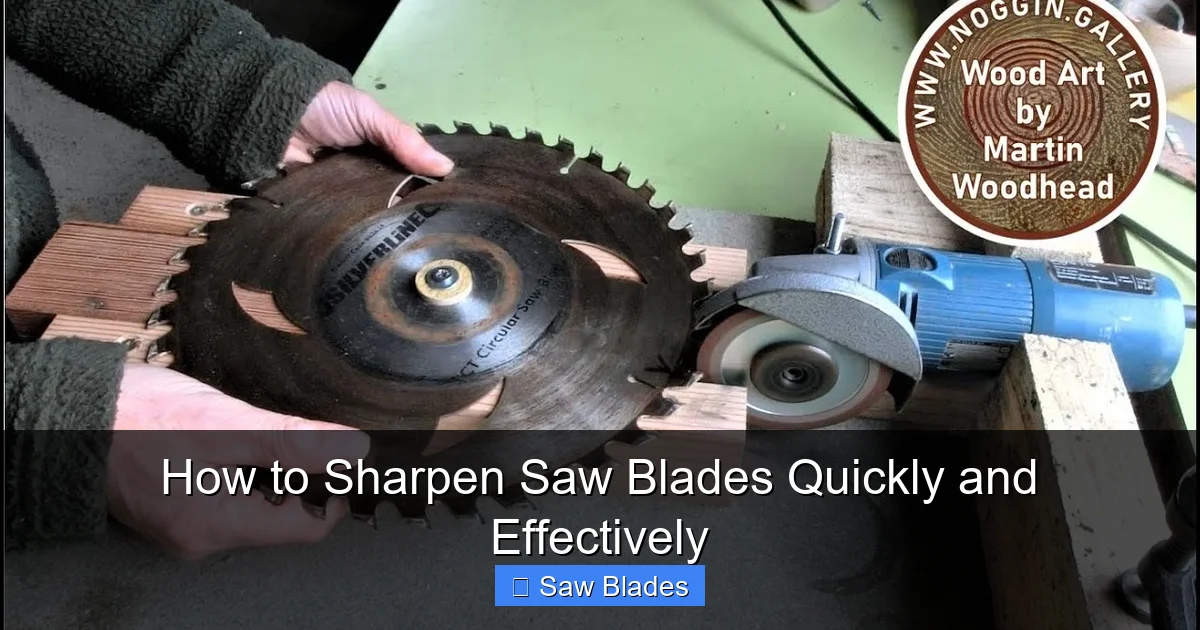
Visual guide about How to Sharpen Saw Blades Quickly and Effectively
Image source: i.ytimg.com
Gather Your Safety Equipment
- Heavy-duty work gloves: Protect hands from nicks and cuts during handling. Leather or cut-resistant gloves are ideal.
- Safety glasses or goggles: Essential to shield eyes from metal filings, dust, and cleaning solvents.
- Hearing protection: Crucial if using power tools like a bench grinder for sharpening.
- Respirator mask (optional but recommended): Helps avoid inhaling fine metal dust, especially when filing or grinding.
Pre-Sharpening Blade Preparation
Cleaning your blade isn’t glamorous, but it’s critical for effective sharpening. Dirt and pitch prevent your file or stone from making proper contact with the cutting edge.
- Remove the blade safely: Always unplug the saw or remove the battery. Consult your saw’s manual for specific removal steps. For circular saws, you’ll typically need to engage the arbor lock and use a wrench. Learn the proper technique by reading our guide on how to change a blade on a circular saw – the removal process is identical.
- Clean thoroughly: Use a stiff wire brush (brass or steel) and a solvent like mineral spirits or dedicated blade cleaner. Scrub each tooth individually, focusing on the gullet (the space between teeth) and the cutting edge. Remove all sawdust, pitch, and resin buildup. Rinse with clean solvent and dry completely.
- Inspect carefully: Look for broken teeth, excessive wear (teeth significantly shorter than others), cracks, or warping. If you find major damage, sharpening won’t help – replace the blade. Minor nicks can often be smoothed out during sharpening.
How to Sharpen Circular Saw Blades (The Most Common Method)
Circular saw blades are workhorses, but their carbide-tipped teeth require a specific approach. You’ll need a circular saw blade sharpening file guide (essential for accuracy) and a triangular or three-square file (typically 6-8 inches long). Diamond sharpening stones also work well.

Visual guide about How to Sharpen Saw Blades Quickly and Effectively
Image source: bestsawguidee.com
Step-by-Step Sharpening Process
- Secure the blade: Clamp the blade firmly to a stable workbench using non-marring clamps or a dedicated blade holder. Ensure the cutting edge faces up and is accessible.
- Set your guide: Place the file guide on the blade according to its instructions. Most guides have a notch that fits over the blade’s arbor hole and arms that rest on the plate to maintain the correct angle (usually 10°-15° for the top bevel). Adjust the guide so the file will contact only the top bevel of the tooth.
- File each tooth consistently:
- Start at one end of the blade. Place the file in the guide.
- Push the file forward smoothly and firmly across the top bevel of the first tooth, applying even pressure. Lift the file on the return stroke – don’t drag it back over the edge.
- Repeat for the next tooth. Crucially, use the exact same number of strokes and pressure for every single tooth. Inconsistency ruins the cut.
- Work your way around the entire blade. Count your strokes (e.g., 3-5 per tooth) to maintain uniformity.
- Check your progress: After sharpening a few teeth, inspect the edge. It should be shiny and sharp, not dull or rounded. Run your gloved finger *carefully* along the edge (don’t press hard!) – it should feel distinctly sharp. Compare teeth to ensure they’re all equally sharp.
- Deburr (Optional but Recommended): After filing, a very light pass with a fine diamond stone or strop can remove any tiny wire burr left on the edge, creating a smoother cut.
Pro Tips for Circular Saw Blades
- Work in sections: Sharpen 5-10 teeth, then rotate the blade. This prevents fatigue and helps maintain consistency.
- Mind the set: Don’t file the sides of the teeth – that’s the “set” (the alternating bend) which creates the kerf. Only sharpen the top bevel.
- Less is more: It’s easy to over-file. Remove only the minimal amount of material needed to restore a sharp edge. Carbide is expensive!
- Clean as you go: Blow away filings frequently so they don’t interfere with the file guide or your vision.
How to Sharpen Band Saw Blades
Band saw blades have continuous teeth and require a different technique, often involving a bench grinder or specialized sharpener. Safety is paramount here due to high-speed rotation.
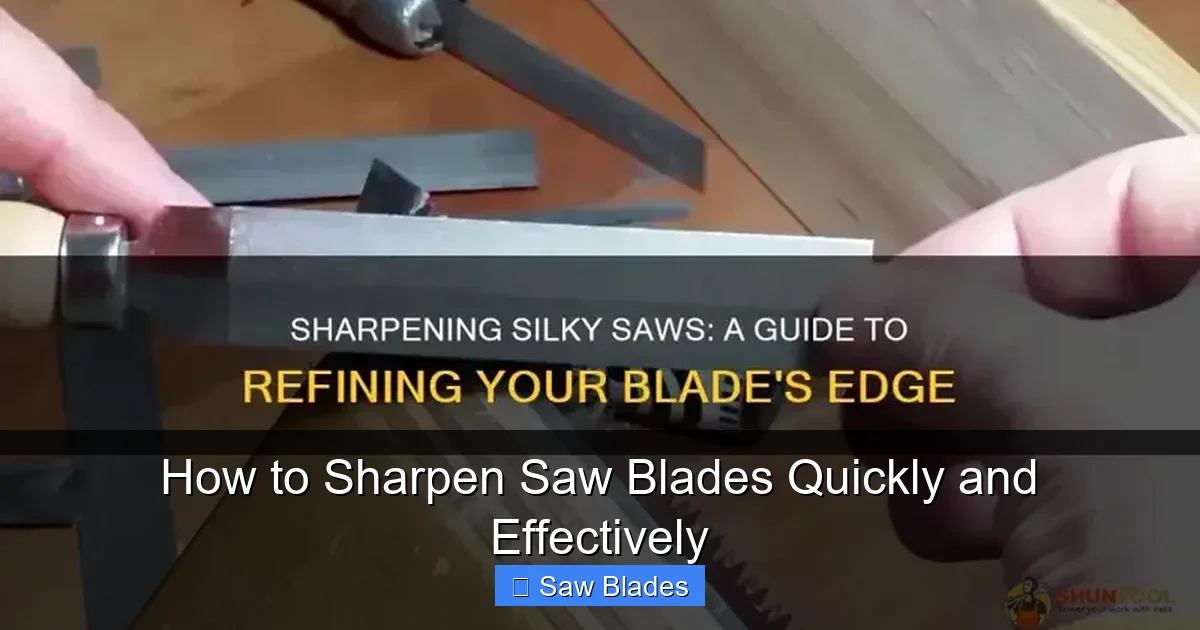
Visual guide about How to Sharpen Saw Blades Quickly and Effectively
Image source: shuntool.com
Using a Bench Grinder (Most Accessible Method)
You’ll need a bench grinder with a fine-grit wheel (60-80 grit) and a blade guide/jig (highly recommended for control and safety).
- Secure the blade: If possible, leave the blade on the saw but disconnect power completely. If removing it, clamp it securely in a vise with the teeth facing up. Never hold a blade freehand against a grinder.
- Set up the grinder: Ensure the wheel is true and dressed. Adjust the tool rest to match the original tooth angle (usually 10°-20° depending on the blade type – check the manufacturer’s specs). The rest should be very close to the wheel.
- Sharpen carefully:
- Using the guide jig or holding the blade firmly against the tool rest, present the cutting edge of one tooth to the wheel.
- Apply light, even pressure. Move the blade smoothly across the wheel for 1-2 seconds per tooth. Overheating the tooth (turning it blue) ruins the temper – let it cool if needed.
- Focus only on the front face (the face leading into the cut). Maintain the exact original angle.
- Work methodically around the entire blade, sharpening each tooth identically.
- Check for heat damage: If any teeth turned blue, the blade is likely weakened and may need replacement soon.
Alternative: Dedicated Band Saw Sharpener
For frequent use, consider a manual or electric band saw blade sharpener. These tools hold the blade at the perfect angle and often include a tooth setter. While an investment, they provide superior consistency and safety. Learn more about the specific process in our detailed guide on how to sharpen band saw blades.
Pro Tips for Band Saw Blades
- Cool frequently: Dip the blade in water after every 5-10 teeth to prevent overheating.
- Sharpen the gullet too: Use a small round file or stone to clean out the gullet (the curve behind the tooth). A clogged gullet reduces cutting efficiency.
- Check tension: After sharpening, ensure the blade is properly tensioned on the saw for accurate tracking and cutting.
How to Sharpen Reciprocating Saw Blades
Reciprocating (Sawzall) blades are generally considered disposable due to their low cost and the high stress they endure. However, sharpening them *can* extend life for non-critical tasks. Use a small triangular file (like a chainsaw file) or a rotary tool with a grinding bit.
Manual Filing Method
- Secure the blade: Clamp the blade firmly in a vise, teeth facing up.
- Identify the angle: Most reciprocating blades have a 0° or 5° rake angle on the front face. Look at a sharp tooth to see the bevel.
- File each tooth:
- Hold the file at the exact angle of the existing bevel on the front face of the tooth.
- Push the file forward smoothly across the face, applying light pressure. Lift on the return.
- Use the same number of strokes per tooth (usually 2-4).
- Work along the entire blade.
Rotary Tool Method (Use with Caution)
A Dremel or similar tool with a small grinding stone can work, but control is critical to avoid overheating or changing the angle.
- Secure the blade as above.
- Use the lowest effective speed.
- Lightly touch the grinding stone to the front face of each tooth for a fraction of a second. Constant motion is essential to prevent burning.
- Cool the blade frequently in water.
Pro Tips for Reciprocating Blades
- Manage expectations: Sharpening won’t make them like new, but can restore functionality for rough cuts.
- Focus on the front face: This is the primary cutting surface. The top bevel is usually minimal or non-existent.
- Replace often: Due to the high cost of reciprocating blades, frequent replacement is often more economical than sharpening for professional use. Have spares ready – see our guide on reciprocating saw blades for selection tips.
Blade Maintenance: The Secret to Longer Life Between Sharpenings
Sharpening is reactive. Smart maintenance is proactive and keeps your blades sharper for longer.
Clean After Every Use
Don’t let pitch and sawdust bake onto the blade. After each project, wipe down the blade with a rag dampened with mineral spirits. For stubborn buildup, use the wire brush method described earlier. This prevents corrosion and makes future sharpening much easier.
Proper Storage is Crucial
How you store blades significantly impacts their longevity. Never toss them loose in a toolbox where they can bang against other tools and dull the edges.
- Use blade guards: Always replace the original plastic guard or use a dedicated blade cover.
- Store vertically: Hang blades on a pegboard or store them upright in a rack. This prevents warping and protects the teeth.
- Avoid moisture: Store in a dry place. Consider adding a rust inhibitor like Boeshield T-9 if storing long-term. Learn best practices in our guide on how to store a circular saw – the principles apply directly to the blades.
Hone Between Sharpenings
For circular saw blades, a simple leather strop charged with honing compound can remove minor burrs and refresh the edge after a few uses, delaying the need for full filing. Run the blade (off the saw, secured safely) against the strop a few times per side.
Troubleshooting Common Sharpening Problems
Even with care, issues can arise. Here’s how to handle them:
Uneven Sharpening or Poor Cuts
Symptom: Blade cuts crooked, burns wood, or requires excessive force.
Cause: Inconsistent filing angle or pressure, sharpening only some teeth, or failing to clean the blade first.
Solution: Double-check your file guide setup. Ensure you’re sharpening *every* tooth with the *exact* same number of strokes. Re-clean the blade thoroughly before your next attempt. If the blade is severely uneven, professional sharpening might be needed.
Blade Feels Sharp But Doesn’t Cut Well
Symptom: Edge feels sharp to the touch, but cut is rough or stalls.
Cause: The tooth geometry (the angle of the face relative to the plate) might be incorrect, or the gullet might be clogged preventing proper chip ejection.
Solution: Verify you’re maintaining the original bevel angle precisely. Clean the gullet deeply with a small file or pick. Check if the blade has the correct “set” (side bend) – this is usually done by a professional setter and isn’t typically part of DIY sharpening.
Overheating During Sharpening
Symptom: Teeth turn blue or discolored during grinding/filing.
Cause: Excessive pressure, speed, or dwell time on the grinding wheel/file, removing the temper from the steel.
Solution: Use lighter pressure. Work faster, spending less time per tooth. Cool the blade frequently in water (dip, don’t soak). If teeth are blue, the blade is weakened; replace it soon. Prevention is key – slow down!
Blade Warping After Sharpening
Symptom: Blade no longer sits flat on the saw table or binds during cuts.
Cause: Extremely rare from hand filing. More likely caused by overheating during grinding or pre-existing stress.
Solution: Warped blades are dangerous and should be replaced. Focus on preventing overheating during future sharpening.
When to Call a Professional (or Replace the Blade)
DIY sharpening is great, but know its limits:
- Carbide-Tipped Blades: While you can sharpen the tips, professionals have specialized equipment to re-tip blades when the carbide is worn down. If the carbide is significantly shorter than the steel body, replacement is usually more cost-effective.
- Severe Damage: Broken teeth, large nicks, cracks, or excessive wear (teeth very short) mean the blade is unsafe to sharpen.
- Specialty Blades: Diamond blades, abrasive blades, or very complex profiles (like some dado blades) are best handled by professionals.
- No Improvement: If your sharpening efforts don’t restore performance, a pro can diagnose geometry issues or sharpen more precisely.
Regular professional sharpening (every 3-5 DIY sharpenings or when performance drops) can maximize the life of expensive blades.
Conclusion: Sharp Blades, Smoother Projects
Mastering how to sharpen saw blades quickly and effectively is one of the most valuable skills you can add to your workshop toolkit. It transforms frustrating, dangerous work with dull tools into effortless, precise cutting. By following the safe preparation steps, using the right tools for your specific blade type (circular, band, or reciprocating), maintaining consistent angles, and prioritizing regular cleaning and storage, you’ll save significant money and achieve professional-quality results. Remember, safety gear is non-negotiable, and knowing when a blade is beyond saving protects you and your projects. Don’t wait for that burning smell – incorporate blade maintenance into your routine. Start with one blade today, apply these techniques, and experience the immediate difference a sharp edge makes. Your saws (and your woodworking) will thank you!
🎥 Related Video: Wow… Sharp Like a Razor! How Can You Easily Sharpen a Hand Saw at Home? #diy #tips #skills
📺 No Tube Creative
