
Unlock precision cutting with our high carbon steel saw blades guide. Discover how to choose, use and maintain these durable blades for professional results in woodworking projects.
Key Takeaways
- HCS blades excel in wood: Ideal for clean cuts in wood, plywood, and plastics but not hardened metals
- Tooth count matters: Use 24-40 TPI for fine woodworking; 10-24 TPI for rough cuts
- Sharpening is essential: Maintain sharpness with files or stones to prevent burning and tear-out
- Proper feed rate prevents damage: Let the blade cut; forcing causes overheating and premature wear
- Rust prevention is critical: Clean and oil blades after use to extend lifespan
- Safety first: Always wear eye protection and secure workpieces
- Replace when damaged: Bent teeth or excessive dullness compromise cut quality
Introduction: Your Journey to Perfect Cuts Starts Here
Ever struggled with splintered wood or burning cuts? You might be using the wrong blade. High carbon steel (HCS) saw blades are the unsung heroes of woodworking – affordable, versatile, and capable of razor-sharp precision when used correctly. In this guide, you’ll learn everything from selecting the perfect HCS blade for your project to mastering cutting techniques that deliver clean, professional results. Whether you’re building furniture or tackling DIY home projects, these tips will transform your workflow. Let’s turn frustrating cuts into satisfying successes!
What Are High Carbon Steel Saw Blades?
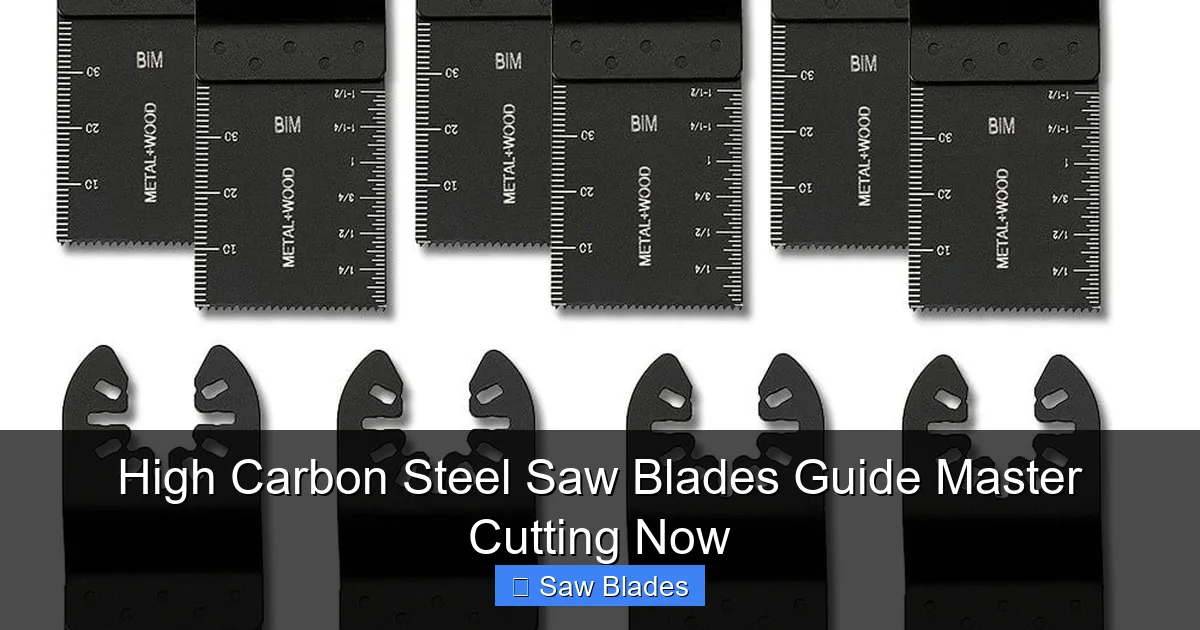
High carbon steel saw blades are crafted from steel containing 0.6-1.0% carbon, making them harder and sharper than regular steel blades. Unlike carbide-tipped blades that cost significantly more, HCS blades offer an excellent balance of durability and affordability. They’re particularly effective for woodworking because they maintain a sharp edge through multiple cuts while being easier to sharpen than harder materials.
Visual guide about High Carbon Steel Saw Blades Guide Master Cutting Now
Image source: i5.walmartimages.com
Key Characteristics of HCS Blades
- Flexibility: Slightly more flexible than carbide blades, reducing breakage risk during curved cuts
- Heat resistance: Withstand moderate heat but require proper feed rates to avoid overheating
- Sharpenability: Can be resharpened 5-10 times before replacement
- Cost efficiency: Typically 30-50% cheaper than carbide alternatives
These properties make HCS blades ideal for table saws, miter saws, and circular saws when working with wood. They’re not suitable for cutting hardened metals or abrasive materials – that’s where bi-metal or carbide blades shine.
Why Choose High Carbon Steel Over Other Blades?
You might wonder: “Why not just use carbide?” While carbide blades last longer for heavy-duty use, HCS blades offer distinct advantages for most woodworkers:
Visual guide about High Carbon Steel Saw Blades Guide Master Cutting Now
Image source: lzd-img-global.slatic.net
- Superior finish quality: Produce smoother cuts in wood due to finer tooth geometry
- Quieter operation: Generate less vibration and noise during cutting
- Easier maintenance: Sharpen with basic tools rather than professional equipment
- Eco-friendly: Fully recyclable without hazardous coatings
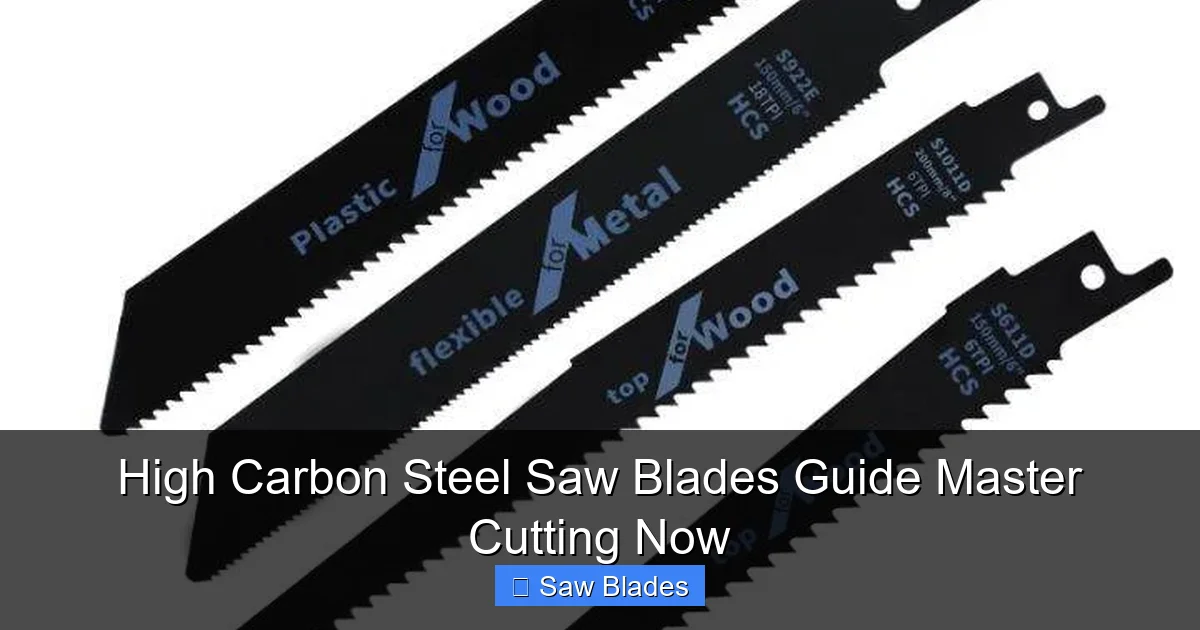
For context, a quality 10-inch HCS blade costs $15-25 versus $40-80 for comparable carbide. If you’re cutting wood more than metal, HCS delivers exceptional value. Unlike reciprocating saw blades designed for demolition, HCS blades prioritize precision in controlled woodworking environments.
Selecting the Perfect High Carbon Steel Blade
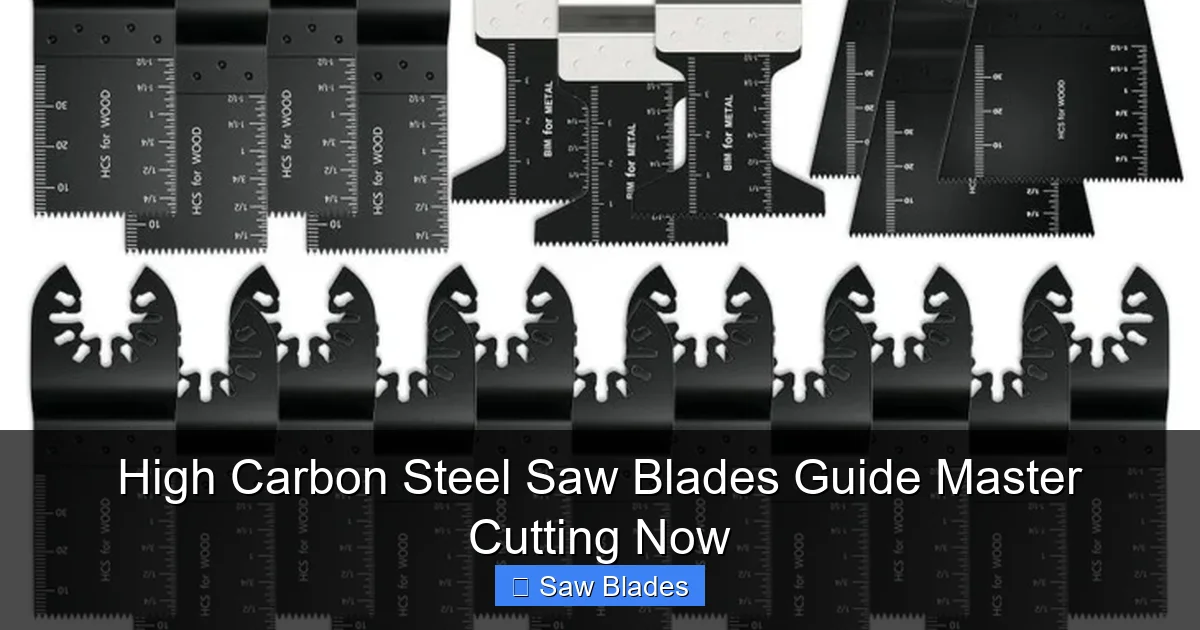
Choosing the right blade prevents 80% of cutting problems. Follow this step-by-step selection process:
Visual guide about High Carbon Steel Saw Blades Guide Master Cutting Now
Image source: acdn.hu
Step 1: Match Blade to Your Saw Type
Always check your saw’s arbor size and RPM limits. Common configurations:
- Circular saws: 7-1/4″ diameter, 5/8″ arbor
- Table saws: 10″ diameter, 1″ arbor
- Miter saws: 10″ or 12″ diameter, 5/8″ arbor
Using an incorrect size can damage your saw or cause dangerous kickback.
Step 2: Determine the Right Tooth Count
Teeth Per Inch (TPI) directly affects cut speed and finish:
- 10-14 TPI: Rough framing cuts (fast but splintery)
- 18-24 TPI: General woodworking (balanced speed/finish)
- 24-40 TPI: Fine furniture work (slow, glass-smooth cuts)
For plywood or MDF, always choose 40+ TPI to minimize tear-out. A 24-tooth blade works well for dimensional lumber.
Step 3: Consider Tooth Geometry
Look for these critical features:
- Alternate Top Bevel (ATB): Best for crosscuts – teeth angled for clean entry/exit
- Flat Top Grind (FTG): Ideal for rip cuts – straight teeth for aggressive material removal
- Triple Chip Grind (TCG): For hardwoods or plastics – reduces chipping
Most general-purpose blades use ATB/FTG combinations. Avoid blades with negative hook angles for woodworking – they’re designed for metal cutting.
Mastering Cutting Techniques for Flawless Results
Even the best blade fails with poor technique. Follow these professional methods:
Pre-Cut Preparation
- Secure your workpiece: Use clamps or a vise – never hold material by hand
- Mark cut lines clearly: Use a carpenter’s pencil for visibility
- Check blade alignment: Ensure it’s parallel to your saw’s fence
Pro tip: Place masking tape over cut lines on plywood to reduce splintering.
The Cutting Process
- Start slowly: Begin cutting at 50% speed to establish the kerf
- Maintain consistent pressure: Let the blade cut – forcing causes burning
- Support long workpieces: Use sawhorses to prevent sagging
- Complete the cut smoothly: Don’t stop mid-cut or reverse direction
For curved cuts, use a jigsaw with an HCS blade instead of forcing a circular saw. Remember: cordless drill care principles apply to all power tools – keep them clean and properly maintained.
Speed and Feed Rate Guidelines
Match your saw’s RPM to material thickness:
- Softwoods (pine, cedar): 3,000-4,000 RPM
- Hardwoods (oak, maple): 2,500-3,500 RPM
- Plywood/MDF: 2,000-3,000 RPM
Feed rate should feel effortless. If you smell burning or see smoke, immediately reduce pressure. A good rule: Your saw should sound like it’s “singing,” not straining.
Sharpening and Maintenance: Extend Your Blade’s Life
Proper care can triple your blade’s lifespan. Here’s how to keep HCS blades performing like new:
Cleaning After Every Use
- Remove the blade from your saw
- Scrub pitch buildup with a brass brush and blade cleaner
- Rinse with water and dry immediately
- Apply a light coat of machine oil to prevent rust
Never use gasoline or harsh chemicals – they damage the steel’s temper.
Sharpening Basics
You’ll need a band saw blade sharpening file set (typically 6-8″ triangular files). Follow these steps:
- Secure the blade: Clamp it in a vise with teeth facing up
- File each tooth: Maintain the original bevel angle (usually 15-20°)
- Work consistently: File every tooth the same number of strokes
- Check sharpness: A sharp tooth reflects light evenly
Sharpen when you notice:
- Increased effort required to cut
- Burn marks on wood
- Tear-out on the exit side
Most woodworkers sharpen every 15-20 board feet of hardwood. For softwoods, extend to 30-40 board feet.
Rust Prevention
HCS blades rust easily. Combat this with:
- Silica gel packs: Store blades in airtight containers with desiccant
- Rust-inhibiting oil: Use Boeshield T-9 or similar after cleaning
- Regular inspection: Check for orange spots weekly
If rust appears, remove it immediately with fine steel wool and oil. Light surface rust won’t affect performance if treated promptly.
Troubleshooting Common Cutting Problems
Even experts face issues. Here’s how to diagnose and fix them:
Problem: Burning or Smoke During Cuts
- Cause: Dull blade, too fast feed rate, or excessive speed
- Solution: Sharpen blade, reduce feed pressure, or lower RPM
Pro tip: Test on scrap wood first when adjusting settings.
Problem: Tear-Out or Splintering
- Cause: Too few teeth, incorrect tooth geometry, or unsupported workpiece
- Solution: Use higher TPI blade, apply masking tape, or support both sides of cut
For plywood, always cut with the good side down.
Problem: Blade Wandering or Curved Cuts
- Cause: Warped blade, misaligned saw, or forcing the cut
- Solution: Check blade flatness, realign saw fence, or reduce pressure
Test blade flatness by placing it on a glass surface – gaps indicate warping.
Problem: Excessive Vibration
- Cause: Loose arbor nut, damaged teeth, or unbalanced blade
- Solution: Tighten arbor nut, replace blade, or clean pitch buildup
Never operate a vibrating saw – it damages both tool and workpiece.
When to Replace Your High Carbon Steel Blade
Even well-maintained blades wear out. Replace when you notice:
- More than 30% of teeth are chipped or broken
- Blade won’t hold an edge after sharpening
- Visible warping or cracks
- Consistent burning despite proper technique
Most HCS blades last 50-100 hours of cutting time. Keep a log to track usage. When replacing, recycle old blades at metal scrap facilities – they’re 100% recyclable.
Conclusion: Cut with Confidence
High carbon steel saw blades are the backbone of quality woodworking when you know how to wield them. By selecting the right blade, mastering cutting techniques, and maintaining sharpness, you’ll achieve cleaner cuts, reduce material waste, and save money on replacements. Remember: patience and proper technique beat brute force every time. Now grab your saw, apply these tips, and experience the satisfaction of perfect cuts. Your next project awaits – go make something amazing! For more blade options, explore our saw blades category.
🎥 Related Video: 𝗪𝗼𝗿𝗹𝗱'𝘀 𝗹𝗼𝗻𝗴𝗲𝘀𝘁 𝗳𝗼𝗹𝗱𝗶𝗻𝗴 𝘀𝗮𝘄 𝘄𝗶𝘁𝗵 𝗮 𝗺𝗮𝘀𝘀𝗶𝘃𝗲 𝟭𝟬𝟬 𝗰𝗺 𝗯𝗹𝗮𝗱𝗲
📺 SilkyEurope
The world’s longest folding saw with a massive 100 cm blade! slicing …