
If you work with trim, moldings, or small craft pieces, the right coping saw blades make a huge difference. The blade you choose affects how clean your cuts are, how tight your curves can be, and how often you have to stop and replace broken teeth. Below you will find a detailed roundup of the best coping saw blades for wood, plastic, and light metal, so you can match the blade to the job instead of fighting with the wrong tool.
Quick Product Comparison
Our Top 9 Coping Saw Blades Reviews – Expert Tested & Recommended
1. FOXBC 6-1/2 Inch Coping Saw Blades, 18 Pack, Mixed 15/18/24 TPI for Wood and Plastic
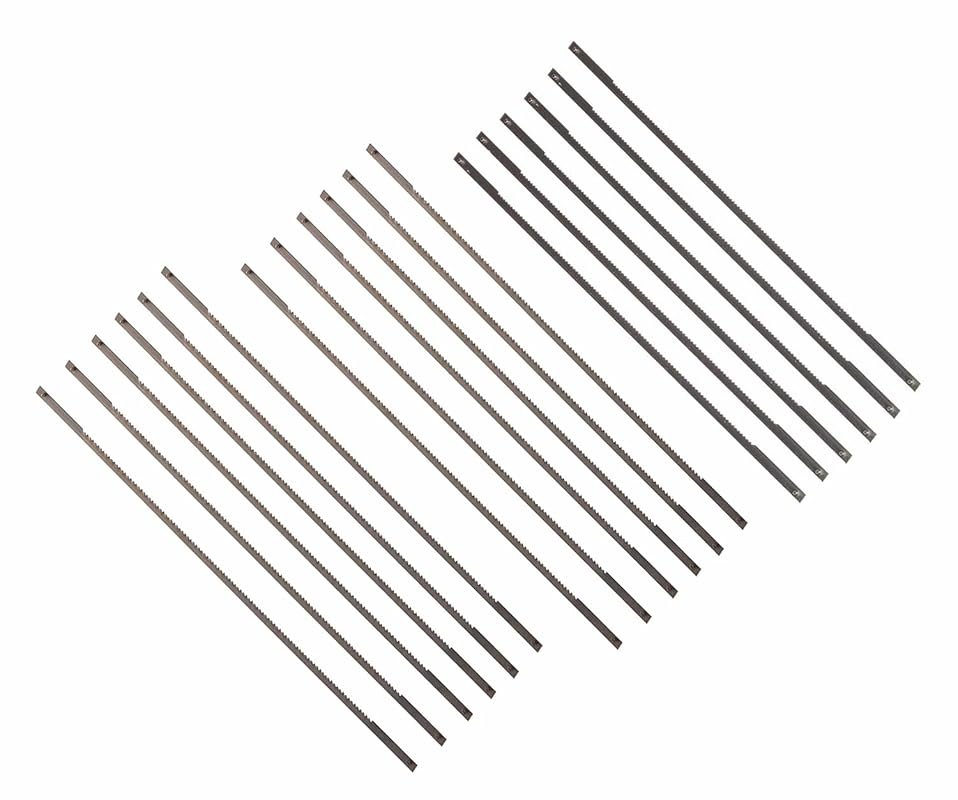
This FOXBC set is a great all‑rounder if you want one pack of coping saw blades to cover most trim and hobby work. You get 18 blades in three tooth counts, so you can swap between fast cuts and smooth finishes without changing frames.
Key Features That Stand Out
✓ Mixed 15, 18, and 24 TPI blades for rough to fine cuts
✓ 6-1/2 inch length with pin ends to fit most standard coping saws
✓ High carbon steel construction for strength and durability
✓ Designed for wood and plastic, ideal for trim, molding, and craft projects
Why We Recommend It
The mix of tooth counts makes this pack very flexible. You can reach for 15 TPI when you need to remove material fast, and switch to 24 TPI when you want a smoother edge on softer woods or plastics. For most DIYers, this set will cover years of weekend projects.
Best For
Best for homeowners and hobby woodworkers who want one reliable set of coping saw blades for general wood and plastic cutting without overthinking specs.
Pros and Cons
Pros:
- Versatile TPI mix handles both fast and fine cuts
- High carbon steel holds an edge well for the price
- Pin ends make blade changes quick and secure
- Good starter pack for learning how to cope joints cleanly
Cons:
- Not designed for metal cutting
- Heavy-handed users may still snap blades on tight curves
Customer Reviews
Customer Review: “This is only a preliminary review as I haven’t used these blades much but they seem to be well enough made that there shouldn’t be any problems.. The blades are thinner than my old blade, which is usually good for a coping saw as it cuts a finer and easier cut. Having spare blades and 3 different “
Customer Review: “Excellent fit, 18 tpi is rough, so if you want smooth, go to a higher tpi. This kit allows that. Quality is great.”
2. FOXBC 6-1/2 Inch Coping Saw Blade Assortment, 48 Pack, 10/15/20/32 TPI High Carbon Steel
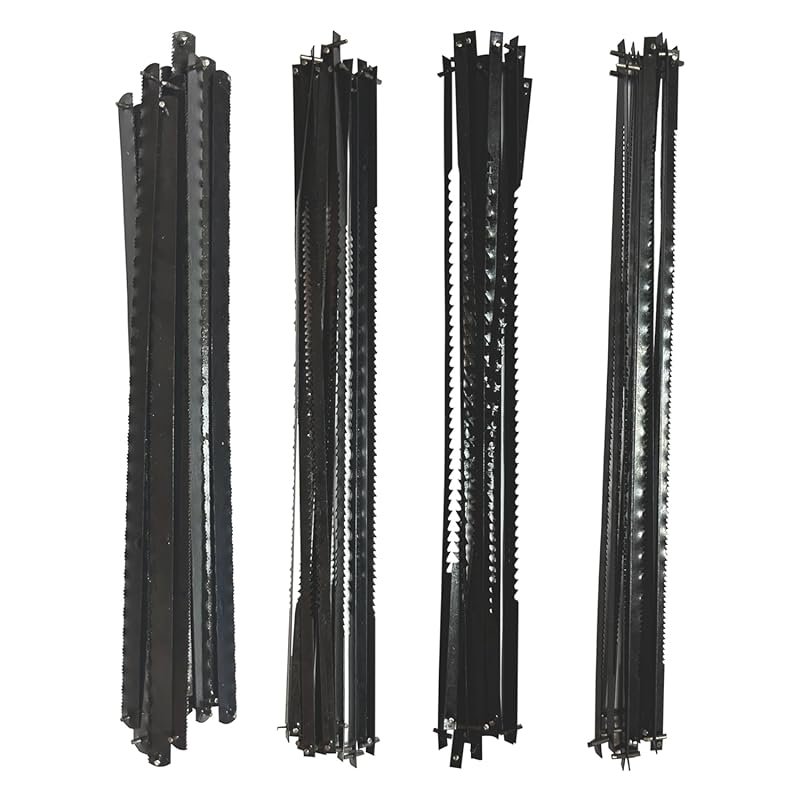
This 48-pack from FOXBC is for people who burn through coping saw blades on a regular basis. With four different TPI options, it works for wood, plastic, and even soft metals like copper, making it one of the most flexible assortments on this list.
Key Features That Stand Out
✓ Huge 48-blade pack with 10, 15, 20, and 32 TPI options
✓ 6-1/2 inch length between pins fits standard coping, fret, scroll, and jeweler’s saw frames
✓ High carbon steel for better edge retention
✓ Rated for wood, plastic, copper, and other soft metals
Why We Recommend It
If you do a mix of fine scroll work and general carpentry, this assortment means you always have the right tooth count on hand. The 10 TPI blades chew through stock fast, while the 32 TPI blades give very clean cuts in thin material and soft metals.
Best For
Best for serious DIYers, trim carpenters, and craft makers who want a full range of coping saw blade options in one box.
Pros and Cons
Pros:
- Excellent variety of tooth counts for many materials
- Compatible with several types of small saw frames
- Large quantity means fewer last-minute store runs
- Good value per blade for frequent users
Cons:
- Might be overkill if you only cope trim once in a while
- Keeping the different TPIs organized takes a little effort
Customer Reviews
Customer Review: “Very well made and perfect fit for my coping saw. Very easy to install and use. Very sharp. Good variety and value for the money.”
Customer Review: “Very well made and perfect fit for my coping saw. Very easy to install and use. Very sharp. Good variety and value for the money.Read more”
3. 6-1/2 Inch Coping Saw Blades, 18 Pack, 15/18/24 TPI High Carbon Steel for Wood and Plastic
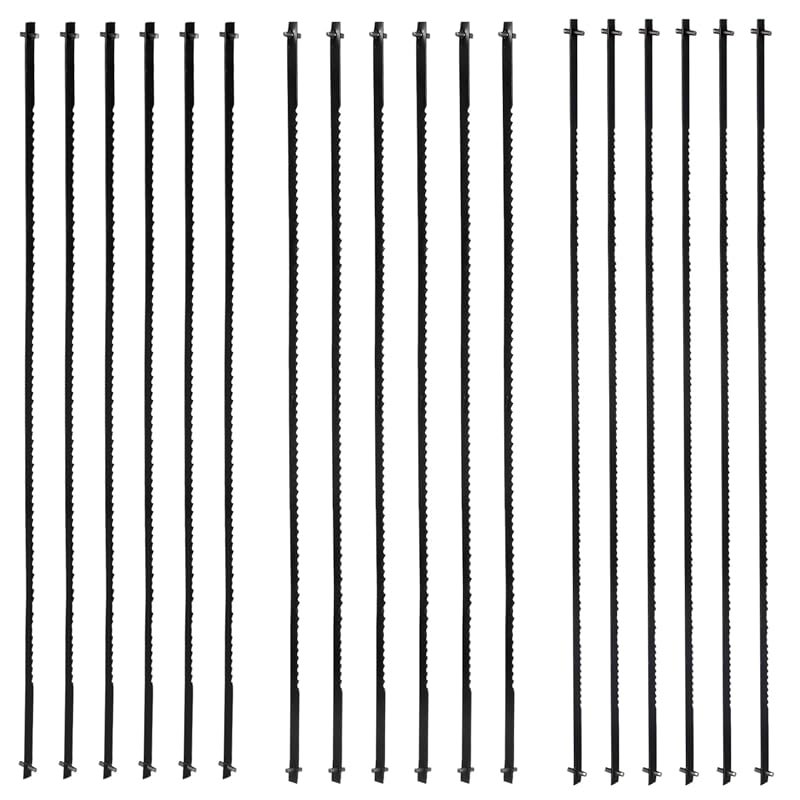
This 18-pack offers a budget-friendly alternative to name brands while still giving you 15, 18, and 24 TPI coping saw blades. They are sharp out of the box and cut cleanly in most soft and medium woods used for trim and small projects.
Key Features That Stand Out
✓ 18 blades split across 15, 18, and 24 TPI
✓ High carbon steel with sharp, precise teeth
✓ Designed for wood and plastic cutting
✓ Easy to install and replace in standard coping saw frames
Why We Recommend It
If you just want a solid pack of blades without paying extra for a big brand name, this set hits that sweet spot. The teeth are ground well enough for accurate coping cuts, and the assortment lets you experiment with which TPI you prefer.
Best For
Best for budget-conscious DIYers and students who need reliable coping saw blades for occasional projects, model making, or learning to cope joints.
Pros and Cons
Pros:
- Affordable price for an 18-pack
- Good selection of TPIs for general woodwork
- Sharp enough for accurate, narrow cuts
- Ideal backup set to keep in your toolbox
Cons:
- Edge life may be shorter than premium brands under heavy use
- Not rated for metal or very hard materials
Customer Reviews
Customer Review: “Plenty of blades for everything i need, cuts accurately. Great deal”
Customer Review: “Just what I need and a good selection of blades.Read more”
4. FOXBC 6-1/2 Inch Coping Saw Blades for Metal, 24 TPI, 20 Pack, Pin End Design
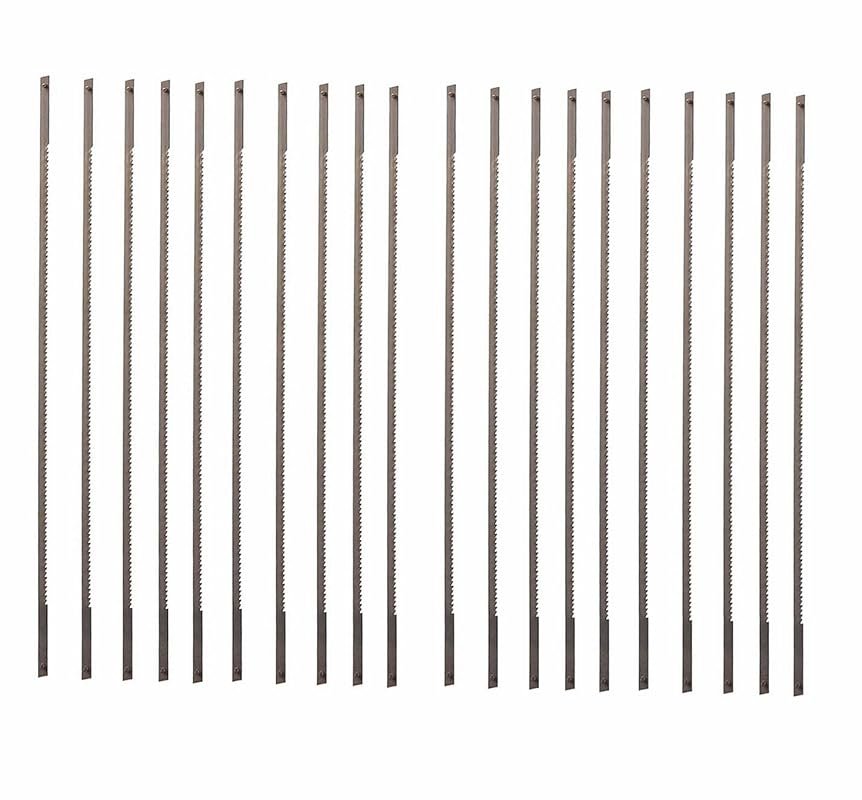
These FOXBC 24 TPI blades are made for metal and other tough materials where standard wood blades struggle. If you often need to nibble through brass, aluminum, or hardware in tight spots, this pack of coping saw blades for metal is worth a look.
Key Features That Stand Out
✓ 24 TPI tooth pattern optimized for metal cutting
✓ 6-1/2 inch pin end blades fit most common coping saws
✓ Flat wire frame compatibility for high blade tension
✓ Good for brass, thin steel, and other non-ferrous metals
Why We Recommend It
Most people only buy wood-focused coping blades and then fight when they hit metal. Having a dedicated metal set like this saves frustration and gives cleaner, more controlled cuts in small metal stock or hardware.
Best For
Best for DIYers, model makers, and metal hobbyists who need fine control when cutting thin metal pieces or trimming hardware in place.
Pros and Cons
Pros:
- Fine 24 TPI teeth reduce snagging in metal
- Works in most standard coping saw frames
- Great for precise cuts in brass, aluminum, and small steel pieces
- 20-pack offers plenty of backups
Cons:
- Cuts slower in wood compared to lower TPI blades
- Not ideal if you only ever work with soft wood and plastic
Customer Reviews
Customer Review: “I had to make a kind of precise cut through almost a 1/4 \” of brass and a regular hacksaw blade was too thick. These blades did the job very well and stayed sharp and true.”
Customer Review: “I had to make a kind of precise cut through almost a 1/4 \” of brass and a regular hacksaw blade was too thick. These blades did the job very well and stayed sharp and true.Read more”
5. FOXBC 6-1/2 Inch Coping Saw Blades, 20 Pack, 15/18 TPI High Carbon Steel Pin End
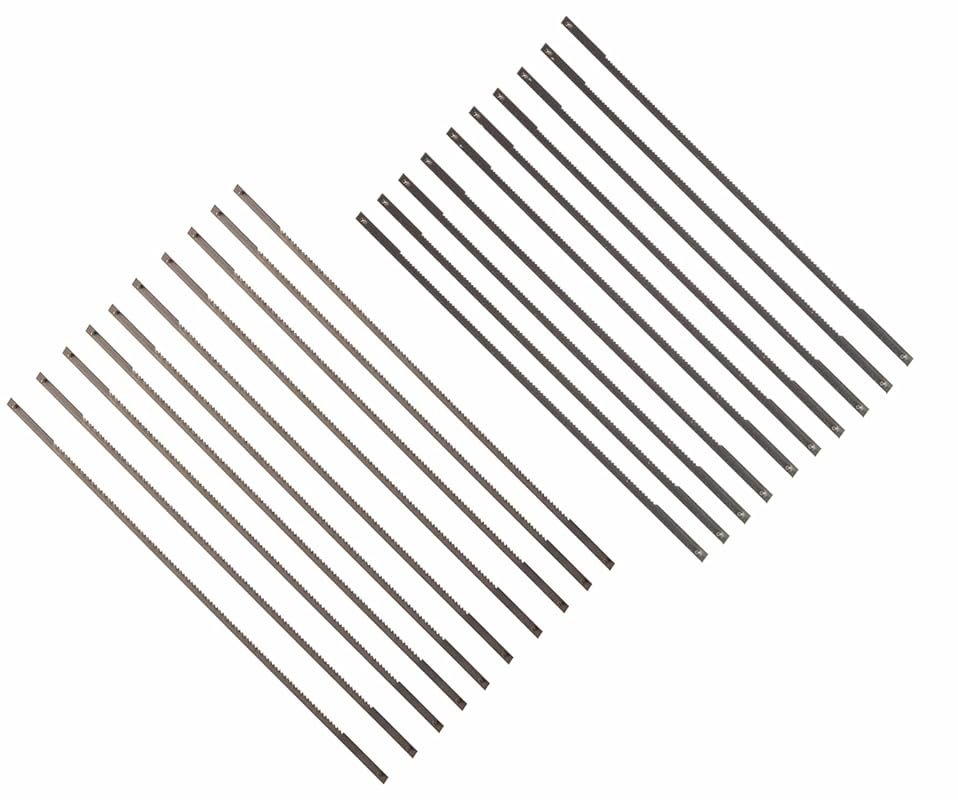
This FOXBC 20-pack focuses on the sweet spot TPIs for trim and general woodwork: 15 and 18. The blades can be rotated 360 degrees in compatible frames, which makes coping tight inside corners and complex shapes much easier.
Key Features That Stand Out
✓ 20 blades in 15 and 18 TPI for fast, controlled cuts
✓ High carbon steel with precision-sharpened teeth
✓ Pin ends allow 360-degree rotation in many frames
✓ Suitable for wood, plastics, and non-ferrous metals
Why We Recommend It
If you mainly cut wood and plastic, you do not always need super fine 24+ TPI blades. These mid-range tooth counts give a good balance of speed and surface finish, which is perfect for baseboard, crown molding, and other trim work.
Best For
Best for trim carpenters and DIYers focused on coping moldings and cutting curves in wood and plastic, without needing ultra-fine teeth.
Pros and Cons
Pros:
- Ideal tooth counts for most wood coping work
- Rotatable in many frames for more flexible cutting angles
- Can handle plastics and softer non-ferrous metals
- Good quantity for regular use
Cons:
- No very fine blades for ultra-smooth cuts in thin stock
- Some users report occasional factory oil residue that needs wiping off
Customer Reviews
Customer Review: “These blades tension well and cut fast in pine trim. I like having both 15 and 18 TPI in one pack, and they rotate easily in my coping saw frame.”
Customer Review: “Good quality blades for the price. I mostly use them on MDF and softwood moldings and they hold up fine. Just make sure to tension them properly to avoid bending.”
6. 25 Pcs 6-1/2 Inch Scroll Saw Blade Set, High Carbon Coping Blades 10–28 TPI, Pin End
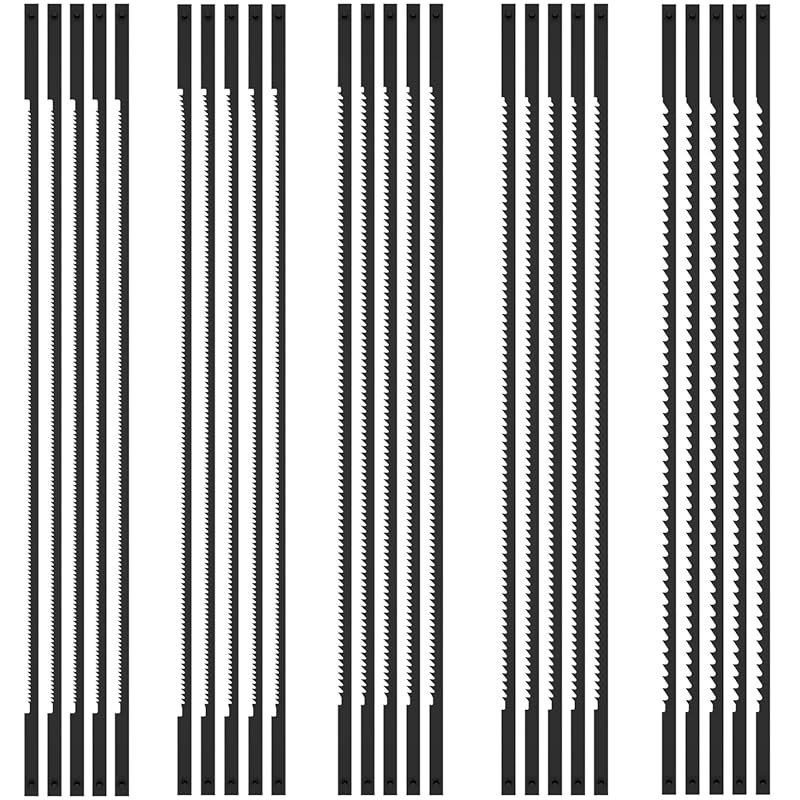
This 25-piece scroll and coping blade set covers a wide range from 10 to 28 TPI. The blades can rotate 360 degrees, which is handy when you are cutting tight scroll patterns or complex curves in wood, plastic, or even leather.
Key Features That Stand Out
✓ Assortment from 10 to 28 TPI for coarse to very fine cuts
✓ SK5 high carbon steel for strength and flexibility
✓ 360-degree rotation for cutting curves in any direction
✓ Suitable for wood, plastic, leather, bone, rubber, and more
Why We Recommend It
These blades blur the line between scroll saw and coping saw use. If you like detailed craft work or small decorative cuts, having this range of TPIs and the ability to rotate the blade makes life much easier.
Best For
Best for crafters, scroll saw enthusiasts, and hobbyists who want pin-end blades that can handle both coarse and detailed cutting in many materials.
Pros and Cons
Pros:
- Wide tooth range from aggressive to ultra-fine
- Works on a variety of materials beyond wood
- Rotating blade capability is great for intricate patterns
- Good quantity for frequent small projects
Cons:
- Not all coping saw frames support full 360-degree rotation
- Very fine blades can snap if pushed too hard
Customer Reviews
Customer Review: “Saw blade teeth are set at between 10 and 28 teeth per inch for cutting from course to fine.”
Customer Review: “Saw blade teeth are set at between 10 and 28 teeth per inch for cutting from course to fine.Read more”
7. Stanley 15-061 Coping Saw Blades, 6-1/2 Inch, 15 TPI, 4 Pack, Durable Steel
Stanley’s 15-061 blades are a simple, no-frills option from a trusted hand tool brand. With 15 TPI and durable steel, they are aimed at general coping tasks where you want a reliable cut and do not need a big assortment.
Key Features That Stand Out
✓ 6-1/2 inch blades with 15 TPI for general wood cutting
✓ Durable steel construction from a well-known brand
✓ 4-pack, ideal as a replacement set for occasional users
✓ Designed to fit standard coping saw frames
Why We Recommend It
If you already own a Stanley coping saw or just trust the brand, these blades are a safe bet. They are not fancy, but they cut well, especially in trim and light carpentry tasks where 15 TPI shines.
Best For
Best for homeowners who only need a few coping saw blades on hand for the occasional project, and prefer a familiar brand over large assortments.
Pros and Cons
Pros:
- Reliable performance from a reputable brand
- 15 TPI is versatile for many wood tasks
- Good choice as a backup pack in your toolbox
- Simple and straightforward, no sorting of multiple TPIs
Cons:
- Only one tooth count, so less flexible than assortments
- 4-pack may not last long for heavy users
Customer Reviews
Customer Review: “None of the big boxes and the two mom-and-pop stores in the largest metropolitan area of this state offer 15 TPI blades; essential for any thing beyond trim molding. I’m grateful Stanley still makes them and that they are affordable on Amazon.”
Customer Review: “None of the big boxes and the two mom-and-pop stores in the largest metropolitan area of this state offer 15 TPI blades; essential for any thing beyond trim molding. I’m grateful Stanley still makes them and that they are affordable on Amazon.Read more”
8. Groz 6-1/2 Inch Coping Saw Blades, 10 Pack, Universal Fit, 14 TPI High Carbon Steel

The Groz 14 TPI blades sit on the coarser side of the spectrum, which makes them good for quick cuts in thicker wood. The universal fit and high carbon steel design keep things simple if you do not want to fuss over matching blades to your frame.
Key Features That Stand Out
✓ 14 TPI, 6-1/2 inch blades for faster cutting in wood
✓ High quality steel with properly formed teeth for speed
✓ 10-pack with universal fit for most coping saws
✓ Balanced between rough cutting and reasonable finish
Why We Recommend It
These blades are ideal when speed matters more than a glass-smooth edge, such as rough shaping, waste removal, or early stages of a coping cut. You can always refine the edge later with a finer blade or sandpaper.
Best For
Best for users who want slightly more aggressive coping saw blades for thicker stock and quick shaping tasks.
Pros and Cons
Pros:
- Coarser 14 TPI teeth cut faster than fine blades
- Universal fit works with many coping saw frames
- Good value in a 10-pack for general shop use
- High carbon steel resists bending under proper tension
Cons:
- Rougher cut surface compared to 20+ TPI blades
- Not ideal for very thin or delicate materials
Customer Reviews
Customer Review: “Well, they are just standard blades. Fit right, cut well, good price.”
Customer Review: “Broke one right out of the gate. Steel is super malleable.”
9. 25 Pcs 6-1/2 Inch Coping Saw Blades, High Carbon Steel Assortment 10–28 TPI, Pin End
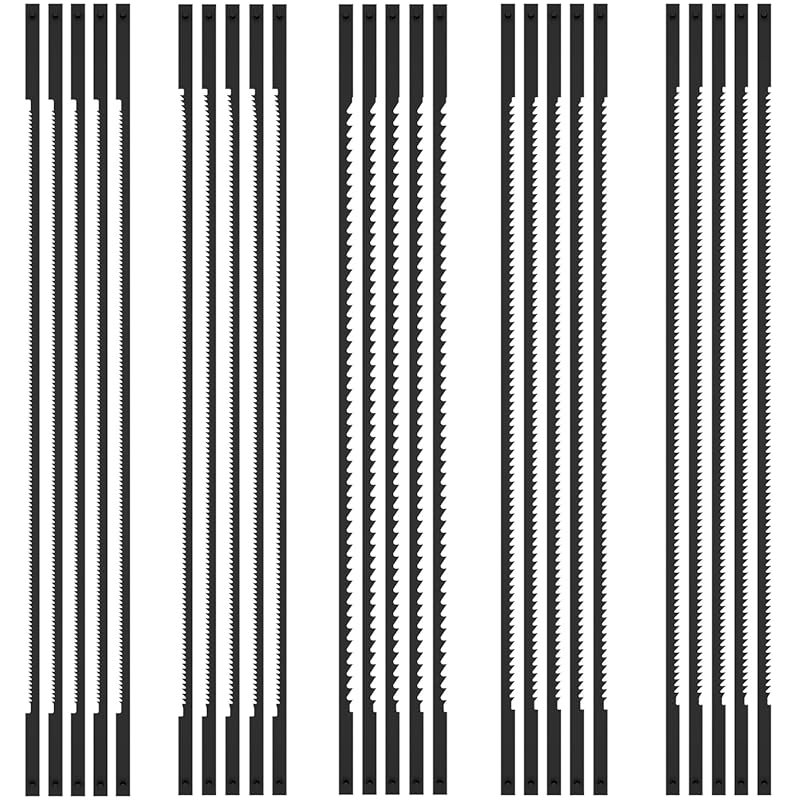
This 25-piece assortment is similar in spirit to the other mixed TPI sets, with blades ranging from 10 to 28 TPI. Made from SK5 high carbon steel, they are designed for a wide range of materials and are compatible with many small saw types.
Key Features That Stand Out
✓ SK5 high carbon steel for strength and flexibility
✓ Tooth counts from 10 to 28 TPI for coarse to fine cuts
✓ Suited for wood, plastic, leather, bone, rubber, and more
✓ Compatible with coping, scroll, skeleton, and jewelry saws
Why We Recommend It
If you like having one box that works across several tools, this set is handy. The wide TPI spread means you can rough cut thicker stock and also switch to fine blades for detail work without buying separate packs.
Best For
Best for makers and tinkerers who use different small saws and want one mixed pack of coping saw blades that can cross over between them.
Pros and Cons
Pros:
- Broad TPI assortment covers many tasks
- High carbon SK5 steel is a solid choice for durability
- Works with several saw types, not just coping saws
- Good for mixed-material craft and hobby projects
Cons:
- Like other assortments, TPIs can be easy to mix up without labeling
- Very fine blades need gentle use to avoid snapping
Customer Reviews
Customer Review: “Nice variety of blades for my coping and scroll saws. I use them on small wood crafts and they cut cleanly if you let the blade do the work.”
Customer Review: “Good assortment for the money. Some of the finer blades are delicate, but that is expected at this TPI. Overall, very happy with the purchase.”
Complete Buying Guide for Coping Saw Blades
Essential Factors We Consider
When we test and compare coping saw blades, a few details matter more than anything else.
First is TPI (teeth per inch). Lower TPI, such as 10–14, cuts faster but leaves a rougher edge. Higher TPI, like 20–32, cuts slower but gives a smoother finish. For most trim work, 15–18 TPI is a safe middle ground.
Second is material. Most blades here use high carbon steel or SK5 steel. These metals balance hardness and flexibility, so the blade can bend slightly without snapping right away, but still stay sharp for a decent amount of time.
Third is compatibility. Most coping saws use 6-1/2 inch pin-end blades, but it is still worth checking your frame. If you are not sure what a coping saw is best at, you might find this guide on what a coping saw is and why it is used helpful before you buy blades.
We also look at ease of rotation in the frame, especially for blades that are meant to turn 360 degrees. This matters when you cut tight curves or detailed profiles in crown molding or craft projects.
Budget Planning
You do not have to spend a lot to get good coping saw blades. For light DIY use, a small 4- or 18-pack is often enough and keeps things simple. If you work with trim or crafts every week, a 20–48 pack with mixed TPIs is usually cheaper per blade and saves store runs.
A smart approach is to buy one assortment pack with several TPIs, then note which blades you burn through fastest. Later, you can top up with single-TPI packs that match your style. This way you do not waste money on tooth counts you rarely touch.
Final Thoughts
The best coping saw blade for you depends on what you cut most. If you mostly cope baseboard and crown, stick with 15–18 TPI wood blades. If you do a lot of craft work or thin materials, add some 24–32 TPI blades. And if you ever need to cut metal, keep at least one dedicated metal blade pack in your drawer.
Also remember that blade care matters. Just like sharpening band saw blades can extend tool life, paying attention to tension, feed pressure, and storage will help your coping blades last longer and cut straighter.
Frequently Asked Questions
Q: What TPI is best for coping saw blades?
A: For most wood trim and molding, 15–18 TPI is ideal. It gives a good balance between cutting speed and a clean edge. If you want smoother cuts in thin stock or plastic, move up to 20–24 TPI or higher.
Q: Can coping saw blades cut metal?
A: Yes, but you need the right blade. Look for 24 TPI or higher blades that are rated for metal, like the FOXBC metal set above. For thicker metal or long cuts, a dedicated metal-cutting tool such as a hacksaw or miter saw rated for metal might still be a better choice. You can learn more about this in guides like whether a miter saw can cut metal.
Q: How often should I replace coping saw blades?
A: Replace a blade when it starts to wander off line, burns the wood, or needs a lot more pressure to cut. For light DIY use, a blade can last several projects. For daily trim or craft work, you might change blades every few days or even sooner on hard materials.
Q: Do all coping saw blades fit all coping saws?
A: Most modern frames use 6-1/2 inch pin-end blades, so they are widely interchangeable. Still, check your saw’s manual or measure between the pins. Some older or specialty frames may use different lengths or pinless blades.
Q: How tight should I tension a coping saw blade?
A: Tight enough that the blade “pings” when plucked and does not twist easily with your fingers. Too loose and it will wander or buckle; too tight and it can snap at the pins. Proper tension is as important as choosing the right blade, just like when you set up other saws such as a back saw or band saw.
Choosing the right coping saw blades turns a frustrating, slow cut into a clean and controlled one. Whether you go for a simple 4-pack from Stanley, a big mixed assortment from FOXBC, or a metal-focused set, matching TPI and material to the job will save you time and effort. When you are ready, pick the set that best fits how you work, click through to check the latest price on Amazon, and give your coping saw the upgrade it deserves.