
Stop struggling with rough cuts and wasted materials! This guide reveals essential saw blade techniques for precision results across all projects. You’ll learn blade selection secrets, setup mastery, and pro cutting methods to transform your woodworking and DIY skills with confidence.
Key Takeaways
- Match Blade to Material: Using the wrong blade (e.g., wood blade on metal) causes damage and poor cuts. Always select blades rated for your specific material.
- Sharpness is Non-Negotiable: Dull blades burn wood, kick back, and waste time. Inspect blades regularly and replace when teeth are worn or damaged.
- Proper Setup Wins: Correct blade height, tension, and alignment prevent wandering cuts and tear-out. Never skip this critical step.
- Control Your Feed Rate: Pushing too fast burns material; too slow causes binding. Let the blade cut at its natural pace for smooth results.
- Support Workpieces Fully: Inadequate support leads to kickback and jagged edges. Use clamps, guides, and sawhorses for stability.
- Respect Blade Direction: Cutting against the grain or improper tooth orientation creates tear-out. Understand grain direction and blade rotation.
- Safety First, Always: Wear eye protection, hearing protection, and keep hands clear. A perfect cut means nothing if you’re injured.
Introduction: Your Path to Perfect Cuts Starts Here
Ever watched a saw blade tear through wood like butter, leaving a smooth, splinter-free edge? That’s not magic – it’s mastery. Whether you’re building a bookshelf, framing a house, or crafting intricate details, saw blade cutting techniques are the unsung heroes of precision woodworking and metalworking. Frustrated by burnt edges, wandering cuts, or constant blade changes? You’re not alone. Many DIYers and even pros struggle because they skip the fundamentals. This guide cuts through the confusion. You’ll discover exactly how to select, set up, and wield your saw blades for flawless results on wood, metal, plastic, and more. No more wasted materials or second-guessing. By the end, you’ll approach every cut with confidence, knowing the blade is your partner, not your problem. Let’s get those perfect cuts!
Step 1: Choosing the Right Blade – Your Cutting Foundation
Using the wrong blade is like trying to write with a hammer. It won’t end well. Blade selection is 50% of the battle for clean cuts. Forget generic “all-purpose” claims – match your blade to the job.

Visual guide about Ultimate Saw Blade Cutting Techniques for Perfect Cuts
Image source: flashmuseum.org
Understanding Blade Types & Materials
- Wood Cutting Blades: Feature large, sharp carbide teeth with significant gullets (spaces) to clear sawdust. Crosscut blades have more, smaller teeth for smooth cuts across the grain. Rip blades have fewer, larger teeth for fast cuts along the grain. Pro Tip: For general woodworking, a high-quality 24-tooth or 40-tooth carbide blade is a versatile starting point.
- Metal Cutting Blades: Made from high-speed steel (HSS) or bi-metal, with fine teeth and often a specialized tooth geometry (like a “hook” angle) designed to slice metal without grabbing. Crucial: Never use a wood blade on metal – it will overheat, warp, and potentially shatter. Always use blades specifically rated for ferrous (steel, iron) or non-ferrous (aluminum, copper) metals. Explore options like those discussed in metal-cutting miter saw blades for specialized applications.
- Multi-Material Blades: Designed for versatility, often featuring a combination of tooth geometries or coatings to handle wood, plastic, and thin metals. Great for general contractors but may not excel at any single task.
- Specialty Blades: Diamond blades for concrete/stone, abrasive blades for tough metals, plywood blades with extra-fine teeth to prevent tear-out on veneers, and non-ferrous blades with specific tooth angles for aluminum.
Key Specifications That Matter
- Tooth Count (TPI): Higher TPI = smoother cut but slower feed rate (ideal for plywood, finish work). Lower TPI = faster cut but rougher edge (ideal for rough framing, ripping lumber).
- Tooth Geometry: The shape and angle of the teeth (e.g., Alternate Top Bevel – ATB, Triple Chip Grind – TCG, Flat Top Grind – FTG) determines cutting action and material suitability. ATB is common for crosscutting wood, TCG excels on hardwoods and metals.
- Blade Material & Coating: Carbide-tipped blades last longest for wood. Bi-metal blades flex for metal cutting. Coatings like Teflon reduce friction and heat buildup.
- Arbor Size & Kerf: Must match your saw’s arbor (e.g., 5/8″, 1″). Kerf (blade thickness) affects cut width and material waste – thinner kerfs are more efficient.
Remember: Investing in quality blades for your primary materials pays off in time, material savings, and safety. A cheap blade dulls fast and makes poor cuts.
Step 2: Perfect Blade Setup – The Secret to Accuracy
A perfect blade poorly installed will still make terrible cuts. Setup is where precision begins. Rushing this step guarantees frustration.

Visual guide about Ultimate Saw Blade Cutting Techniques for Perfect Cuts
Image source: suryamachines.com
Mounting the Blade Correctly
Always disconnect your saw from power before changing blades! Follow your saw’s manual, but the core principles are universal:
- Clean the arbor flange and blade mounting surface thoroughly – sawdust buildup prevents proper seating.
- Ensure the blade’s rotation direction arrow matches the saw’s rotation (usually clockwise when viewed from the motor side).
- Tighten the arbor nut securely using the correct wrench, but avoid over-tightening which can warp the blade. Refer to guides like how to change a circular saw blade for tool-specific steps.
Critical Alignment Checks
- Blade Parallel to Fence/Guide: This is VITAL for table saws and miter saws. Use a combination square or dedicated alignment tool. Even a 1/16″ misalignment causes significant cut errors over distance. Adjust the saw’s fence or miter gauge until the blade is perfectly parallel.
- Blade Height: For most saws (circular, table, miter), set the blade height so only 1/4″ to 1/2″ of the tooth protrudes above the material. Too high increases kickback risk and vibration; too low reduces cutting efficiency and can cause burning.
- Blade Tension (Band Saws): Follow your band saw manual. Proper tension prevents wandering and blade breakage. Too loose = blade drifts; too tight = premature fatigue.
Pro Tip: After setup, do a “dry run” without cutting material. Listen for unusual noises and watch for excessive vibration – both indicate a problem.
Step 3: Mastering Cutting Techniques for Different Materials
Now for the fun part: making the cut. Technique varies dramatically based on material and saw type.
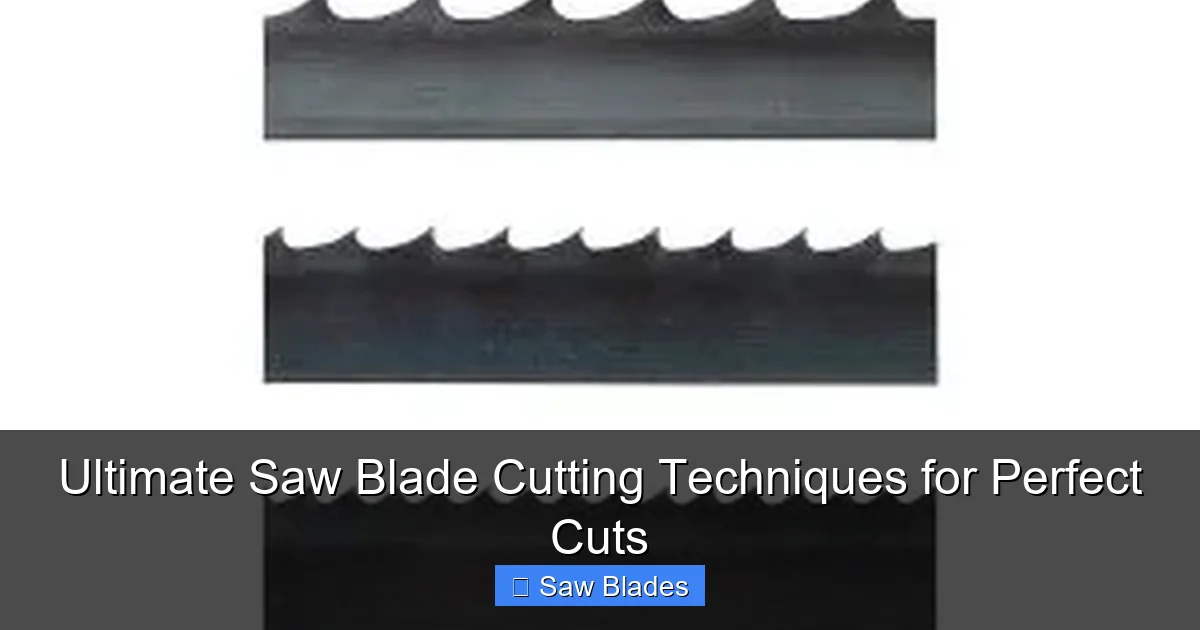
Visual guide about Ultimate Saw Blade Cutting Techniques for Perfect Cuts
Image source: sawblade.com.au
Wood Cutting Excellence
- Respect the Grain: Cutting *with* the grain (ripping) is generally easier and faster than cutting *across* the grain (crosscutting). Always orient your workpiece so the blade enters with the grain direction if possible.
- Prevent Tear-Out:
- Use masking tape over the cut line on the side where tear-out is unacceptable (usually the top surface).
- Support the wood’s back edge firmly with a sacrificial board or zero-clearance insert (especially on table saws).
- Use a sharp blade with the correct tooth geometry (e.g., ATB for crosscuts).
- For plywood, cut with the good side *down* on a table saw to minimize tear-out on the visible face.
- Feed Rate Control: Apply steady, even pressure. Let the blade do the work. Pushing too hard burns the wood and strains the motor. Feeding too slowly causes the blade to dwell and scorch the material. Find the “sweet spot” where the saw sounds smooth and cuts efficiently.
- Using Guides: For straight cuts on circular saws or jigsaws, clamp a straight edge guide firmly to the workpiece. This is far more accurate than freehanding. A panel saw is designed for this precision on large sheets.
Metal Cutting Mastery
- Lubrication is Key: Most metal cutting (especially ferrous) requires cutting fluid or oil to reduce heat, prevent work hardening, and extend blade life. Use a spray bottle for thin stock or flood coolant for larger jobs.
- Slower is Smoother: Metal cutting requires significantly slower feed rates than wood. Rushing causes excessive heat, blade damage, and poor finishes. Be patient.
- Secure Clamping: Metal vibrates intensely. Use sturdy vises or clamps on both sides of the cut line to prevent movement and ensure accuracy. A chop saw designed for metal has the rigidity needed.
- Blade Selection Specifics: Use blades with the correct TPI for the metal thickness (thicker metal = lower TPI). Ensure the blade is rated for the specific metal type.
Plastic & Composite Cutting
- Sharpness is Paramount: Dull blades melt and gum up plastic, creating rough edges and hazardous fumes. Use a fresh, fine-tooth blade (60+ TPI for acrylic, 80+ for plexiglass).
- Slow & Steady Wins: High heat is the enemy. Cut slowly to prevent melting. A bandsaw with a fine-tooth blade is excellent for intricate plastic cuts.
- Support & Cool: Support the plastic well to prevent cracking. A little water spray can help cool acrylic cuts.
Step 4: Essential Cutting Accessories & Pro Tips
Even the best technique benefits from the right support tools.
Must-Have Accessories
- Clamps: Non-negotiable for securing workpieces. Use multiple clamps for large pieces.
- Straight Edge Guides: Essential for circular saws and jigsaws. Commercial guides or a straight board clamped securely work.
- Zero-Clearance Inserts (Table Saws): Dramatically reduce tear-out by supporting the wood right up to the blade.
- Dust Collection: Keeps your line of sight clear and reduces respiratory hazards. A simple shop vac attachment makes a huge difference.
- Push Sticks/Push Blocks (Table Saws): Keep your hands safely away from the blade, especially for narrow cuts.
Pro Techniques for Common Challenges
- Making Bevel Cuts: Always double-check the bevel angle setting on your saw. Use a reliable angle finder. Support the workpiece firmly against the fence *and* the table surface. For complex bevels on miter saws, understand the difference between single vs. double bevel functionality.
- Cutting Curves: Use a jigsaw or bandsaw. Drill a starter hole for internal curves. Go slow, let the blade turn naturally – don’t force it. Use a fine-tooth blade for smoother curves.
- Cutting Thin Stock: Use a backing board to prevent tear-out and support the thin piece. A zero-clearance insert is ideal for table saws.
- Avoiding Kickback (Table Saws): Always use a riving knife or splitter. Keep the fence parallel to the blade. Never stand directly behind the blade. Use push sticks for narrow cuts.
Step 5: Troubleshooting Common Cutting Problems
Even experts hit snags. Here’s how to diagnose and fix the most frequent issues:
Problem: Burned or Scorched Wood
- Cause: Dull blade, feeding too slowly, incorrect blade (wrong TPI/geometry), insufficient blade height.
- Solution: Replace blade. Increase feed rate slightly. Ensure correct blade for material. Check blade height (more protrusion can help clear sawdust).
Problem: Tear-Out (Splintering) on Cut Edge
- Cause: Dull blade, cutting unsupported back edge, wrong blade (e.g., rip blade for crosscut), cutting too fast.
- Solution: Use sharp blade with correct geometry (ATB for crosscuts). Support back edge with sacrificial board/zero-clearance insert. Apply masking tape. Slow down feed rate.
Problem: Wandering Cut (Blade Doesn’t Follow Line)
- Cause: Blade not parallel to fence/guide, dull blade, incorrect feed pressure, workpiece not secured.
- Solution: Realign blade to fence/guide. Replace blade. Apply steady, even pressure. Clamp workpiece securely.
Problem: Excessive Vibration or Noise
- Cause: Blade not seated properly, warped blade, incorrect blade tension (band saw), loose arbor nut, blade hitting something.
- Solution: Reinstall blade carefully. Replace warped blade. Check/adjust tension. Tighten arbor nut. Inspect for obstructions.
Problem: Blade Binding or Stalling
- Cause: Feeding too fast, dull blade, cutting too thick material for blade/saw, insufficient power.
- Solution: Slow down feed rate. Replace blade. Ensure material thickness is within saw’s capacity. Check power source (extension cord gauge).
Conclusion: Cut with Confidence, Create with Precision
Mastering saw blade cutting techniques transforms you from someone who *uses* tools into a true craftsman. It’s not just about the saw or the blade – it’s about the synergy between your knowledge, preparation, and execution. By meticulously selecting the right blade, setting it up perfectly, understanding material-specific techniques, and troubleshooting effectively, you eliminate the guesswork and frustration that plague so many projects. Those perfect, clean cuts you admire in professional work? They start with these fundamentals. Remember, every master woodworker or metalworker began by learning to respect the blade. Invest in quality blades, take the time for proper setup, prioritize safety above all else, and practice deliberately. Your next project – whether it’s a simple shelf or a complex piece of furniture – will benefit immensely. Stop fighting your tools. Start commanding them. Your journey to consistently perfect cuts begins with the very next blade you install. Now go make something amazing!
🎥 Related Video: Hand Sawing Tips (cutting 8×8 by hand 😰)
📺 Appalachian Wood
Discover must-know hand sawing tips for cutting a straight line with a hand saw! The saw shown is a Z saw pull saw cutting …
