Learn the essential steps for proper saw blade heat treatment to dramatically increase durability and cutting performance. This guide reveals pro techniques for heating, quenching, and tempering blades while avoiding common pitfalls. Follow these methods to save money and achieve cleaner, longer-lasting cuts on every project.
Key Takeaways
- Material matters most: Always identify your blade’s steel type (HSS, carbide, etc.) before heat treating, as processes vary significantly.
- Temperature control is critical: Overheating destroys hardness; use a calibrated pyrometer or magnet test for precise critical temperature targeting.
- Quenching method dictates results: Choose oil, water, or air quenching based on steel type to prevent cracking while achieving maximum hardness.
- Tempering prevents brittleness: Always temper immediately after quenching to relieve internal stresses and add toughness without sacrificing too much hardness.
- Safety cannot be ignored: Wear full PPE (heat-resistant gloves, face shield, apron) and work in a well-ventilated area with fire extinguishers nearby.
- DIY has limits: Complex blades (like carbide-tipped) often require professional heat treatment; know when to seek expert help.
Why Saw Blade Heat Treatment is Your Secret Weapon for Durability
Ever watched a brand-new saw blade lose its edge after just a few cuts? Or dealt with a blade that chips or warps mid-project? The culprit is often improper or skipped heat treatment. This isn’t just factory jargon – it’s the scientific process that transforms soft steel into a razor-sharp, resilient cutting tool. Mastering saw blade heat treatment is the single biggest factor in extending blade life, improving cut quality, and saving you money on replacements. In this guide, we’ll break down the pro techniques used by blade manufacturers and serious woodworkers to maximize durability. You’ll learn the precise steps for heating, quenching, and tempering, plus crucial safety tips and troubleshooting advice. Whether you’re reconditioning old blades or understanding what makes a premium blade last, this knowledge is essential for anyone serious about cutting performance.
Understanding Saw Blade Heat Treatment Basics
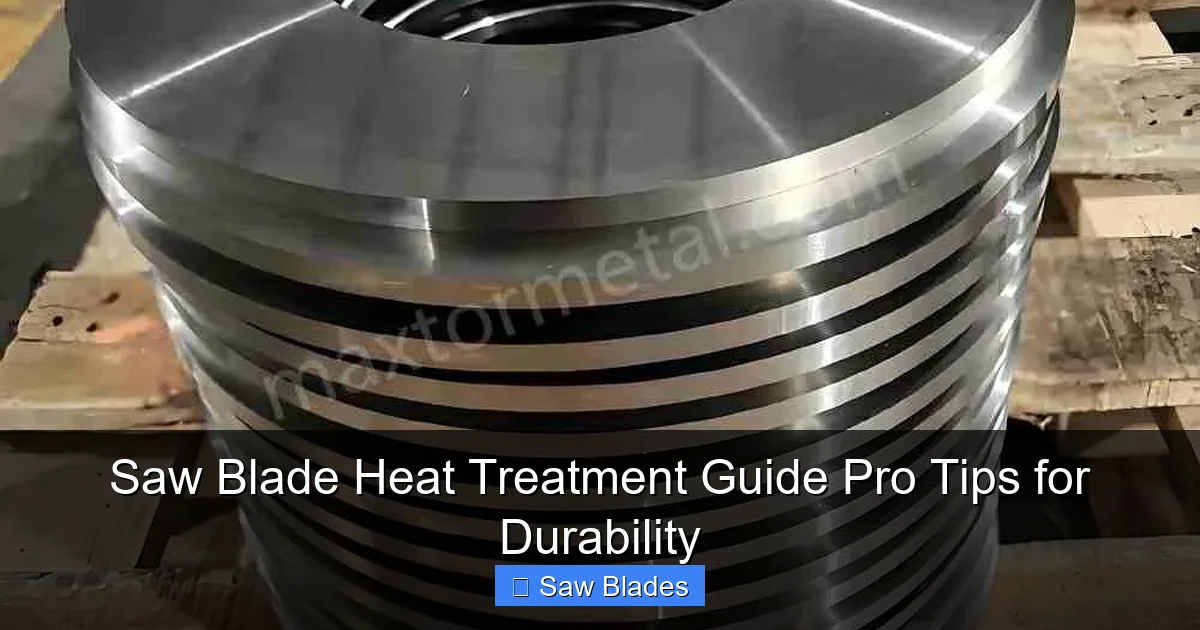
Before you fire up the torch, grasp what heat treatment actually does. Steel isn’t born hard – it’s made hard through controlled heating and cooling. This process alters the metal’s internal crystal structure. Think of it like baking a cake: the right temperature and timing create the perfect texture. Get it wrong, and you’ve got a disaster.
Visual guide about Saw Blade Heat Treatment Guide Pro Tips for Durability
Image source: maxtormetal.com
The Science Simplified: Austenitizing, Quenching, Tempering
There are three core stages in heat treating carbon and high-speed steel (HSS) blades:
- Austenitizing: Heating the steel to a specific “critical temperature” (usually between 1450°F – 1600°F / 790°C – 870°C depending on the steel). At this point, the steel’s structure changes to austenite, absorbing carbon.
- Quenching: Rapidly cooling the hot steel in a medium (oil, water, or air). This “freezes” the austenite structure into martensite – an extremely hard but brittle form.
- Tempering: Reheating the quenched steel to a lower temperature (typically 300°F – 600°F / 150°C – 315°C) for a set time. This relieves internal stresses from quenching, making the steel tough enough to resist chipping without losing excessive hardness.
Carbide-tipped blades are different. The carbide tips are sintered (formed under extreme heat and pressure) and cannot be heat treated by the user. Heat treatment here focuses solely on the steel body to prevent warping and maintain tension. Always identify your blade type first!
Why Heat Treatment Makes Blades Last Longer
Proper heat treatment delivers two critical benefits:
- Optimal Hardness: Measured on the Rockwell C scale (HRC). Blades need high hardness (typically HRC 60-65 for HSS) to resist wear and maintain a sharp edge. Too soft = dulls fast. Too hard = brittle and chips.
- Essential Toughness: Hardness alone makes steel brittle. Tempering adds toughness – the ability to absorb impact without cracking. This is vital for blades hitting nails or knots.
Skipping tempering after quenching is the #1 mistake DIYers make. You’ll get a super-hard blade that shatters on the first hard cut. Heat treatment isn’t just about hardness; it’s the perfect balance of hardness and toughness that delivers true durability.
Preparing for Saw Blade Heat Treatment: Safety & Setup
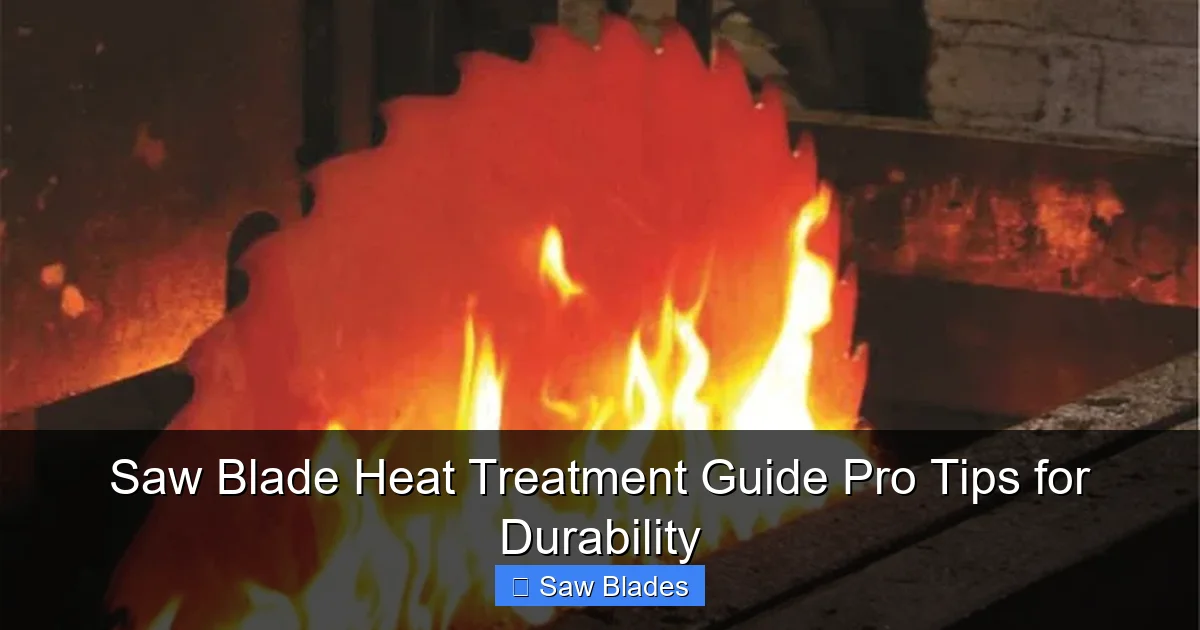
Heat treating involves extreme temperatures and potential hazards. Rushing this step risks injury and ruined blades. Preparation is non-negotiable.
Visual guide about Saw Blade Heat Treatment Guide Pro Tips for Durability
Image source: donglaimetal.com
Essential Safety Gear (Non-Negotiable!)
Never skip this. Molten metal and hot oil are unforgiving:
- Heat-Resistant Gloves: Leather or Kevlar gauntlets rated for 500°F+ (260°C+). Standard work gloves melt.
- Full Face Shield: Protects against sparks, splatter, and radiant heat. Safety glasses alone are insufficient.
- Heavy-Duty Apron: Leather or flame-resistant fabric to shield your body.
- Respirator: For fumes from quenching oils or scale (especially important in enclosed spaces).
- Fire Extinguisher: Class B (flammable liquids) and Class D (metal fires) rated, easily accessible.
Work outdoors or in a very well-ventilated garage. Keep children and pets far away.
Tools & Equipment Checklist
You’ll need:
- Heat Source: Propane forge (best for control), oxy-acetylene torch (requires skill), or high-quality kiln. Avoid cheap camp stoves – insufficient heat.
- Temperature Indicator: Crucial! A calibrated infrared pyrometer (best) or a magnet (for approximate critical temp – steel loses magnetism at austenitizing temp).
- Quenching Tank: Sturdy metal container (never plastic!) sized for your blade. For oil quenching, use dedicated quenching oil (never motor oil!). Water quenching requires a large tank to prevent violent steam explosions.
- Tempering Oven: A dedicated toaster oven or small kiln. Never use your kitchen oven! Residual oils and fumes are hazardous.
- Tongs: Long, heavy-duty steel tongs with insulated handles.
- Wire Brush & Scale Remover: To clean the blade before and after treatment.
Having the right tools prevents dangerous improvisation. If you lack a proper pyrometer, reconsider DIY heat treatment – guessing temperatures ruins blades and risks safety.
The Heating Process: Reaching the Critical Temperature
This is where precision matters most. Heating too fast or too hot destroys the steel’s potential.
Visual guide about Saw Blade Heat Treatment Guide Pro Tips for Durability
Image source: industrymd.blob.core.windows.net
Step 1: Clean the Blade Thoroughly
Remove all pitch, resin, and dirt with a wire brush and solvent (like acetone). Any contaminants burn off unevenly, causing hot spots and inconsistent heating. Pay special attention to the tooth faces and gullets. A clean blade heats evenly.
Step 2: Heat Slowly and Evenly
Place the blade in your forge or under the torch. Heat gradually from room temperature. Rushing causes thermal shock and warping. Rotate the blade constantly to ensure uniform heating – especially important for larger blades. Focus heat on the body and teeth, avoiding the arbor hole area if possible.
Step 3: Identify the Critical Temperature (Austenitizing Temp)
This is the make-or-break moment:
- Using a Pyrometer: Heat until the blade reaches the specific critical temperature for its steel type (e.g., ~1500°F/815°C for common HSS like M2). This is the most accurate method.
- Using a Magnet (Approximate Method): Heat the blade until it just loses its magnetic pull. This indicates it’s reached the austenitizing temperature (Curie point). Warning: This is less precise and varies slightly by steel. Only use if you have no pyrometer and understand the limitations.
Pro Tip: For HSS blades, the critical temperature is often visible as a specific color: a “strawberry red” or “cherry red” glow. However, relying solely on color is risky due to lighting conditions and eye fatigue. Always prioritize a pyrometer or magnet test. Do not exceed the critical temperature – overheating burns the steel, making it unusable.
Quenching: Locking in Hardness (The Delicate Dance)
Quenching must be fast and consistent, but the medium is critical and depends entirely on the steel type.
Choosing the Right Quench Medium
Using the wrong medium causes cracks or insufficient hardness:
- Oil Quenching (Most Common for HSS Blades): Provides a slower, more controlled cool-down than water. Ideal for complex shapes like saw blades to minimize warping and cracking. Use dedicated quenching oil (e.g., Parks 50, Houghton K). Never use vegetable or motor oil – they can ignite or cause uneven cooling.
- Water Quenching (Use with Extreme Caution): Cools very rapidly. Only suitable for simple carbon steel blades (like some older handsaw blades) or specific, water-hardening steels. High risk of warping and cracking on modern HSS blades. If using water, agitate the blade vigorously in a large tank to prevent steam pockets.
- Air Quenching (For Specific Steels): Some high-alloy steels (like certain tool steels) can be air-cooled. Rarely used for standard saw blades. Check your steel’s specifications.
For 95% of user-heat-treatable saw blades (HSS), oil quenching is the safe, recommended choice.
Executing the Quench
- Once the critical temperature is reached (confirmed by pyrometer/magnet), immediately transfer the blade to the quenching tank using tongs.
- Submerge the blade completely and agitate it vigorously in a straight up-and-down motion. This ensures even cooling and prevents steam pockets (which cause soft spots).
- Keep agitating for 10-15 seconds, then let the blade sit submerged until it cools to near room temperature (you can feel slight warmth).
- Remove the blade and wipe off excess oil. Do not delay tempering!
Critical Mistake: Hesitating between heating and quenching, or quenching at the wrong temperature, results in poor hardness. Have your quench tank ready before heating begins.
Tempering: Adding Toughness Without Losing Edge
This step transforms brittle martensite into tough, usable steel. Skipping it guarantees a shattered blade.
Why Tempering is Non-Optional
Quenched steel is extremely hard (HRC 65+) but also extremely brittle. Tempering reduces hardness slightly (to HRC 60-62 for most blades) but dramatically increases toughness – the ability to withstand impact without chipping. This is what makes a blade durable in real-world use, hitting nails or hard knots.
The Tempering Process
- Clean the Blade: Remove any scale or oil residue with a wire brush.
- Heat in a Dedicated Oven: Place the blade in a toaster oven or kiln preheated to the tempering temperature. Typical range: 300°F – 600°F (150°C – 315°C). Lower temps = harder but more brittle; higher temps = tougher but softer. For most saw blades, 400°F – 500°F (200°C – 260°C) is ideal.
- Hold for Time: Maintain the temperature for 1-2 hours. Use an oven thermometer – don’t trust the dial!
- Cool Slowly: Turn off the oven and let the blade cool inside it to room temperature. Avoid rapid cooling which can reintroduce stresses.
Pro Tip: Tempering color can indicate temperature (pale yellow = ~430°F/220°C, straw = ~500°F/260°C), but an oven thermometer is far more reliable. For critical blades, temper twice: cool completely after the first temper, then repeat at the same temperature. This ensures thorough stress relief.
Testing, Finishing & Knowing Your Limits
Heat treatment isn’t done until you verify the results and finish the blade properly.
Checking Hardness (The File Test)
While a Rockwell tester is best, you can do a basic check:
- Try to file the blade’s cutting edge. A properly hardened and tempered HSS blade should spark and the file should skate off without biting in. If the file cuts easily, the blade is too soft (under-hardened or over-tempered).
- A blade that chips instantly when filed is likely over-tempered (too soft) or was quenched incorrectly.
This isn’t precise, but it’s a good field check. For professional results, invest in a hardness tester.
Final Cleaning and Sharpening
After tempering and cooling:
- Clean off any remaining scale or oil with a wire brush and solvent.
- Sharpen the blade immediately. Heat-treated steel is brittle; use a fine-grit sharpening stone or professional sharpener. Avoid excessive pressure. Proper sharpening is the final step to unlock the durability you’ve built.
Remember, a heat-treated blade is only as good as its edge. Pair your heat treatment skills with proper sharpening for maximum performance. Learning how to change blade on circular saw correctly also ensures your newly treated blade performs optimally without vibration issues.
When to Call a Professional (Respect the Limits)
DIY heat treatment has boundaries:
- Carbide-Tipped Blades: The carbide tips cannot be heat treated. Attempting to heat the steel body risks damaging the braze joint or the carbide itself. Professional reconditioning is the only safe option.
- Complex or Thin Blades: Band saw blades, very thin circular saw blades, or blades with intricate tooth geometry are extremely prone to warping during DIY treatment.
- Lack of Proper Equipment: If you don’t have a reliable pyrometer and proper quenching setup, the risk of ruining the blade is very high.
- Safety Concerns: If you’re uncomfortable with the inherent risks, don’t proceed. Professional heat treaters have the expertise, equipment, and safety protocols.
For standard HSS circular saw blades (like many general-purpose woodcutting blades), DIY is feasible with the right tools and knowledge. For anything else, especially how to tell if a diamond saw blade is dull (which involves different wear patterns), professional assessment is wise. Know when to invest in a pro service – it’s cheaper than replacing a ruined blade.
Troubleshooting Common Heat Treatment Problems
Even with care, things can go wrong. Here’s how to diagnose and fix issues:
Problem: Blade Warped During Quenching
Cause: Uneven heating, uneven quenching (poor agitation), or quenching at too low a temperature.
Solution: Ensure even heating by rotating constantly. Agitate vigorously and consistently in the quench tank. Verify critical temperature is reached. For minor warps, you might straighten the blade cold (carefully with a press), but severe warps usually mean the blade is scrap.
Problem: Blade Cracked
Cause: Quenching too fast (wrong medium for the steel), quenching from too low a temperature, or inherent stress in a flawed blade.
Solution: Use the correct quench medium (oil for HSS). Ensure critical temperature is reached. Avoid quenching blades with existing cracks or severe damage. Cracked blades are unsafe and must be discarded.
Problem: Blade is Too Soft (File Cuts Easily)
Cause: Under-heated (didn’t reach critical temp), quenched too slowly, or over-tempered.
Solution: Verify temperature with a pyrometer/magnet. Ensure rapid, consistent quenching. Check tempering temperature and time – you may have tempered too high or too long. Reheat and requench (if possible), then temper at a lower temperature.
Problem: Blade is Too Brittle (Chips Easily)
Cause: Skipped tempering, tempered at too low a temperature, or quenched too rapidly.
Solution: Always temper! If you skipped it, reheat to the tempering temperature (400°F-500°F) for 1-2 hours. If already tempered, you may have tempered too low – re-temper at a slightly higher temperature.
Problem: Soft Spots on the Blade
Cause: Scale or contaminants burning off during heating, creating insulation; poor agitation during quenching causing steam pockets.
Solution: Clean the blade meticulously before heating. Agitate vigorously and consistently during quenching. Ensure the quench tank is large enough.
Conclusion: Unlock Longer-Lasting, Higher-Performance Blades
Mastering saw blade heat treatment is a game-changer for durability and cutting performance. It transforms a potentially short-lived tool into a long-term asset. By understanding the science – austenitizing, quenching, and tempering – and executing each step with precision and respect for safety, you gain control over your blade’s lifespan. Remember the non-negotiables: identify your steel type, use a pyrometer for temperature control, choose oil quenching for HSS blades, and always temper immediately after quenching. Avoid the common pitfalls of overheating, wrong quench media, and skipped tempering.
While DIY heat treatment is achievable for standard HSS circular saw blades with the right tools and knowledge, recognize when professional services are needed, especially for carbide-tipped or complex blades. Pair your heat treatment skills with proper sharpening and blade maintenance – like knowing how to change blade on circular saw correctly to prevent vibration – for the ultimate cutting experience. Invest the time to treat your blades right, and you’ll enjoy cleaner cuts, fewer replacements, and significant cost savings on every project. Your saw – and your workpiece – will thank you.
🎥 Related Video: How To Heat Treat A Knife | The 4 Steps You NEED To Know
📺 OUTDOORS55
Knife Making – How To Heat Treat A Knife | Super Simple DIY heat treating. The 4 steps you NEED to know. More info below⬇️ …