
Ladders are indispensable tools in both residential and professional settings. Whether you’re performing home maintenance, working in construction, or tackling an office repair job, ladders are often the go-to solution for reaching high places. However, ladders can be hazardous if not used correctly. Ladder-related accidents are common, and can lead to serious injuries, including falls, fractures, and even fatalities. According to the U.S. Occupational Safety and Health Administration (OSHA), ladder accidents account for a significant portion of workplace injuries every year.
This comprehensive guide will cover essential safety precautions to follow when using a ladder, whether it’s a step ladder, extension ladder, or any other type. By following these safety tips, you can reduce the risk of accidents and ensure that your ladder usage remains safe and effective.
Why Ladder Safety Matters
Before diving into specific safety precautions, it’s important to understand why ladder safety is so critical. Ladder-related falls are a leading cause of workplace injuries, and the impact of these accidents is often severe. According to the National Safety Council (NSC), falls from ladders send thousands of people to emergency rooms every year.
Common injuries from ladder accidents include:
- Broken bones: Especially fractures in the arms, legs, and back.
- Head injuries: Including concussions or traumatic brain injuries (TBI).
- Spinal cord injuries: Which can result in long-term or permanent disability.
- Sprains and strains: Particularly in the wrists, ankles, or knees.
By following proper safety guidelines, you can significantly reduce the risk of these injuries.
Safety Precautions When Using a Ladder
Here are the key safety precautions you should always take when using a ladder:
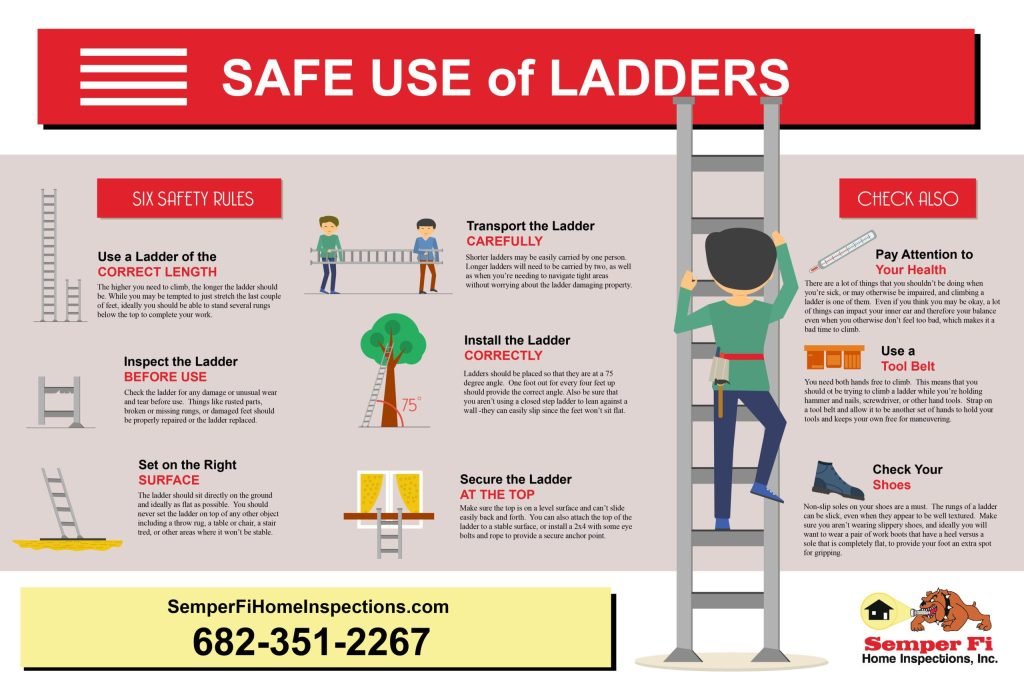
1. Choose the Right Ladder for the Job
The first step in ensuring ladder safety is selecting the correct ladder for your specific task.
- Ladder Type: Ensure you’re using the correct type of ladder for your job. For example, if you’re working indoors, a step ladder might be the best choice. If you need to reach higher heights, an extension ladder will be more suitable.
- Weight Capacity: Make sure the ladder can support your weight plus any tools or materials you plan to carry. Most ladders come with a weight rating. Always stay within the recommended load limit.
- Height: Select a ladder that is tall enough to reach the desired height without you needing to stand on the top rungs. A ladder that’s too short can be dangerous, leading you to overreach and risk falling.
2. Inspect the Ladder Before Use
Before climbing, perform a thorough inspection of the ladder to ensure it’s in good working condition.
- Check for Damage: Look for cracks, bends, or corrosion (in metal ladders), or splits and soft spots (in wooden ladders). Any damage should disqualify the ladder from use.
- Test the Feet: Ensure the ladder’s feet are in good condition and provide adequate grip. Worn or damaged feet can cause the ladder to slip.
- Inspect the Rungs: Check for any loose or broken rungs. If a rung is damaged or cracked, the ladder should not be used.
- Locks and Hinges: If you’re using an extension ladder, make sure the locks and hinges are secure and functional. An extension ladder that doesn’t lock properly can collapse during use.
3. Set Up the Ladder Correctly
Where and how you set up your ladder plays a significant role in preventing accidents.
- Level Ground: Always place the ladder on a firm, level surface. Never use a ladder on uneven or soft ground, as it can cause instability and increase the risk of a fall.
- Angle of Extension Ladders: When setting up an extension ladder, ensure that it is placed at the correct angle. A general rule is to place the base of the ladder one foot away from the surface it leans against for every four feet of height.
- Avoid Obstacles: Make sure the area around the ladder is clear of obstacles or debris that might cause tripping or interfere with your climbing.
- Lock the Ladder: If your ladder has a locking mechanism (like extension or folding ladders), make sure it’s securely locked in place before climbing.
4. Use the Three-Point Rule
The three-point rule is one of the simplest and most effective ladder safety precautions.
- Three Points of Contact: Always maintain three points of contact with the ladder while climbing. This means two hands and one foot, or two feet and one hand, should be in contact with the ladder at all times.
- Keep Both Hands Free: When climbing or descending, make sure your hands are free of tools or other items. If you need to carry something, use a tool belt or hoist it up once you’re at the top of the ladder.
5. Don’t Overreach or Lean Too Far
A common cause of ladder accidents is overreaching or leaning too far to one side.
- Stay Centered: Always keep your body centered between the ladder rails. Leaning too far to one side can destabilize the ladder and cause you to lose your balance.
- Use a Ladder with Adequate Height: Don’t stand on the top rungs of the ladder or try to reach something that’s out of arm’s length. Use a taller ladder if necessary.
6. Never Use a Damaged Ladder

Using a damaged ladder is one of the most dangerous things you can do. If a ladder is broken or shows signs of wear, it should be removed from service immediately.
- Repair or Replace: Don’t attempt to repair a ladder with broken or damaged components. Replace it instead, as DIY fixes may not restore its full strength and integrity.
- Mark Damaged Ladders: If a ladder is found to be unsafe, mark it with a visible sign (e.g., a red “X”) to warn others not to use it.
7. Wear Proper Footwear
Your choice of footwear can have a significant impact on your safety when using a ladder.
- Non-Slip Shoes: Always wear shoes with non-slip soles when using a ladder. Smooth-soled shoes, sandals, or barefoot climbing are dangerous as they can slip off the rungs, leading to a fall.
- Secure Footwear: Ensure your shoes are securely fastened. Loose shoes or shoes that don’t provide adequate grip increase the risk of slipping.
8. Avoid Wet, Icy, or Slippery Conditions
Ladders can become very slippery in wet or icy conditions, making it much more dangerous to climb.
- Check the Weather: Don’t use a ladder in rain, snow, or high winds. Wet surfaces can cause you to lose grip or balance, increasing the likelihood of an accident.
- Dry the Ladder: If you’re using a ladder outdoors, check that the rungs are dry before climbing. If necessary, wipe down the ladder to remove any moisture or debris.
9. Climb Slowly and Steadily
Climbing a ladder should always be done with caution.
- Don’t Rush: Never rush while climbing or descending a ladder. Quick movements or sudden shifts in weight can cause you to lose your balance and fall.
- Use Both Hands: Always use both hands to grip the ladder when climbing or descending. This ensures better control and stability.
10. Maintain the Ladder’s Stability
Once you’re on the ladder, make sure it remains stable throughout your work.
- Don’t Rock the Ladder: Avoid rocking or swinging the ladder while on it. Sudden shifts in weight can destabilize the ladder and increase the risk of tipping.
- Use a Ladder Stabilizer: For added stability, use a ladder stabilizer when working on an extension ladder, especially when working near a wall or at a height.
- Don’t Overload the Ladder: Avoid carrying too many tools or materials up the ladder. Overloading the ladder can make it unstable and hard to manage.
11. Work With a Buddy
If possible, always work with a buddy when using a ladder, especially for tasks that require heavy lifting or working at significant heights.
- Assistance in Stabilizing: A second person can help stabilize the ladder, pass tools up to you, and spot you for safety.
- In Case of Emergency: In case of an accident, a second person can immediately provide assistance or call for help.
12. Follow OSHA and Safety Standards
For workplace ladder safety, ensure that you follow all applicable OSHA and industry-specific safety standards.
- OSHA Guidelines: Familiarize yourself with the OSHA ladder safety standards, which provide specific guidelines on ladder construction, maintenance, and usage.
- Training: If you’re working in a professional setting, ensure that you’re trained on proper ladder use and safety protocols.
Conclusion
Ladders are essential tools that can help you accomplish a wide range of tasks, from simple household chores to more complex professional jobs. However, it’s important to recognize that ladders, when used improperly, can pose significant safety risks. By following the safety precautions outlined above, you can significantly reduce the likelihood of accidents and ensure that you’re using your ladder in the safest possible manner.
Remember: always choose the right ladder for the job, inspect it thoroughly, set it up correctly, maintain three points of contact, and take your time while climbing. By practicing these safety habits consistently, you’ll minimize the risk of injury and use ladders with confidence.
RELATED POST
- Guide to Inspecting Ladders
- How to Prevent Injury When Raising or Lowering
- What Happens When You Walk Under a Ladder
- Guide to Ladder Inspections