
This guide breaks down the internal components and physics that make a cordless drill function. You’ll learn how the battery powers a motor, which then spins gears to deliver torque to the chuck. Understanding this helps you choose the right tool and use it safely for any project.
Key Takeaways
- The Battery is the Heart: It stores chemical energy, converted to electrical power for the motor. Voltage (V) indicates power potential, while Amp-hours (Ah) show capacity.
- The Motor Converts Power: A brushless or brushed electric motor transforms electrical energy into rotational motion (RPMs), which is the drill’s speed.
- Gears Control Torque and Speed: A planetary gear system trades rotational speed for twisting force (torque), allowing for both high-speed drilling and high-torque driving.
- The Chuck Holds the Bit: This clamping mechanism, keyless or keyed, securely grips drill bits and driver bits to transfer force from the motor to your work.
- The Clutch Prevents Damage: A adjustable clutch disengages the drivetrain at a set torque level, preventing over-driven screws and stripped heads.
- Electronic Controls Offer Precision: The trigger provides variable speed, while a forward/reverse switch changes rotation direction for installing or removing fasteners.
- Proper Maintenance Extends Life: Regular care like battery management, chuck cleaning, and brush inspection (on brushed models) keeps your drill running smoothly for years.
Discover How a Cordless Drill Works Inside and Out
Have you ever picked up your cordless drill, pulled the trigger, and marveled at its power? It’s a modern marvel of engineering that fits in your hand. But what’s actually happening inside that plastic and metal shell? This guide will take you on a journey through every major component. We’ll explain the science and mechanics in simple terms. By the end, you’ll not only know how it works. You’ll be a more informed and effective user, whether you’re assembling furniture or building a deck.
The Core Power Source: Understanding the Battery
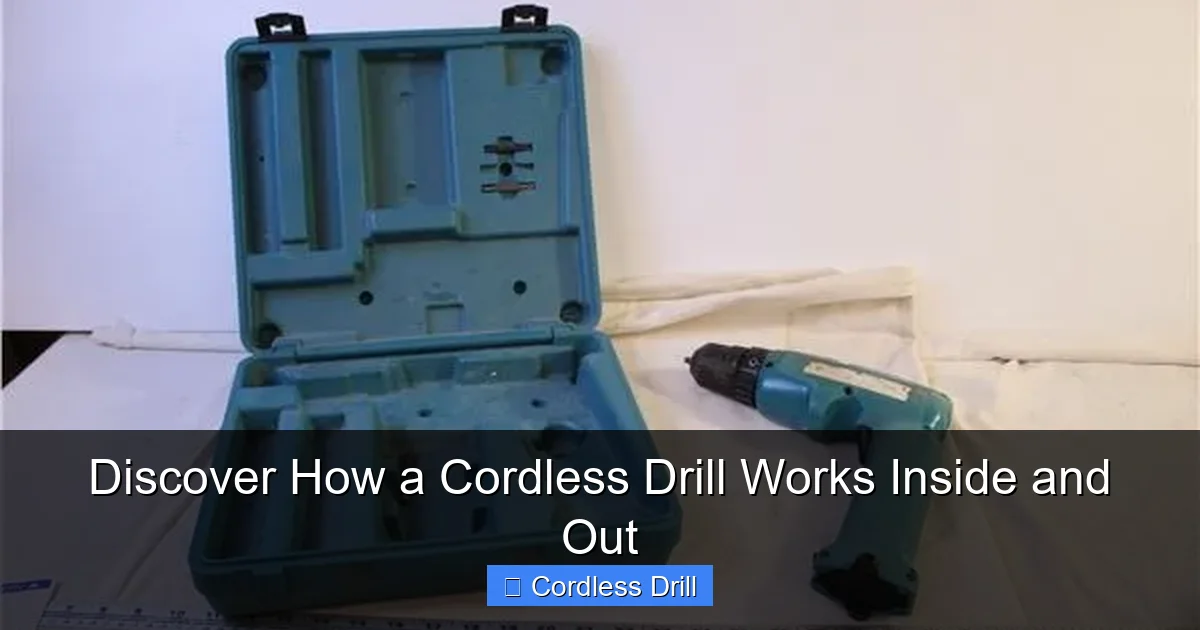
Every action starts with energy. For a cordless drill, that energy comes from the rechargeable battery pack. It’s the heart of the system.
Visual guide about Discover How a Cordless Drill Works Inside and Out
Image source: dygtyjqp7pi0m.cloudfront.net
Chemistry and Voltage
Most modern drills use Lithium-ion (Li-ion) batteries. Older models might use Nickel-Cadmium (NiCd). Li-ion batteries are lighter, hold a charge longer, and don’t have a “memory effect.” The battery’s voltage (e.g., 12V, 18V, 20V Max) tells you its electrical pressure. Think of it like water pressure in a hose. Higher voltage generally means more potential power for tougher jobs. If you’re looking for a powerful option, check out our guide on choosing the best cordless drill for your needs.
Amp-Hours and Capacity
The battery’s capacity is measured in Amp-hours (Ah). A 2.0Ah battery can deliver 2 amps of current for one hour before dying. A 5.0Ah battery can deliver 5 amps for one hour, or 2 amps for 2.5 hours. Higher Ah means longer run time between charges.
The Electrical Circuit
When you pull the trigger, you complete an electrical circuit. Stored chemical energy in the battery converts to electrical energy. This electricity flows through wires to the drill’s brain and brawn: the motor.
The Mighty Motor: From Electricity to Spin
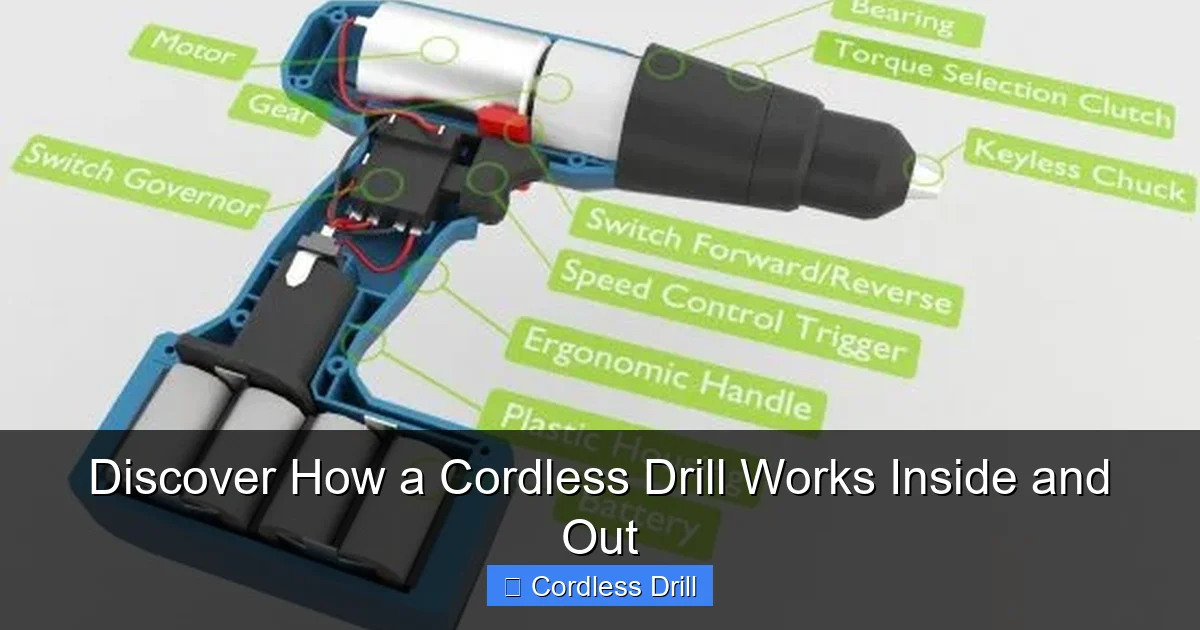
This is where the magic of conversion happens. The motor takes electrical energy and turns it into mechanical motion.
Visual guide about Discover How a Cordless Drill Works Inside and Out
Image source: artgraphic3d.com
Brushed vs. Brushless Motors
There are two main types. Brushed motors use carbon brushes that press against a spinning commutator to transfer power. They are simpler and cheaper but create friction, heat, and wear over time. Brushless motors use an electronic controller to power the motor. They are more efficient, run cooler, last longer, and offer more power in a smaller size. They are the premium choice in modern drills.
Creating Rotation (RPM)
Inside the motor, electromagnetic forces cause a central shaft (the armature) to spin at incredibly high speeds. This speed is measured in Revolutions Per Minute (RPM). A drill motor might spin at 20,000 RPM or more with no load. But that’s too fast and not strong enough for most tasks. That’s where the gears come in.
The Gear Train: Trading Speed for Strength
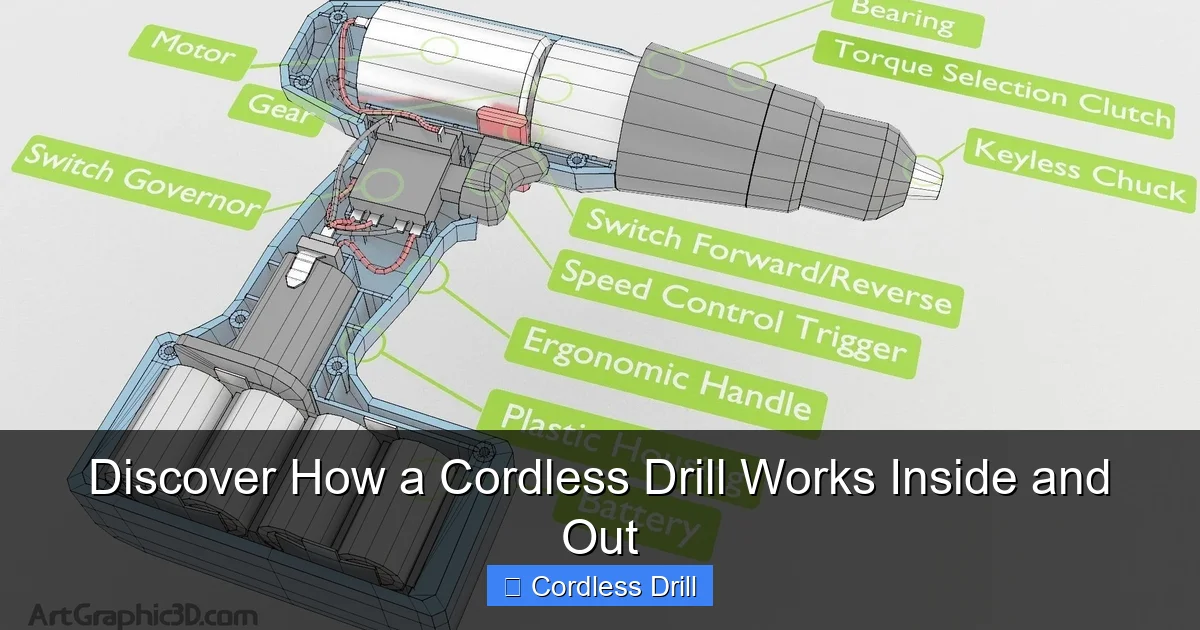
If the motor provides high-speed spin, the gearbox provides usable force. It’s a trade-off.
Visual guide about Discover How a Cordless Drill Works Inside and Out
Image source: artgraphic3d.com
Planetary Gear System
Cordless drills use a compact and efficient planetary gear system. A central “sun” gear drives multiple “planet” gears, which rotate inside a ring gear. This design is great for handling high torque in a small space.
Gear Settings (1, 2, 3)
Your drill’s numbered collar selects different gear ratios. Setting 1 (Low Gear): High torque, low speed. Perfect for driving large screws or bolts. Setting 2 (High Gear): Low torque, high speed. Ideal for drilling small holes or using spade bits. Many drills also have a hammer drill setting that adds a pounding action for masonry, which is essential knowledge for tasks like our guide on how to use a drill for screws into a wall.
The Business End: The Chuck and Clutch
This is where the drill meets the bit and your project.
The Chuck’s Job
The chuck is the three-jawed clamp at the front. Its sole purpose is to hold the drill bit or driver bit absolutely securely. Keyless chucks are tightened by hand. Keyed chucks use a special gear key for a tighter grip, often found on heavy-duty models.
The Clutch’s Genius
The numbered clutch ring is a mechanical savior. It controls a set of plates that slip past each other at a specific torque level. When driving a screw, you set the clutch to a low number. Once the screw is flush, the clutch “clicks” and disengages, stopping the bit from turning further. This prevents you from over-driving, stripping the screw head, or damaging your material. For delicate work, it’s indispensable.
Command and Control: The Trigger and Switch
You are in the driver’s seat thanks to these interfaces.
Variable Speed Trigger
The trigger isn’t just an on/off switch. The harder you press, the more electricity flows to the motor, and the faster it spins. This gives you precise control to start a hole or screw slowly, then increase speed.
Forward/Reverse Switch
This simple switch changes the polarity of the electricity sent to the motor. Reversing the current flow reverses the magnetic fields, making the motor spin backwards. This is crucial for removing screws or backing a drill bit out of a hole.
Putting It All Together: The Complete Workflow
Let’s follow the energy path from your hand to the screw head.
- Energy Storage: Chemical energy sits ready in the Li-ion battery.
- Energy Release: You pull the trigger, completing the circuit. Electricity flows.
- Energy Conversion: The motor converts electricity into high-RPM rotational motion.
- Energy Transformation: The planetary gearbox reduces the RPM and multiplies the torque.
- Energy Transfer: The spinning gear shaft engages the clutch mechanism.
- Energy Application: If torque is below the clutch setting, power transfers to the chuck, which spins the bit, drilling a hole or driving a screw.
Essential Maintenance for Longevity
Understanding how it works helps you take care of it.
Battery Care
Don’t store batteries fully depleted or fully charged for long periods. A 40-60% charge is ideal for storage. Keep them cool and dry. For more on tools and their care, explore our broader cordless drill category.
Chuck Cleaning
Over time, metal dust and grime can get in the chuck jaws. Open it fully and blow it out with compressed air occasionally.
Brush Replacement (Brushed Motors Only)
If your brushed motor sparks excessively or loses power, the carbon brushes may be worn. Many models allow for easy user replacement.
General Cleanliness
Wipe down the drill body. Keep air vents clear of dust to prevent overheating.
Troubleshooting Common Issues
Here’s how to diagnose basic problems.
- Drill Won’t Start: Check battery charge. Ensure it’s clicked fully into place. Check for debris in the battery contacts.
- Bit Keeps Slipping: Tighten the chuck more securely. For a keyless chuck, use both hands. Clean the chuck jaws and the bit shank.
- Clutch “Clicks” Immediately: The torque setting is too low for the task. Turn the clutch ring to a higher number or the drill icon.
- Drill Overheats: You may be pushing it too hard. Let it cool down. Ensure air vents are not blocked. Use a lower speed or sharper bits.
- Reduced Power: For brushed motors, check/replace brushes. For all drills, try a fresh, fully charged battery. The current battery may be aging.
Conclusion: Power in Your Hands, Knowledge in Your Mind
Your cordless drill is no longer a mysterious black box. It’s a beautifully coordinated system. The battery stores the power. The motor creates the spin. The gears make that spin useful. The clutch protects your work. And you command it all. This knowledge empowers you to select the right tool, use it effectively, maintain it properly, and troubleshoot minor issues. So next time you pick up your drill, you’ll appreciate not just what it does, but the brilliant engineering humming inside. Now go forth and build, fasten, and create with confidence.
🎥 Related Video: The Clever Mechanism That Gives Cordless Drills So Much Torque
📺 Deconstructed
In this 3D animation, we demonstrate how to use a cordless drill and take a close look at the internal mechanism to understand …