
This guide charts the complete hammer drill evolution timeline. You will learn how crude manual tools transformed into today’s high-tech cordless machines. We cover every major breakthrough, from the first electric models to brushless motors and smart features. Understand the history to choose the right tool for your project.
Key Takeaways
- The Journey from Muscle to Motor: The hammer drill evolution timeline began with pure human force, using tools like the hammer and chisel, before electricity revolutionized the concept of impact.
- Corded Power Defined an Era: The invention of the first dedicated electric rotary hammer drill in the 1930s created a new category of power tool, making masonry work significantly faster.
- Battery Freedom Was a Game-Changer: The shift from corded to cordless hammer drills, fueled by NiCad and later Lithium-ion batteries, provided unprecedented portability and changed job site logistics.
- Brushless Motors Maximized Efficiency: The adoption of brushless motor technology marked a major leap, offering more power, longer runtime, and greater durability compared to brushed motors.
- Smart Tech Enhances Control: The modern era of the hammer drill evolution timeline is defined by electronic controls, Bluetooth connectivity, and app integration, allowing for precision and data tracking.
- Ergonomics Improved Usability: Throughout the timeline, designs evolved to reduce vibration, improve balance, and lessen user fatigue, making powerful tools more comfortable to operate.
The Ultimate Hammer Drill Evolution Timeline Revealed
Have you ever looked at a modern hammer drill and wondered how we got here? That sleek, cordless tool in your hand is the result of over a century of innovation. The hammer drill evolution timeline is a story of human ingenuity. It’s about replacing brute force with smart technology.
This guide will walk you through every major milestone. You will see how simple hand tools paved the way for electric beasts. You will learn how battery technology set them free. And you will discover how computer chips made them smarter. By the end, you’ll not only know the history. You’ll also understand what makes today’s hammer drills so capable. Let’s dive into the timeline that built a modern essential.
Era 1: The Manual Age – Pre-1900s
Before electricity, “hammer drilling” was a two-step, two-tool process. This era was defined by pure physical labor. The concept was simple: apply a hammering force to drive a cutting edge into material.
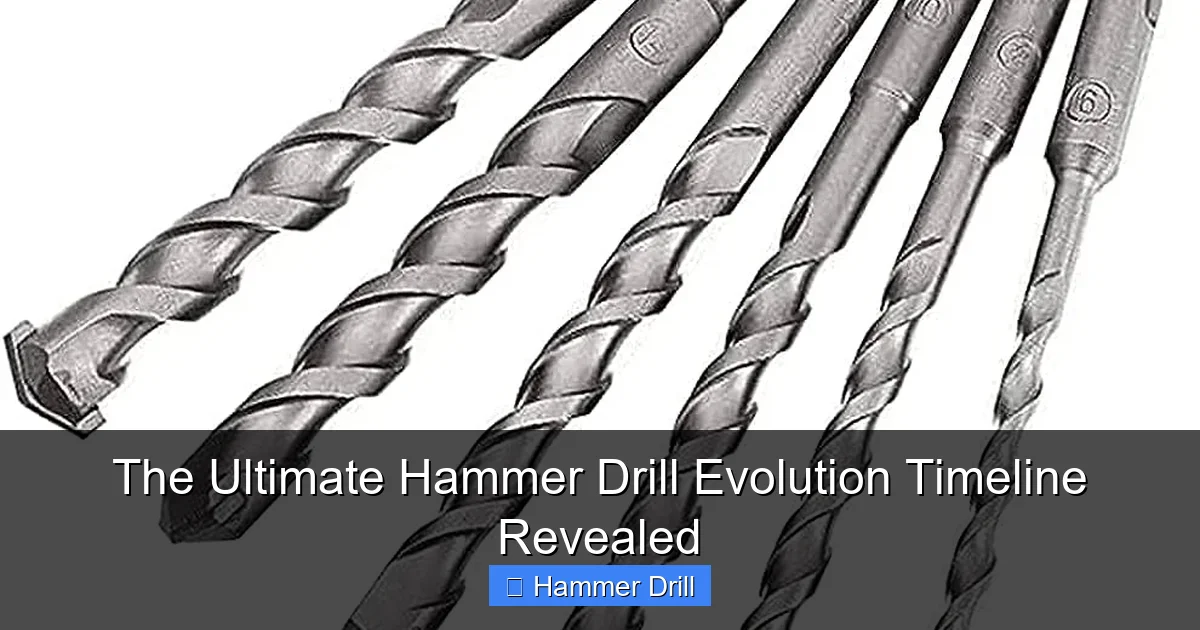
Visual guide about The Ultimate Hammer Drill Evolution Timeline Revealed
Image source: pumpstech.com.fj
The Tools of the Trade
The primary tools were the hammer and the chisel or star drill. A worker would hold a hardened steel chisel against rock or masonry. Another person (or the same one, alternating) would strike it with a heavy hammer. For very hard materials, a “star drill” – a pointed rod with a fluted end – was used. Turning it slightly between blows helped to grind away material and create a hole.
Practical Implication: This method was incredibly slow, exhausting, and produced inconsistent results. It limited the scale and speed of construction and mining. The force was entirely dependent on the user’s strength and stamina. Specialty hammers, like the sledge hammer, were often the tool of choice for delivering the heaviest blows.
Era 2: The Spark of Invention – Early 1900s
The dawn of electricity changed everything. Inventors began experimenting with ways to mechanize the hammering action. The goal was to combine rotation and percussion into one powered tool.
Visual guide about The Ultimate Hammer Drill Evolution Timeline Revealed
Image source: imgcdn.stablediffusionweb.com
The First Electric Hammer Patents
In the 1910s and 1920s, several patents were filed for “electro-pneumatic” hammers. These early devices often used an electric motor to drive a piston mechanism. This piston would then strike a chisel or drill bit. They were bulky, often required an external air compressor, and were far from portable. However, they proved the concept: machines could effectively deliver rapid, repetitive impact.
Key Innovation: The separation of the power source (electricity) from the user’s muscle. This was the foundational idea for the entire hammer drill evolution timeline.
Era 3: Birth of the Modern Hammer Drill – 1930s to 1960s
This era saw the transition from experimental machines to dedicated, commercially available power tools. The rotary hammer drill, as we recognize it, was born.
Visual guide about The Ultimate Hammer Drill Evolution Timeline Revealed
Image source: suneuropa.com
The First True Rotary Hammer
In 1932, the German company Bosch is widely credited with introducing the first portable, electric “hammer drill.” The Bosch “Bulldog” was a breakthrough. It integrated an electropneumatic hammering mechanism and a rotary drill function into a single, hand-held unit. This meant one tool could both spin and punch the drill bit into masonry.
Practical Implication: Speed and efficiency increased dramatically. Tasks that took hours with a hammer and chisel could now be done in minutes. This revolutionized construction, particularly for installing utilities and anchors in concrete and stone.
The Rise of Corded Dominance
For decades, the corded rotary hammer was the professional standard. They were powerful, reliable, and durable. Brands like Bosch, Hilti, and Makita refined the designs. They improved the piston mechanisms, introduced vibration damping, and developed specialized carbide-tipped drill bits. The core technology was electro-pneumatic: an electric motor drove a crank that moved a piston, creating the hammering action.
Tip for Users Today: Understanding this heritage is key. If you’re ever confused about tool types, our guide on the difference between a drill and a hammer drill explains these core functions clearly.
Era 4: Cutting the Cord – The 1970s to 1990s
The next seismic shift in the hammer drill evolution timeline was portability. Being tethered to an outlet limited where these tools could be used.
Early Battery Experiments (NiCad Era)
The first cordless drills appeared in the 1960s and 70s, but they were weak. Nickel-Cadmium (NiCad) battery technology was heavy and had low energy density. Early cordless “hammer drills” were often just standard drills with a crude hammering function (a “hammer drill” action, not a true rotary hammer). They struggled with hard masonry. However, they created a new market for light-duty and DIY users.
The DIY Boom and Tool Accessibility
As battery technology slowly improved, cordless combi-drills (drill/driver/hammer drill) became popular for home use. They were good enough for drilling a few holes in brick or block for a shelf. This era made the hammer function accessible to millions of non-professionals. It blurred the lines, making it more important than ever to know the difference between a hammer drill and regular drill before buying.
Era 5: The Lithium-Ion Revolution – Late 1990s to 2010s
This is perhaps the most significant leap since electrification itself. The introduction of Lithium-ion (Li-ion) batteries changed all the rules for cordless tools.
Power Meets Portability
Li-ion batteries were lighter, more powerful, had no memory effect, and charged faster than NiCad. Suddenly, cordless hammer drills and rotary hammers could rival the power of their corded ancestors. Professionals began switching to cordless systems in droves for their convenience and improving performance.
The Brushless Motor Breakthrough
Coupled with Li-ion batteries was the adoption of brushless motor technology. Unlike traditional brushed motors, brushless motors have no physical contacts that wear out. They are more efficient, generating more power and torque from the same battery charge. They also run cooler and last much longer. This combination of Li-ion and brushless motors defined the high-end of the hammer drill evolution timeline for a decade.
Practical Implication: A modern brushless cordless hammer drill can often outperform a mid-range corded model from the 1990s. This allowed for complete cordless job sites.
Era 6: The Smart Tool Era – 2010s to Present
The latest chapter isn’t about more raw power. It’s about more intelligence, control, and connectivity. The tool is becoming a data point.
Electronic Precision Controls
Microprocessors are now standard in advanced hammer drills. They manage power delivery to prevent overload, control speed with extreme precision, and offer multiple impact settings. Some tools have electronic kickback control and active torque management for safety.
Connectivity and Ergonomics
Bluetooth and tool-tracking apps now let users customize tool settings, monitor battery health, and even locate a lost tool. Ergonomic design has also peaked, with advanced anti-vibration systems, better weight distribution, and LED lights becoming standard. When choosing a modern tool, looking at a curated list of the best cordless drill models is a great way to see these features in action.
The Future: Integration and Automation
We are seeing the beginnings of deeper integration. Imagine a hammer drill that, via an app, knows the exact diameter and depth of the anchor you’re installing and automatically sets itself. Or one that can connect to a dust extraction system automatically when it starts. The line between tool and connected device is fading.
How to Use This Timeline When Buying a Hammer Drill
History is useful because it helps you make better choices today. Here’s how to apply the hammer drill evolution timeline.
Identify Your Era of Need
For Occasional Brick/Block: A modern cordless combi-drill with a hammer function (Era 5/6 tech) is likely sufficient. It’s the descendant of the early DIY tools but vastly more capable.
For Serious Concrete Work: You need a true rotary hammer, the direct descendant of the 1930s Bulldog. Choose a corded model for stationary, high-demand work or a high-voltage Li-ion brushless cordless model for general professional use.
For Precision and Control: Look for the smart features of Era 6: electronic controls, multiple modes, and advanced ergonomics.
Prioritize the Right Innovations
Don’t pay for tech you won’t use. A DIY user doesn’t need Bluetooth. A professional will benefit hugely from brushless motors and high-capacity Li-ion batteries. Let the timeline guide your budget to the most relevant era of technology for your tasks.
Conclusion: From Rock to Robotics
The hammer drill evolution timeline is a powerful story of progress. We moved from the sweat of swinging a claw hammer against steel, to the intelligent push of a button on an electronically controlled machine. Each era built on the last, solving the core problems of force, portability, efficiency, and control.
Today, you hold the cumulative knowledge of over a century of engineering in your hands. Whether you’re drilling a hole for a simple wall plug or anchoring a heavy structure, you’re using a tool with a rich history. Understanding that history gives you the knowledge to choose the right tool, use it effectively, and appreciate the incredible engineering that makes modern construction possible. The timeline isn’t finished. The next era of smarter, more connected, and more sustainable tools is already being written.
🎥 Related Video: WATCH THIS NOW!!! MILWAUKEE VS DEWALT VS MAKITA #basictools #tools #goodtools
📺 Solar_with_Akande
