
A hammer drill is a powerhouse tool that combines rotation with a rapid hammering action. This guide breaks down its essential benefits, showing you why it’s a must-have for concrete, brick, and stone work. You’ll learn how it saves time, reduces effort, and outperforms a regular drill, making tough tasks simple for any DIYer or professional.
Are you staring at a concrete wall, wondering how to hang that new shelf? Have you ever burned out a drill bit—or your patience—trying to make a simple hole in brick? There’s a tool that turns this struggle into a smooth, quick job. It’s called a hammer drill. This guide will walk you through all the incredible benefits of owning and using a hammer drill. By the end, you’ll see it’s not just another power tool; it’s a game-changer for your home projects and repairs.
We’ll explore what makes it unique, the specific problems it solves, and how it can save you time, money, and a lot of frustration. Let’s drill into the details!
Key Takeaways
- Master Masonry with Ease: The hammering action pulverizes hard material, allowing you to drill into concrete, brick, and stone effortlessly where a regular drill would fail.
- Unmatched Speed and Efficiency: Projects that would take ages with a standard drill are completed in a fraction of the time, dramatically increasing your productivity.
- Superior Versatility: Most hammer drills function as a standard drill and sometimes as a screwdriver, making it a versatile 3-in-1 tool for your entire project.
- Reduces User Fatigue and Tool Strain: The tool does the hard pounding work for you, requiring less physical force and putting less strain on the motor compared to forcing a regular drill.
- Professional-Quality Results: Creates clean, precise holes in hard materials, ensuring secure anchor points for shelves, TV mounts, and structural elements.
- Essential for Modern DIY and Construction: From installing safety railings to building a deck foundation, it’s the key tool for any project involving solid walls or floors.
Step 1: Understanding the Core Benefit – The Hammering Action
First, you must grasp how a hammer drill works. It’s the secret to all its power.
A standard drill only spins. It’s great for wood and driving screws. But against concrete, it just grinds slowly. A hammer drill does two things at once: it rotates and hammers.
How the Mechanism Works
Inside the tool, a special mechanism pushes the drill bit forward in tiny, rapid pulses while it spins. Imagine using a regular drill and tapping the back with a hammer as it turns. The hammer drill automates this action at high speed—thousands of blows per minute.
This hammering action pulverizes the hard material directly in front of the bit’s tip. The rotation then clears away the dust. This combo lets the bit chew through masonry like it’s butter.
Step 2: Discover the Top Practical Benefits for Your Projects
Now, let’s translate that mechanism into real-world advantages you can count on.
Visual guide about Discover the Essential Benefits of Hammer Drill Today
Image source: roboinstruction.com
Benefit 1: Effortless Drilling into Hard Materials
This is the headline benefit. With a hammer drill, you can confidently tackle:
- Concrete (foundations, walls, floors)
- Brick (exterior and interior walls)
- Stone (natural stone veneers, slabs)
- Cinder Block and Mortar
Tasks like installing a wall anchor for a heavy shelf, putting up a curtain rod in a brick facade, or securing a deck to a concrete patio become straightforward. Without a hammer drill, these jobs range from extremely difficult to impossible.
Benefit 2: Dramatically Increased Speed and Productivity
Time is precious. A hole that might take 2-3 minutes of sweating and straining with a regular drill can take 10-15 seconds with a hammer drill. When you have a dozen holes to drill for a project, that’s the difference between an hour of grueling work and five minutes of easy work. This speed boost is a massive benefit for renovation projects or any professional trade.
Benefit 3: Exceptional Versatility and Value
Most modern hammer drills are “combination” or “hammer drill/drivers.” They have a switch or dial to select between three modes:
- Drill-Only Mode: Acts like a standard drill for wood, metal, or plastic.
- Hammer Drill Mode: Engages the hammer mechanism for masonry.
- Driver Mode: Used for driving and removing screws (common on cordless models).
This means one tool can do about 95% of the drilling and fastening tasks in your home. It replaces the need for multiple single-purpose tools. For help choosing the best versatile model, see our guide on the best cordless drill options, many of which include hammer functionality.
Benefit 4: Reduced Physical Effort and Tool Wear
Because the tool is doing the pounding, you’re mostly just guiding it. You don’t need to lean your full body weight into it. This reduces fatigue, especially on large projects. It also prevents the dangerous “binding” and kickback you might get from forcing a standard drill.
Furthermore, it’s actually better for the tool. Running a standard drill at high load on concrete can overheat and burn out the motor. A hammer drill is specifically engineered for this task, so it works efficiently within its design limits.
Benefit 5: Cleaner, More Precise Holes
The efficient hammer-and-rotate action creates a cleaner hole with less cracking or chipping around the edges compared to a struggling standard drill. This is crucial for aesthetics and for ensuring anchors and fittings sit securely.
Step 3: How to Choose and Use a Hammer Drill to Maximize Benefits
To get these benefits, you need the right tool and technique.
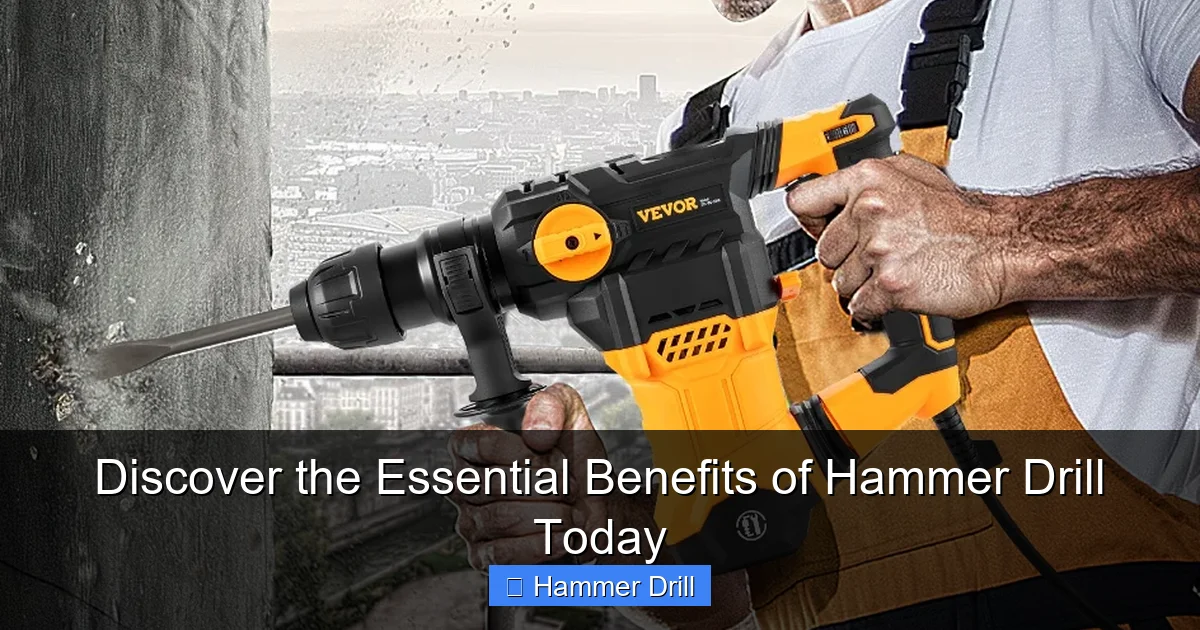
Visual guide about Discover the Essential Benefits of Hammer Drill Today
Image source: diy-ideas.oss-accelerate.aliyuncs.com
Selecting Your Hammer Drill
Consider power (corded for heavy-duty, cordless for convenience), speed settings, and ergonomics. For most DIYers, a mid-range cordless combi-drill is perfect. Remember, it’s different from an impact driver and hammer drill, which is a crucial distinction for your toolkit.
Essential Tips for Effective Use
- Use Masonry Bits: Always use carbide-tipped masonry bits. Regular bits will be destroyed.
- Start Slow: Begin at a low speed to create a pilot dimple and prevent the bit from walking.
- Apply Steady, Moderate Pressure: Let the tool do the work. Don’t force it.
- Clear Dust Frequently: Pull the bit out partially every 10-15 seconds to clear dust from the hole. This keeps the bit cool and allows it to cut more effectively.
- Use a Depth Stop: If your drill has one, use it to ensure all your holes are a consistent depth for anchors.
Step 4: Troubleshooting Common Misconceptions
Let’s clear up some frequent questions and issues.

Visual guide about Discover the Essential Benefits of Hammer Drill Today
Image source: gympros.com
“Can’t I just use my regular drill?” For one or two small holes in soft brick, you might get away with it. For anything serious, no. You risk damaging your drill, the bit, and the material. Understand the full difference between a drill and a hammer drill to avoid this mistake.
“My hammer drill seems slow in wood.” You likely have it in hammer mode! Always switch back to “drill-only” mode for wood, metal, or driving screws. The hammer mechanism should only be engaged for masonry.
“The bit isn’t digging in.” First, check you’re in hammer mode. Second, ensure you’re using a sharp masonry bit. Dull bits will just spin and polish the concrete. Third, apply firm, steady pressure.
Conclusion: Why a Hammer Drill is an Essential Investment
The benefits of a hammer drill are clear and substantial. It transforms intimidating, labor-intensive tasks into quick, manageable jobs. It expands the scope of what you can confidently DIY, from simple picture hanging on plaster-over-brick to building a garden wall or installing outdoor lighting.
It’s a tool that pays for itself in saved time, reduced frustration, and professional-quality results. Whether you’re a homeowner looking to tackle renovations or a hobbyist expanding your workshop capabilities, adding a hammer drill to your arsenal is a smart, powerful move. Stop struggling with the wrong tool. Discover the essential benefits of a hammer drill for yourself, and unlock a new level of project potential today.
🎥 Related Video: Hammer Drill vs Rotary Hammer: Which to Use?
📺 4thewin
Discover the best drill for the job! We explore when to use a hammer drill vs. a rotary hammer drill for various projects. Learn the …
