This guide teaches beginners everything about cordless drill essential features for 2024. You’ll learn how batteries, motors, and key functions affect performance so you can pick the right tool. We break down complex specs into simple terms with practical tips for your first DIY projects.
Key Takeaways
- Battery voltage determines power: 12V is light-duty, 18V/20V handles most projects, while 40V+ is for heavy construction work.
- Brushless motors last longer: They’re 30% more efficient, save battery life, and require less maintenance than brushed motors.
- Adjustable clutch is crucial: This feature prevents stripping screws and damaging materials by setting torque limits.
- Keyless chuck saves time: 1/2-inch chucks accept most bits and allow quick changes without tools.
- LED work lights help in dark spaces: Built-in lights illuminate your project area for better accuracy.
- Weight matters for comfort: Lighter drills reduce fatigue during extended use, especially overhead work.
- Hammer function adds versatility: Not all drills have it, but it’s essential for drilling into masonry and concrete.
Welcome to Your First Cordless Drill: A Complete Feature Guide
You’re holding a cordless drill for the first time. Maybe you’re staring at a confusing wall of options at the hardware store. Volts, RPMs, brushless, clutch settings—what does it all mean? Don’t worry. This guide cuts through the jargon and shows you exactly which cordless drill essential features matter most for beginners in 2024.
By the end, you’ll confidently choose your first drill, understand how to use every feature, and avoid common mistakes that frustrate new users. We’ll walk through each component step by step, with real-world examples you can apply today.
Understanding Battery Technology: Your Drill’s Power Source
The battery is the heart of any cordless drill. Without understanding battery features, you’ll end up with a tool that dies mid-project. Let’s break down what you need to know.
Visual guide about Cordless Drill Essential Features Guide for Beginners 2024
Image source: i.etsystatic.com
Voltage: How Much Power Do You Really Need?
Voltage (V) measures electrical power. Think of it like engine size in a car. For beginners, here’s the simple breakdown:
- 12V drills: Perfect for light tasks like assembling furniture or hanging pictures. They’re lightweight but struggle with tough materials.
- 18V/20V drills: This is the sweet spot for most DIYers. They handle wood, metal, plastic, and even some masonry work. Most cordless drill essential features lists recommend starting here.
- 40V+ drills: These are for professional construction work. They’re overkill for beginners and much heavier.
Practical tip: If you plan to drill into anything harder than drywall, choose at least 18V. This gives you room to grow without upgrading soon.
Amp-Hour Rating: Runtime Explained
Amp-hours (Ah) tell you how long your battery lasts. A 2.0Ah battery runs half as long as a 4.0Ah battery under the same load. For weekend DIYers, a 2.0Ah battery works fine. If you plan longer projects, grab a 4.0Ah or 5.0Ah battery.
Important: Always buy a drill that comes with at least two batteries. One charges while you use the other. This prevents frustrating delays.
Battery Chemistry: Lithium-Ion vs. Older Types
All quality cordless drills in 2024 use lithium-ion batteries. They’re lightweight, hold charge longer, and have no memory effect. Avoid nickel-cadmium (NiCd) batteries—they’re outdated and heavier.
Pro tip: Check if the battery is compatible with other tools from the same brand. Many manufacturers share batteries across their entire line, saving you money long-term.
Motor Types: Brushed vs. Brushless
Your drill’s motor converts battery power into rotational force. The type of motor affects performance, lifespan, and cost.
Visual guide about Cordless Drill Essential Features Guide for Beginners 2024
Image source: i.ytimg.com
Brushed Motors: The Budget Option
Brushed motors use physical contacts to transfer electricity. They’re cheaper but have downsides:
- Less efficient (wastes power as heat)
- Require regular maintenance
- Shorter lifespan (typically 500-1,000 hours)
- Heavier for the same power output
For a beginner doing occasional projects, a brushed drill works. But you’ll outgrow it faster.
Brushless Motors: The Smart Investment
Brushless motors use electronic controllers instead of physical brushes. The benefits are clear:
- 30% more efficient: Your battery lasts longer between charges
- Longer lifespan: Often 2,000+ hours of use
- Better performance: More torque at lower speeds
- Less maintenance: No brushes to replace
Most cordless drill essential features guides now recommend brushless as the standard. Yes, they cost more upfront, but you’ll save money and frustration over time. For 2024, this is the technology to choose.
Speed Settings and Control Features
Speed control determines what materials you can work with and how precise your work will be. Don’t overlook these features.
Visual guide about Cordless Drill Essential Features Guide for Beginners 2024
Image source: vocabularyan.com
Variable Speed Trigger: Your Precision Control
The trigger controls speed based on how far you press it. Light pressure = slow speed. Full pressure = maximum speed. This is crucial for:
- Starting screws without stripping them
- Drilling small holes in delicate materials
- Controlling bit speed in different materials
Try this: Practice on scrap wood. Learn how little pressure you need for different tasks. This muscle memory prevents costly mistakes.
Speed Selector Gears: Two or Three Speeds?
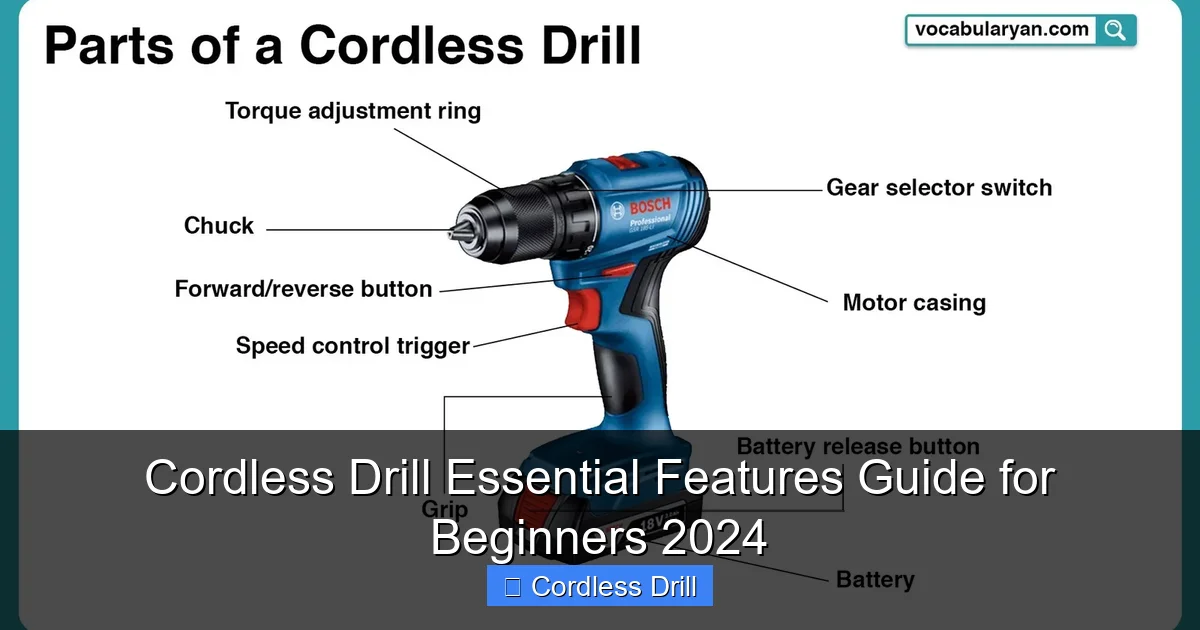
Most drills have a gear selector switch near the trigger. Here’s what they do:
- Low gear (1-500 RPM): High torque for driving screws and large drill bits
- High gear (500-1,500 RPM): Faster drilling into wood and metal
- Three-speed models: Add a middle gear for more control
For beginners, two speeds are sufficient. Three speeds offer more precision but cost more.
Adjustable Clutch: Prevent Stripping Screws
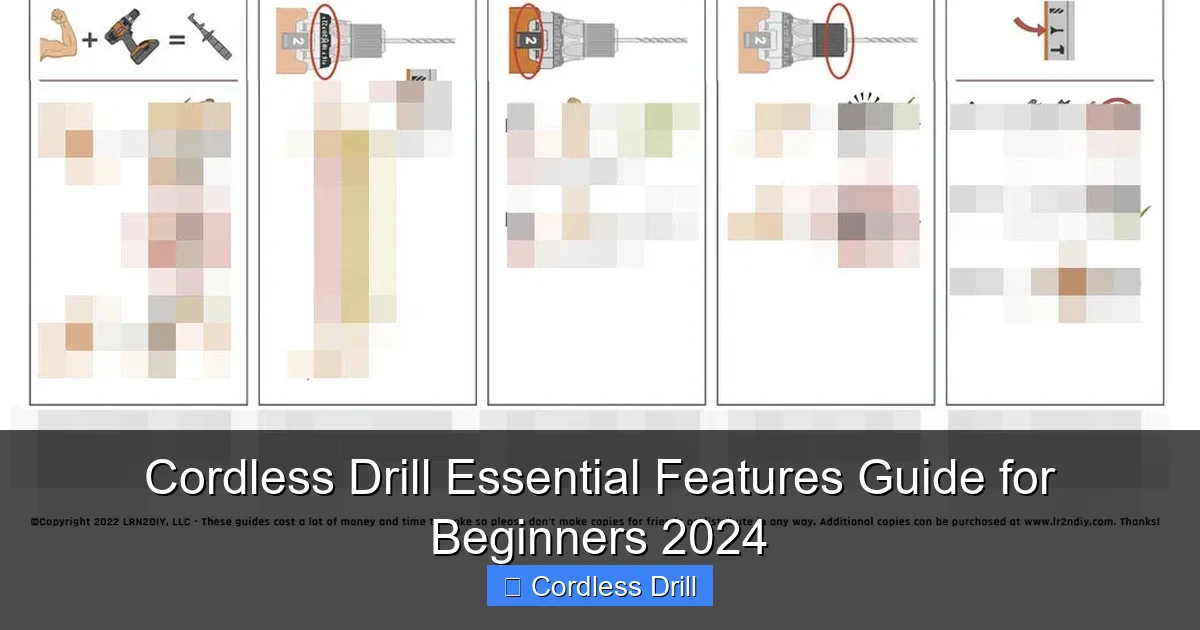
The clutch is the numbered collar behind the chuck. It limits torque to prevent overdriving screws. This is one of the most important cordless drill essential features for beginners.
How to use it:
- Start with a low number (5-10) for soft materials
- Increase the number for harder materials or larger screws
- Test on scrap material first
- When the clutch slips, you’ve reached the set torque limit
Real example: When assembling a bookshelf, set the clutch to 8. This prevents sinking screws too deep into particle board.
Chuck Size and Bit Changing Systems
The chuck holds your drill bits and driver bits. This simple component can make or break your experience.
Chuck Size: 3/8-Inch vs. 1/2-Inch
Chuck size determines the maximum bit shank diameter you can use:
- 3/8-inch chuck: Accepts bits up to 3/8″ diameter. Good for light-duty work.
- 1/2-inch chuck: Accepts bits up to 1/2″ diameter. Handles all standard bits and larger accessories.
Recommendation: Choose a 1/2-inch chuck. It’s the most versatile option and works with every standard drill bit you’ll ever need.
Keyless Chuck: Tool-Free Bit Changes
Older drills required a key to tighten the chuck. Modern drills use keyless systems:
- Single-sleeve chuck: Twist the sleeve to open/close. Fastest system.
- Two-sleeve chuck: Hold one sleeve while twisting the other. More grip but slower.
Pro tip: Practice changing bits with one hand. A good keyless chuck lets you do this easily. This matters when you’re on a ladder or holding a workpiece.
Ergonomics and Design Features
How a drill feels in your hand affects accuracy, fatigue, and safety. These features matter more than you think.
Weight and Balance: Don’t Underestimate Comfort
A heavy drill causes arm fatigue during extended use. Consider:
- Bare tool weight: Usually 2.5-4.5 lbs without battery
- With battery: Add 0.5-1.5 lbs depending on battery size
- Balance: The drill should feel balanced, not nose-heavy
Test before buying: Hold the drill with a battery inserted. Pretend to drill overhead for 30 seconds. If your arm tires quickly, choose a lighter model.
Handle Design and Grip
The handle should fit your hand comfortably:
- Pistol grip: Most common. Natural hand position for most tasks.
- T-handle: Better for precision work and control.
- Rubber overmold: Reduces vibration and provides slip resistance
For beginners: A pistol grip with rubber overmold is the best starting point. It works for 90% of home projects.
LED Work Light: See Your Work Clearly
Almost all modern drills include an LED light. But not all are equal:
- Position: Should shine directly on the work area, not on your hand
- Brightness: Test it in a dim room
- Activation: Usually turns on automatically with the trigger
This feature is non-negotiable for beginners. You’ll drill more accurately in garages, basements, and closets where lighting is poor.
Additional Features That Add Versatility
Beyond the basics, these features expand what your drill can do. Some are essential, others are nice-to-have.
Hammer Function: Drilling into Masonry
Not all cordless drills have hammer mode. If you need to drill into concrete, brick, or stone, you must get one with this feature.
How it works: A hammer drill has a special mechanism that pounds the bit while it rotates. This breaks up hard materials as you drill.
When you need it: Installing anchors in concrete, running wires through exterior walls, or mounting heavy items to masonry.
Alternative: If you rarely drill into masonry, you can rent a hammer drill for specific projects. But if it’s a frequent need, buy one with this feature.
For more details on when you need a hammer function, check out our guide on the difference between a drill and a hammer drill.
Belt Hook and Bit Storage
A belt hook lets you clip the drill to your tool belt or pants. This keeps both hands free when you’re climbing ladders or moving around.
Some drills include a bit holder on the base or side. This stores your most-used driver bits for quick access.
Real-world benefit: When you’re on a ladder installing shelves, you can grab your drill, climb, and have it ready without digging through a toolbox.
Smart Features for 2024
Newer drills include Bluetooth connectivity and companion apps. These let you:
- Track battery usage and charging cycles
- Adjust torque settings digitally
- Log maintenance schedules
For most beginners, these features are unnecessary. Focus on core performance instead.
Troubleshooting Common Cordless Drill Issues
Even the best drills have problems. Here’s how to fix the most common issues beginners face.
Battery Won’t Hold Charge
If your battery dies quickly or won’t charge:
- Check for dirty battery contacts. Wipe them with a dry cloth.
- Ensure you’re charging at room temperature. Batteries won’t charge in extreme cold or heat.
- Try the other battery if you have two. This isolates whether it’s the battery or charger.
- Replace batteries after 2-3 years or 500 charge cycles.
Prevention tip: Store batteries at 50% charge in a cool, dry place. Never leave them on the charger indefinitely.
Drill Won’t Turn On
No power when you pull the trigger? Try this:
- Ensure the battery is fully seated. Listen for a click.
- Check for a safety lock button that needs to be released.
- Inspect the trigger switch for debris or damage.
- Test the battery in another tool if possible.
If none work, the trigger switch may be faulty. Contact the manufacturer for warranty service.
Chuck Won’t Tighten Properly
Bits slipping in the chuck is dangerous and frustrating:
- Clean the chuck and bit shank. Oil or debris prevents proper grip.
- Ensure the bit is inserted fully into the chuck.
- Tighten the chuck by twisting it firmly with both hands.
- Check for worn chuck jaws. If they’re rounded, replace the chuck.
Important: Always unplug the battery before changing bits. This prevents accidental starts.
Overheating Motor
If your drill gets too hot to touch:
- Stop using it immediately. Let it cool for 15-20 minutes.
- Check for blocked ventilation holes. Clean them with compressed air.
- Avoid continuous heavy use. Let the motor rest every few minutes.
- Ensure you’re using the correct speed and gear for the task.
Persistent overheating indicates a motor problem. Have it serviced.
Putting It All Together: Your First Drill Purchase
Now that you understand cordless drill essential features, here’s what to look for when buying your first drill:
- Budget: $100-150 gets you a quality 18V brushless drill with two batteries.
- Brand: Choose major brands (DeWalt, Milwaukee, Makita, Ryobi) for better support and battery compatibility.
- Kit vs. Bare Tool: Buy a kit with batteries and charger. It’s better value.
- Warranty: Look for at least a 3-year warranty on the tool and 2-year warranty on batteries.
Recommended starter setup: 18V/20V brushless drill, 2.0Ah battery for portability, 4.0Ah battery for longer runtime, 1/2-inch keyless chuck, adjustable clutch, LED light, and hammer function if you might drill into masonry.
For more help choosing, see our roundup of the best cordless drills for different needs and budgets.
Conclusion: Master Your Drill Features for Success
Understanding cordless drill essential features transforms you from a confused beginner to a confident DIYer. The battery voltage, motor type, speed controls, and ergonomics all work together to determine what you can accomplish.
Remember: Start with 18V, choose brushless, prioritize a good clutch, and never skip the LED light. These features give you the most versatility for home projects without overwhelming complexity.
Your drill is a long-term investment. Take time to learn each feature. Practice on scrap materials. Read the manual. And when you’re ready to tackle your first real project, check out our comprehensive guide on using a drill for screws into a wall to apply these features safely and effectively.
With the right knowledge, your cordless drill will handle everything from hanging curtains to building decks. That’s real power in your hands.