
This guide takes you through the fascinating evolution of the cordless drill, from its humble beginnings to today’s high-tech powerhouses. You’ll discover key milestones, battery breakthroughs, and what the future holds for these essential tools. Whether you’re a DIY enthusiast or professional, understanding this history helps you appreciate the technology in your hands.
Key Takeaways
- First Cordless Drill: The Black & Decker 1961 prototype was heavy and weak, but started it all
- NiCad Dominance: Nickel-Cadmium batteries powered drills for decades despite memory effect issues
- Lithium-Ion Revolution: 2005 brought lighter, more powerful cordless drills with no memory effect
- Voltage Milestones: Power jumped from 7.2V to 20V+ mainstream, with 12V and 18V becoming sweet spots
- Brushless Motors: Digital age innovation that doubled motor life and improved efficiency dramatically
- Smart Features: Modern cordless drills now include Bluetooth, LED lights, and battery management systems
- Future Trends: Solid-state batteries and AI integration promise to reshape cordless drill technology by 2030
Introduction: Why Cordless Drill History Matters
Think about the last time you grabbed your cordless drill. Did you wonder how this amazing tool became so powerful and portable? The journey from clunky prototype to sleek modern powerhouse spans over six decades of innovation. This guide walks you through every major breakthrough, helping you understand the technology that drills into your walls today. You’ll learn about battery revolutions, motor improvements, and the engineering feats that made cordless drills the indispensable tools they are now.
By the end, you’ll know exactly what to look for in your next purchase and why certain features matter more than others. Plus, you’ll impress your friends with trivia about the first cordless drill ever made!
The Dawn of Cordless: Early Prototypes and Innovations
The story begins in the early 1960s when power tools were still tethered to wall outlets. Engineers dreamed of freedom from cords, but battery technology couldn’t deliver. The first attempts were more proof-of-concept than practical tools.
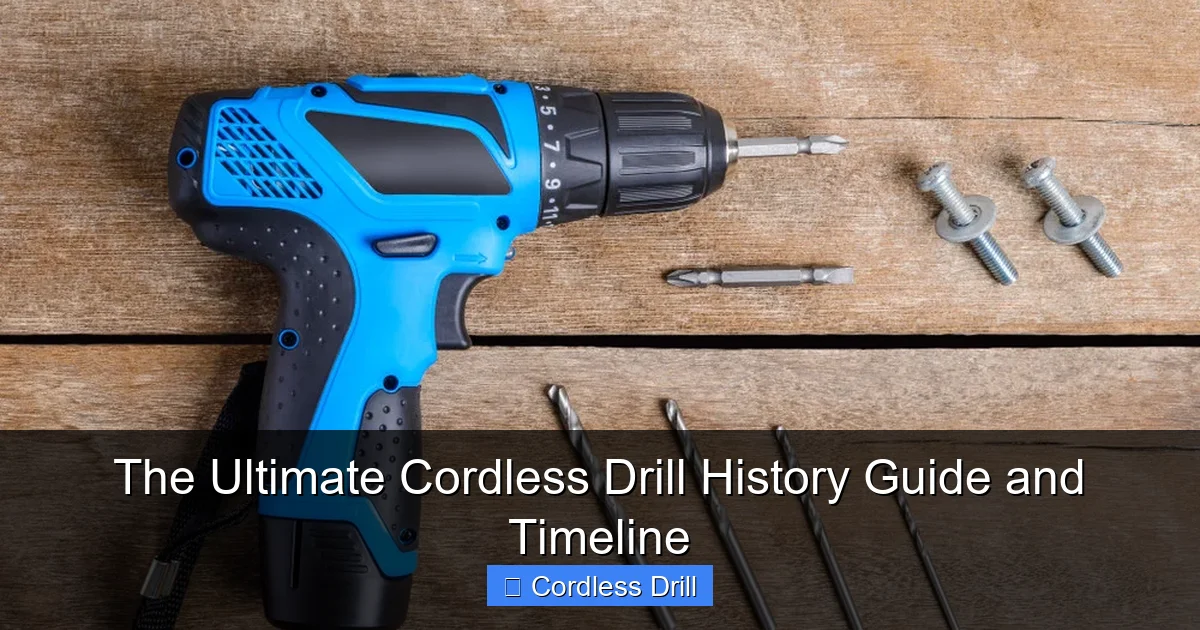
Visual guide about The Ultimate Cordless Drill History Guide and Timeline
Image source: greenbuildinginsider.com
The First Cordless Drill (1961)
Black & Decker introduced the world’s first cordless drill in 1961. It ran on a 7.2-volt nickel-cadmium battery, which was cutting-edge for its time. The drill weighed nearly 10 pounds—more than some modern hammer drills! It delivered barely enough power to drive screws into soft wood. Professionals laughed at it. DIYers found it more frustrating than useful.
Still, this clunky tool proved one thing: portable power was possible. The company sold a few thousand units, mostly to curious homeowners who wanted to try the future. The design team kept refining their creation, knowing better batteries would eventually arrive.
Limitations of Early Models
Early cordless drills suffered from three major problems. First, the batteries were heavy and drained quickly. Second, the motors were inefficient and overheated after minutes of use. Third, the chargers were slow—overnight charging for just 30 minutes of work.
These issues meant cordless drills remained niche products through the 1970s. Professionals stuck with corded models for good reason. The tools simply couldn’t handle heavy-duty tasks like drilling through concrete or driving long screws into studs.
The Nickel-Cadmium Revolution: Powering the 1980s and 1990s
By the early 1980s, battery chemistry improved enough to make cordless drills viable. Nickel-Cadmium (NiCad) batteries became the standard. They offered better energy density and could handle higher current draws. This era transformed cordless drills from novelties to real tools.

Visual guide about The Ultimate Cordless Drill History Guide and Timeline
Image source: handymantips.org
Power and Affordability in the 1980s
Voltage jumped from 7.2V to 9.6V and then 12V during this period. A 12-volt cordless drill could now handle most household tasks. Weight dropped below 6 pounds. Prices fell from over $200 (in 1980s dollars) to under $100, making them accessible to average homeowners.
Major brands like Makita, DeWalt, and Milwaukee entered the market. They introduced interchangeable battery packs, a game-changing feature. Users could buy one drill and a spare battery. While one charged, the other worked. This solved the downtime problem that plagued early models.
The Memory Effect Problem
NiCad batteries had a frustrating flaw called “memory effect.” If you recharged them before they fully discharged, they “remembered” the shorter cycle. Over time, this reduced runtime dramatically. Users learned to drain batteries completely before plugging them in.
This maintenance requirement annoyed many owners. It also meant carrying multiple batteries on job sites. Despite these issues, NiCad remained king because no better alternative existed. The 1990s saw refinement rather than revolution. Charges got faster, and battery packs became more reliable.
Lithium-Ion Changes Everything: The 2000s and Beyond
The introduction of lithium-ion batteries in consumer tools around 2005 marked the biggest shift since the first cordless drill. These batteries offered three huge advantages: lighter weight, more power, and no memory effect.

Visual guide about The Ultimate Cordless Drill History Guide and Timeline
Image source: clipartmax.com
The Game Changer Arrives
Early lithium-ion cordless drills appeared in 2005, but they were expensive. By 2010, prices dropped enough for mass adoption. A typical lithium-ion battery weighed 40% less than an equivalent NiCad pack. Runtime increased by 30-50% on a single charge.
Most importantly, users could recharge anytime. No more waiting for full discharge. Partial charges didn’t harm the battery. This convenience factor made cordless drills truly practical for professionals who needed reliability.
Advantages Over NiCad
Lithium-ion batteries maintain voltage throughout the discharge cycle. A cordless drill starts strong and stays strong until the battery dies. NiCad batteries gradually lose power, making the tool feel weaker as you work.
They also charge much faster. Modern chargers can refresh an 18-volt lithium pack in 30-45 minutes. Some even offer quick-charge modes that give you 20 minutes of runtime from a 10-minute charge. This changed how contractors work on job sites.
Another benefit: lithium-ion batteries last longer. Most now provide 500-1000 charge cycles before significant capacity loss. That’s 3-5 years of heavy use. Some premium models even include battery management systems that monitor individual cells for optimal performance.
Key Milestones Timeline: Decade-by-Decade Breakdown
Let’s look at the specific milestones that shaped your cordless drill’s evolution.
The 1960s: The Dream Begins
1961: Black & Decker introduces the first cordless drill. It’s a 7.2V NiCad model that barely works but proves the concept. 1968: The company releases an improved version with better battery seals, but sales remain modest. The market just isn’t ready for such an expensive, limited tool.
The 1970s: Slow Progress
1972: Makita enters the cordless market with a 7.2V drill. It’s slightly lighter but still underpowered. 1979: Hitachi introduces the first 9.6V model, showing the industry that higher voltage is the path forward. Professionals still ignore cordless drills for serious work.
The 1980s: The Real Revolution
1983: Milwaukee launches the “Screwdriver,” a dedicated 9.6V model that finds a niche in assembly work. 1987: DeWalt enters with a 12V system that finally competes with corded drills for many tasks. 1989: The first hammer-action cordless drill appears, letting users drill into masonry. This changes everything for contractors.
The 1990s: Refinement and Competition
1992: Bosch introduces the first “smart” charger that prevents overcharging. 1995: Panasonic releases a 14.4V model that professionals actually use for framing. 1998: Battery packs become truly interchangeable within brand lines, a feature users demanded for years.
The 2000s: Lithium Era Begins
2005: Makita launches the first lithium-ion cordless drill. It’s $250, but professionals snap them up. 2007: DeWalt introduces the 18V XRP line, which becomes an industry standard. 2009: Milwaukee’s V28 platform shows the potential of higher voltage, though it’s short-lived.
The 2010s: Brushless and Connected
2011: Milwaukee introduces the first brushless motor cordless drill. Runtime jumps 50% over brushed models. 2013: Most major brands transition to brushless as the new standard. 2015: Bluetooth-enabled tools appear, letting you track battery life via smartphone apps. 2018: 20V platforms dominate the market, with 12V models finding a home in compact applications.
The 2020s: Intelligence and Integration
2020: Artificial intelligence enters battery management systems. 2022: Most manufacturers offer battery-sharing across tool lines (drills, impacts, saws). 2024: New models feature USB charging ports and digital torque control. The cordless drill becomes a smart device.
Understanding Battery Technology: What Powers Your Drill
Your cordless drill’s performance depends entirely on its battery. Let’s break down what those numbers mean.
Voltage Explained Simply
Voltage measures electrical “push.” Higher voltage means more power to drive screws and drill holes. Early cordless drills used 7.2V. Modern standard is 18V or 20V (they’re the same, just measured differently).
For most DIY tasks, a 12V cordless drill provides enough power while staying lightweight. For deck building or framing, 18V is the sweet spot. Heavy-duty concrete work needs 20V or higher. Some brands now offer 60V platforms for extreme applications.
Amp-Hour Ratings and Runtime
Amp-hours (Ah) measure capacity. A 2.0Ah battery runs longer than a 1.5Ah battery at the same voltage. Think of it like fuel tank size. Most cordless drills now come with 2.0Ah or 4.0Ah batteries. Higher Ah ratings mean heavier batteries, so balance matters.
Some brands use “compact” batteries for tight spaces and “extended” batteries for longer runtime. You can mix and match within the same voltage system. This flexibility lets you optimize weight versus endurance for each job.
Motor Evolution: From Brushed to Brushless
The motor inside your cordless drill determines efficiency, power, and lifespan. The shift from brushed to brushless was revolutionary.
Traditional Brushed Motors
Brushed motors use physical carbon brushes to transfer electricity to the spinning rotor. These brushes wear out over time, creating dust and eventually failing. A typical brushed motor lasts 500-1000 hours of use.
They’re simple and cheap to manufacture. You’ll still find brushed cordless drills in budget models under $50. For light DIY work, they’re perfectly adequate. But they waste energy as heat and require more maintenance.
Brushless Innovation
Brushless motors eliminate the physical brushes. Instead, they use electronic controllers to manage current flow. This reduces friction, heat, and wear. Brushless motors last 2000-3000 hours—essentially forever for most users.
They’re also 30% more efficient. That extra efficiency translates to longer runtime and more power. A brushless cordless drill can deliver the same performance as a brushed model while using a smaller battery. Most professionals now refuse to buy brushed tools.
The downside? Brushless motors cost more. But prices have dropped significantly. You can now find brushless cordless drills under $100. The investment pays off in longevity and performance.
Chuck Sizes and What They Mean for Your Work
The chuck is the clamp that holds your drill bits. Its size determines what bits you can use.
Common Chuck Types
Most cordless drills come with a 3/8-inch or 1/2-inch chuck. The measurement refers to the maximum bit shank diameter it accepts. A 3/8-inch chuck handles most DIY bits. A 1/2-inch chuck accommodates larger bits for heavy-duty woodworking or metalworking.
Keyless chucks let you change bits by hand. No tools required. Most modern cordless drills feature keyless chucks with knurled grips. Some high-end models offer ratcheting keyless chucks that lock bits more securely.
For precision work, consider a drill with a 3/8-inch hex chuck. These accept quick-change bit tips directly, eliminating the need for a separate chuck. Impact drivers use this design exclusively.
Choosing the Right Size
For hanging pictures and assembling furniture, a compact cordless drill with a 3/8-inch chuck works perfectly. For building decks or framing walls, step up to a 1/2-inch model. The larger chuck handles bigger auger bits and spade bits without slipping.
Some manufacturers offer interchangeable chucks. You can swap a standard keyed chuck for a keyless model in minutes. This flexibility is great for serious DIYers who want one tool for multiple applications.
Modern Features That Matter in Today’s Cordless Drills
Today’s cordless drills include features that early inventors never imagined. Let’s explore what’s actually useful.
LED Lights and Ergonomics
LED work lights illuminate your drilling surface. This seems simple but is incredibly valuable when working in dark cabinets or under sinks. Most cordless drills now include this feature. Some even let you adjust the LED brightness.
Ergonomic grips reduce fatigue during extended use. Look for soft-grip handles and balanced weight distribution. A well-designed cordless drill should feel like an extension of your hand, not a heavy tool you’re fighting.
Smart Technology Integration
Bluetooth connectivity lets you track battery health, locate your drill via GPS, and even lock it remotely if stolen. Milwaukee’s One-Key system pioneered this. DeWalt, Ryobi, and others now offer similar platforms.
Digital torque control prevents stripping screws. You can set exact torque values for different materials. This precision is perfect for cabinet installation or working with expensive hardwoods. Some models even log your torque settings for repeatable results.
Choosing Your Perfect Cordless Drill: A Buyer’s Guide
With so many options, picking the right cordless drill can feel overwhelming. Here’s how to make an informed choice.
Assessing Your Needs
Start by asking: What will you use it for most? Light tasks like mounting shelves need only a compact 12V model. General home improvement calls for an 18V or 20V platform. Professional work demands the best cordless drill your budget allows.
Consider weight versus power. A 5-pound drill with a 4.0Ah battery might weigh more than a 6-pound drill with a 2.0Ah pack. Runtime matters more than raw weight for long projects. Think about where you’ll use it most often.
Top Considerations Before Buying
Battery ecosystem is crucial. Choose a brand whose batteries work across multiple tools. This saves money when you expand your collection. Most major brands now offer 10+ tools on the same 18V platform.
Brushless or brushed? For any serious use, brushless is worth the extra $20-30. It will pay for itself in battery savings and longer tool life. Only go brushed for a dedicated backup tool or very light duty.
Check the warranty. Quality cordless drills now come with 3-year limited warranties. Some premium brands offer 5 years. This tells you how confident the manufacturer is in their product.
Finally, read reviews from actual users. Professional reviewers test under ideal conditions. Homeowners and contractors post real-world experiences that matter more. Look for patterns in complaints or praise.
Troubleshooting Common Cordless Drill Issues
Even the best cordless drill eventually needs maintenance. Here’s how to handle common problems.
Battery Problems and Solutions
Battery won’t hold charge: Lithium-ion batteries last 3-5 years. If yours dies after 18 months, it might be defective. Check for physical damage or swelling. Swollen batteries are dangerous—dispose of them properly at a recycling center.
Charger won’t work: Clean the contacts on both battery and charger with a dry cloth. Dirt or corrosion can prevent charging. If that fails, try a different outlet. Some smart chargers display error codes—consult your manual.
Reduced runtime: This is normal as batteries age. But extreme heat or cold can accelerate capacity loss. Store batteries at room temperature, not in your hot garage or cold basement. Avoid leaving them on the charger constantly.
Motor and Chuck Issues
Drill gets hot quickly: This suggests you’re using too much force or the motor is failing. Check for debris in the ventilation holes. Let the drill rest for 10 minutes. If overheating continues, the motor brushes (on brushed models) may be worn out.
Chuck won’t tighten: Keyless chucks can wear out over time. Try tightening it firmly by hand. If it slips, you may need to replace the chuck. Most chucks are user-serviceable with basic tools. Watch a YouTube tutorial for your specific model.
Strange noises: Grinding or clicking sounds mean something is wrong internally. Stop using the drill immediately. Check for loose bits or debris. If noises persist, have a professional repair shop inspect it. Continuing to use a damaged cordless drill is unsafe.
Conclusion: The Future of Cordless Drills
The cordless drill has come a long way since that first 7.2V prototype in 1961. What started as a heavy, weak curiosity is now the backbone of construction sites and DIY projects worldwide. The journey from NiCad to lithium-ion, brushed to brushless, and simple to smart represents one of the most successful technology adoptions in tool history.
Looking ahead, solid-state batteries promise even more power and faster charging. Artificial intelligence will optimize performance for each specific task. We might even see cordless drills that communicate with smart home systems to log every hole you drill for future reference.
But the core purpose remains the same: giving you the freedom to create, build, and fix without being tethered to a wall. The next time you pick up your cordless drill, remember the decades of engineering that went into that tool. You’re holding the culmination of 60+ years of innovation.
Whether you’re shopping for your first cordless drill or upgrading to the latest model, understanding this history helps you make better choices. You now know what features matter, why certain voltages dominate, and how to spot the next big breakthrough. That knowledge will serve you well for years to come.
FAQs
What was the first cordless drill ever made?
The Black & Decker 7.2-volt cordless drill introduced in 1961 was the first commercially available model. It weighed nearly 10 pounds and had limited power, but proved the concept of portable power tools was possible. This prototype paved the way for all modern cordless drills.
Why did it take so long for cordless drills to become popular?
Battery technology was the main bottleneck. Early batteries were too heavy, stored too little energy, and cost too much. It wasn’t until the 1980s that nickel-cadmium batteries improved enough to make cordless drills practical for average users. Lithium-ion in the 2000s finally made them truly professional-grade.
What voltage cordless drill is best for DIY projects?
An 18-volt (or 20-volt, which is the same) cordless drill is the sweet spot for most DIY work. It provides enough power for drilling into wood, metal, and masonry while staying reasonably lightweight. For very light tasks, a 12-volt model saves weight. For heavy construction, step up to 20V or higher.
How long should a cordless drill battery last?
A quality lithium-ion battery typically lasts 3-5 years or 500-1000 charge cycles before capacity drops significantly. With proper care—avoiding extreme temperatures and not leaving it on the charger constantly—you can extend this lifespan. Store batteries at room temperature for best results.
What’s the difference between brushed and brushless cordless drills?
Brushed drills use carbon brushes that wear out over time, while brushless models use electronic controllers for more efficient operation. Brushless cordless drills last twice as long, run 30% more efficiently, and deliver more power. They cost more upfront but save money over the tool’s lifetime.
Are cordless drills allowed on airplanes?
Yes, cordless drills are allowed in both carry-on and checked luggage according to TSA guidelines. However, lithium-ion batteries must be in your carry-on baggage only. Remove any batteries from the drill and pack them separately to prevent accidental activation during transport.
🎥 Related Video: Expert Reveals Top Apple Watch Secrets for Maximizing Battery Life
📺 P MATH
Expert Reveals Top Apple Watch Secrets for Maximizing Battery Life.
