
Cordless drill power isn’t just about voltage. It’s a combination of the battery’s voltage (V), the motor’s torque (in-lbs or Nm), and the battery’s capacity (Ah). This guide breaks down each specification, explains how they work together, and helps you match the right drill power to your specific tasks, from light DIY to heavy construction.
Key Takeaways
- Voltage (V) Indicates Potential Power: Higher voltage platforms (18V/20V Max) generally offer more power for demanding tasks, while lower voltage (12V) tools are lighter and great for overhead work.
- Torque is the Real Turning Force: Measured in inch-pounds (in-lbs) or Newton-meters (Nm), this is the rotational force that drives screws and drills holes. More torque means easier work with larger fasteners and tougher materials.
- Battery Capacity (Ah) Affects Runtime: Amp-hours (Ah) tell you how long the battery will last. A higher Ah rating (e.g., 5.0Ah vs. 2.0Ah) means longer work between charges, not more raw power.
- Brushless Motors are More Efficient: Brushless motors deliver more power and runtime from the same battery, generate less heat, and have a longer lifespan than older brushed motor designs.
- The Right Tool for the Job Saves Effort: Don’t use a compact 12V drill to build a deck, and don’t use a heavy 20V hammer drill for assembling furniture. Matching power to your common tasks is key.
- Understand the Drill Driver Family: A standard drill driver is for drilling and driving. For very stubborn screws, you need an impact driver. For masonry, you need a hammer drill.
Cordless Drill Power Explained: What You Need to Know
Walking into a tool aisle can be overwhelming. You see drills labeled 12V, 18V, 20V Max. You see numbers for torque and amp-hours. What does it all mean? Buying the wrong drill means either struggling with a weak tool or lugging around a heavy, overpowered beast.
This guide cuts through the jargon. We’ll explain every power metric on the box. You’ll learn how voltage, torque, and battery tech work together. By the end, you’ll confidently pick the perfect cordless drill for your projects. Let’s get started.
Step 1: Understanding the Core Power Metrics
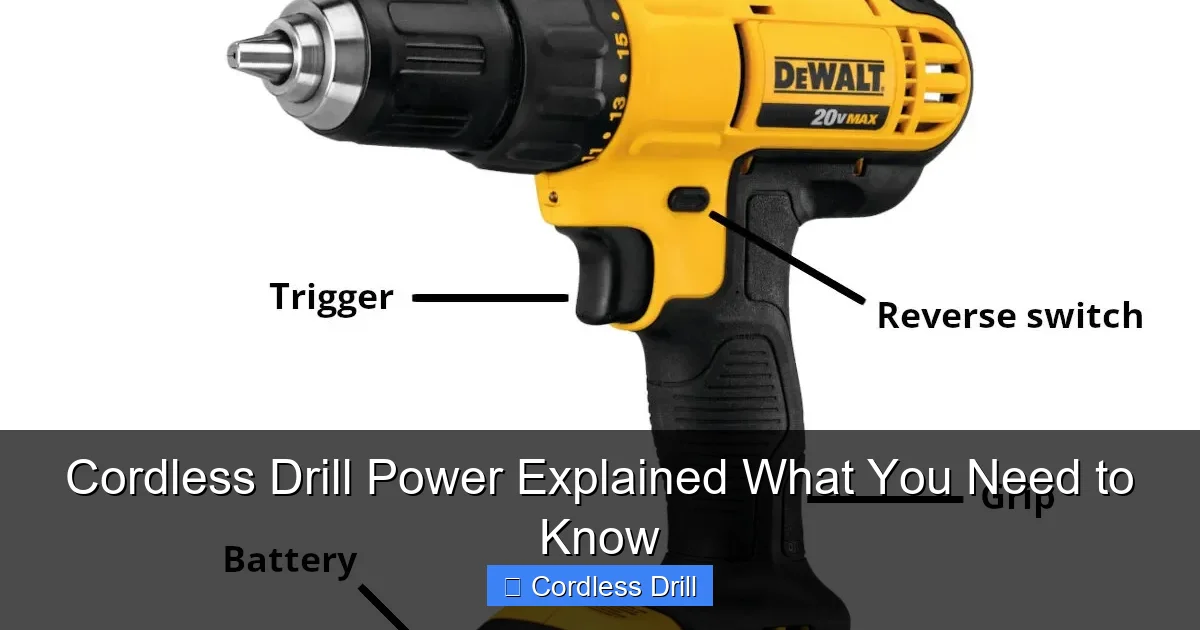
Think of drill power like a car engine. Horsepower, torque, and fuel tank size all matter. For drills, it’s Voltage, Torque, and Amp-hours.
Visual guide about Cordless Drill Power Explained What You Need to Know
Image source: bobvila.com
Voltage (V): The Power Potential
Voltage is like the size of the engine’s cylinders. It represents the potential power available. Common ratings are 12V, 18V/20V Max, and 40V+ for heavy-duty tools.
- 12V Compact: Lightweight and nimble. Perfect for assembly, furniture building, driving small screws, and drilling into softwood or drywall. They fit easily in tight spaces.
- 18V/20V Max (They’re the Same): This is the standard for full-power tools. “20V Max” is a marketing term for the initial battery voltage. Technically, it’s an 18V system. These drills handle 95% of home and pro tasks: deck building, drilling into hardwoods, and general construction.
- 40V+ & Higher: These are for extreme-duty jobs, like heavy framing or continuous use on a job site. They are larger, heavier, and more expensive.
Tip: For most homeowners and serious DIYers, an 18V/20V Max platform is the sweet spot. It offers the best balance of power and weight.
Torque (in-lbs or Nm): The Real Muscle
If voltage is potential, torque is the delivered force. Measured in inch-pounds (in-lbs) or Newton-meters (Nm), it’s the twisting power that drives the screw or turns the drill bit.
- Low Torque (150-400 in-lbs): Good for basic tasks. A 12V drill might have 350 in-lbs, enough for most screws.
- Medium Torque (400-800 in-lbs): The range of most 18V drills. This can drive large lag bolts into wood or drill 1-inch holes in softwood.
- High Torque (800+ in-lbs): Found on performance models. Essential for demanding, all-day professional work.
Example: A drill with 600 in-lbs of torque can easily drive a 3-inch deck screw. A drill with 200 in-lbs might stall or require you to push hard.
Amp-Hours (Ah): The Fuel Tank
This measures battery capacity, not power. A 5.0Ah battery stores more energy than a 2.0Ah battery. It will run your drill longer on a single charge. It doesn’t make the drill more powerful, but a high-capacity battery can sustain high-power tasks longer without voltage drop.
Practical Tip: If you’re doing lots of drilling, invest in a higher Ah battery (e.g., 4.0Ah or 5.0Ah). For occasional use, a 2.0Ah battery is fine and keeps the tool lighter.
Step 2: How Motor Technology Affects Power
The motor turns battery power into work. There are two main types.
Visual guide about Cordless Drill Power Explained What You Need to Know
Image source: cozyprojects.com
Brushed Motors
The older, simpler design. Carbon brushes contact the spinning commutator to create motion. They are less expensive but have downsides:
- More friction and heat.
- Less efficient (shorter runtime).
- Brushes wear out and need replacement.
Brushless Motors
The modern standard for better tools. A computer (controller) manages the magnetic fields to spin the motor.
- More Power & Efficiency: Delivers up to 30% more runtime and more torque from the same battery.
- Longer Life: No brushes to wear out. The motor runs cooler.
- Smarter: Can adjust power output to the task, saving battery.
Bottom Line: If your budget allows, always choose a brushless motor drill. The gains in performance, battery life, and durability are significant. Many of the models we feature in our guide to the best cordless drill options utilize brushless technology for this reason.
Step 3: Matching Drill Power to Your Projects
Now, let’s apply this knowledge. Choose your drill based on what you’ll actually do.
Visual guide about Cordless Drill Power Explained What You Need to Know
Image source: images.saymedia-content.com
Light-Duty Tasks (Choose 12V)
Assembling furniture, hanging pictures, installing cabinet hardware, drilling pilot holes in pine, or working on electronics. The light weight reduces fatigue.
General DIY & Homeowner Tasks (Choose 18V/20V Max)
This is the workhorse category. Building a deck, fence, or shelving. Drilling into hardwood or metal. Driving many large screws. Installing drywall. Any serious home renovation project. This platform offers the most versatility.
Heavy-Duty & Professional Tasks (Choose High-Performance 18V/20V Max or 40V+)
All-day construction, framing houses, drilling large diameter holes in dense lumber or masonry, mixing thick compounds like mortar or paint. Here, maximum torque and durable construction are critical.
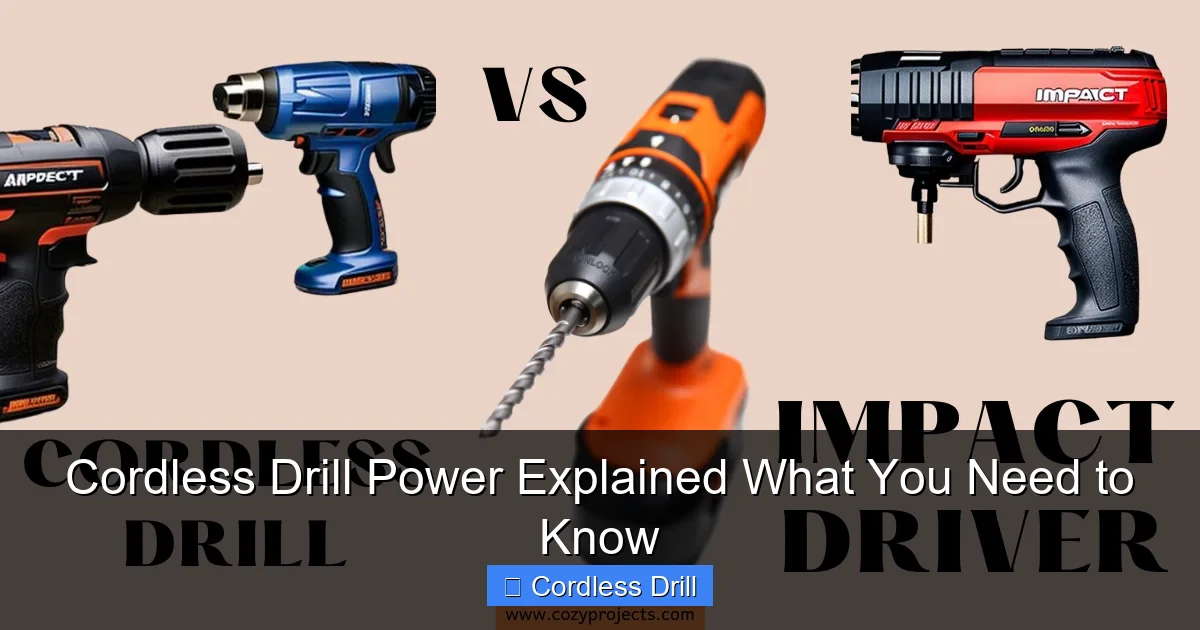
Remember: You might need more than one type of tool. A standard drill driver is great for drilling holes and general screwing. But for driving very long screws or lag bolts, an impact driver uses a hammering action to provide immense torque. For concrete or brick, you need the hammering action of a hammer drill.
Step 4: Reading the Spec Sheet Like a Pro
Look beyond the big “20V MAX” sticker on the box. Find the spec sheet.
- Unit of Battery Power: Look for Voltage (V) and Amp-hour (Ah). e.g., “20V MAX, 5.0Ah Battery.”
- Unit of Work Power: Find “Maximum Torque.” It might say “550 in-lbs” or “62 Nm.” This is a key performance number.
- Motor Type: It should say “Brushless Motor” if it is one.
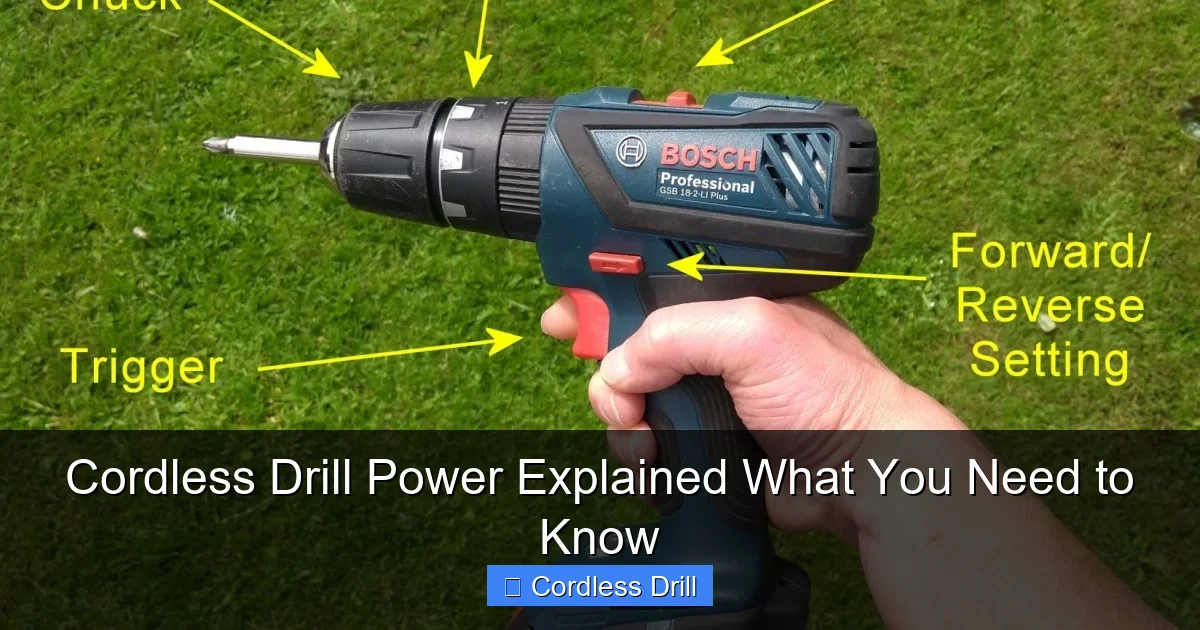
- Speed: Measured in RPM (Revolutions Per Minute). A two-speed setting (e.g., 0-600 & 0-2000 RPM) is very useful. Low speed for high torque driving, high speed for drilling.
Step 5: Power Myths and Troubleshooting
Common Power Myths Busted
Myth 1: “A 20V Max drill is twice as powerful as a 10V drill.” Not exactly. Power increases are not linear. An 18V drill is significantly more powerful than a 12V, but the jump from 18V to 20V Max is mostly in name.
Myth 2: “More Ah means more power.” False. A 5.0Ah battery doesn’t make the drill spin faster or with more force than a 2.0Ah battery from the same series. It just lasts longer.
Myth 3: “Brand X’s 18V is more powerful than Brand Y’s 18V.” Possibly. Different motors and electronics mean different torque outputs. Always compare the actual torque numbers.
What to Do If Your Drill Lacks Power
- Check the Battery: Is it fully charged? Is it a high-capacity (Ah) battery? A worn-out old battery may not deliver full voltage.
- Check the Clutch Setting: Is the clutch (numbered collar) set too low? Turn it to the drill icon for maximum power.
- Check the Speed Setting: Are you trying to drive a big screw on high speed? Switch to low speed (gear 1) for more torque.
- Check the Bit: Is your drill bit or driver bit dull, stripped, or of poor quality? A sharp, high-quality bit makes a huge difference.
- Wrong Tool for the Job: Are you trying to drill into concrete with a standard drill? You need a hammer function. Are you driving a huge lag bolt? You might need an impact driver. Understanding the difference between a drill and a hammer drill is crucial for masonry work.
Conclusion: Empowering Your Purchase
Understanding cordless drill power demystifies the buying process. Remember, voltage is your potential, torque is your delivered force, and amp-hours are your staying power. For most people, investing in a mid-range 18V/20V Max brushless drill from a reputable brand is the perfect choice. It provides ample power for common tasks and allows you to expand your tool collection with other compatible tools (like saws and lights) that use the same battery platform.
Start by listing the projects you plan to tackle. Then, use the specs—real torque numbers, brushless motor designation, and a sensible battery size—to find your match. With this knowledge, you’re not just buying a tool; you’re making a smart investment for your home and workshop. Now that you know how to choose the right power, you can explore all the options in our main cordless drill category to find your perfect match.
