
Battery health is the cornerstone of professional cordless drill performance, requiring users to avoid deep discharges and store batteries at partial charge to maximize lifespan and runtime. Mastering precise control via the variable speed trigger and maintaining a clean, secure chuck are equally critical for preventing stripped screws, ensuring accurate holes, and extending the tool’s durability on demanding jobs. These foundational practices separate amateur results from truly professional outcomes.
Key Takeaways
- Rotate batteries strategically: Keep one charging while using another to eliminate project downtime.
- Master trigger control: Light pressure yields high speed; firm pressure activates maximum torque.
- Set torque correctly: Start low to avoid stripping screws, then increase as needed.
- Choose quality bits: Sharp, job-specific bits prevent slipping and material damage.
- Maintain chuck cleanliness: Regularly remove debris from jaws to ensure secure bit holding.
- Prevent tear-out: Always use backing material behind your drilling surface.
- Drill pilot holes: Essential for accuracy and preventing wood splitting in joinery.
Why This Matters / Understanding the Problem
Let me tell you about the time I stripped my first screw. I was hanging a shelf in my living room, feeling pretty handy with my new cordless drill. I pushed harder, cranked up the speed, and—pop!—the screw head was ruined. The shelf crashed down. Sound familiar?
Most people think using a cordless drill is simple. Point, pull, done. But here’s the truth: cordless drill professional tips every user should master separate the weekend warriors from the folks who actually get things done without the frustration.
I learned this the hard way through countless stripped screws, wobbly holes, and dead batteries at the worst possible moment. That’s why I’m sharing these hard-won lessons. This isn’t about becoming a contractor overnight. It’s about working smarter, avoiding the headaches, and actually enjoying your DIY projects.
Whether you’re hanging pictures or building a deck, these cordless drill professional tips every user should master will save you time, money, and sanity.
What You Need
Don’t worry—you don’t need a workshop full of gear. Here’s what I keep in my toolbox for most projects:
Visual guide about Cordless Drill Professional Tips Every User Should Master
Image source: i.ytimg.com
- A decent cordless drill (12V-18V is perfect for most jobs)
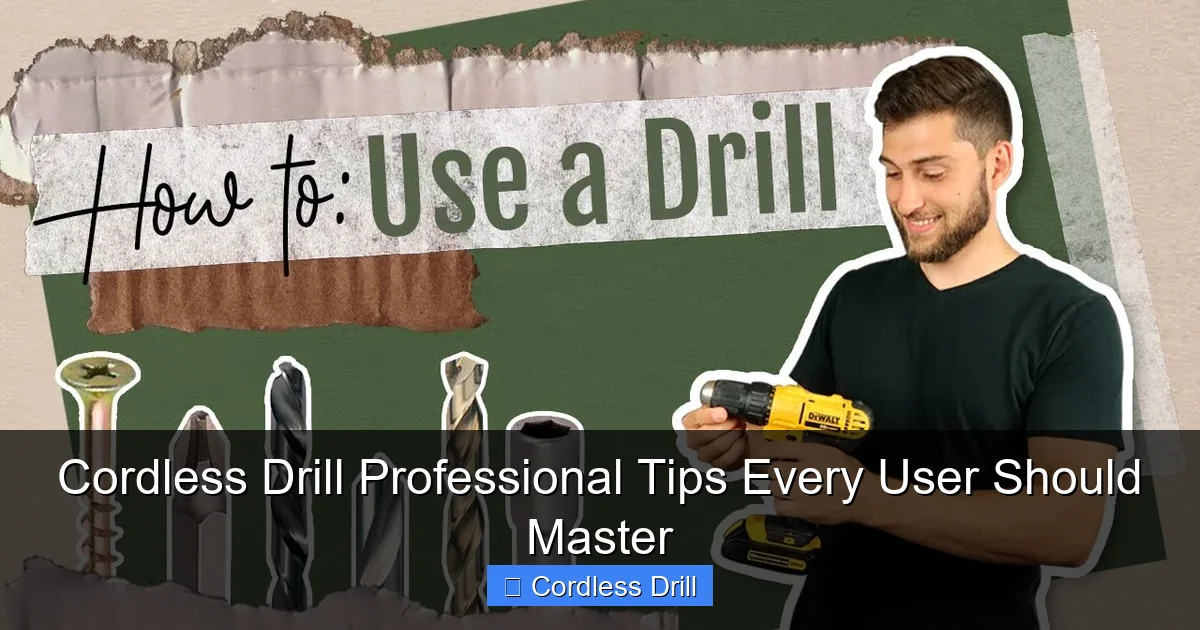
- A set of quality drill bits (twist bits, spade bits, and masonry bits)
- Driver bits that match your screws (Phillips, flathead, Torx, etc.)
- At least two batteries (this is a game-changer)
- A sturdy tool belt or pouch
- Safety glasses (seriously, don’t skip these)
- A tape measure and pencil for marking
- A scrap piece of wood for practice
Pro tip: Start with what you have. Even a basic drill will work wonders if you use it correctly. The magic isn’t in the tool—it’s in how you handle it.
Step-by-Step Guide to Cordless Drill Professional Tips Every User Should Master
Alright, let’s dive into the good stuff. These steps transformed my drilling from “meh” to “heck yeah!”
Visual guide about Cordless Drill Professional Tips Every User Should Master
Image source: i.pinimg.com
Step 1: Choosing the Right Drill for Your Project
Not all drills are created equal. When I first started, I grabbed the cheapest one I could find. Big mistake. For light tasks like hanging curtains, a compact 12V drill is perfect. It’s lightweight and won’t overpower delicate materials.
For bigger jobs—deck building, framing, or heavy-duty masonry—step up to an 18V or 20V model. These pack more punch without being exhausting to hold. Look for a brushless motor if you can. They last longer and run cooler.
One of the most important cordless drill professional tips every user should master is knowing when to use what. Check out our guide to the best cordless drill options for different needs. I wish I had this resource years ago!
Step 2: Understanding Drill Bits and Accessories
Here’s where most folks go wrong. They use the wrong bit and wonder why everything sucks. Let me break it down simply:
- Wood bits: Sharp points with deep flutes. Great for… well, wood.
- Masonry bits: Look like they have a little pyramid tip. Use these with your hammer function for concrete.
- Metal bits: Usually black or gold. They’re stiffer and cut cleaner in metal.
- Spade bits: For rough, fast holes in wood. Not pretty, but quick.
- Forstner bits: Clean, precise holes. Perfect for cabinet hinges.
Always match your bit to the material. Using a wood bit on metal is like trying to cut steak with a spoon. It works, but it’s a disaster waiting to happen.
Store your bits in a case, not loose in your toolbox. This keeps them sharp and prevents damage. I learned this after ruining a whole set by tossing them in with my wrenches.
Step 3: Mastering Speed and Torque Settings
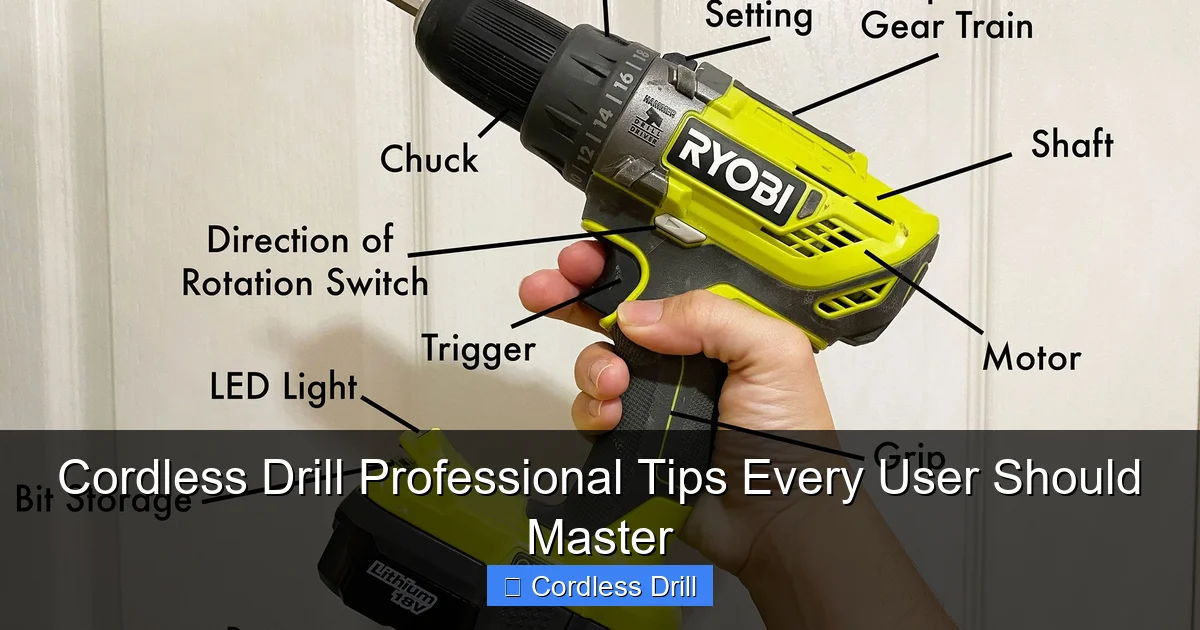
This is the secret sauce. Your drill has two superpowers: variable speed trigger and torque adjustment ring.
The trigger is obvious—light touch for slow, full pull for fast. But that torque ring? That’s where the magic happens. It controls how much force the drill applies before the clutch slips.
For driving screws, start with a low setting (3-5). This prevents stripping. For drilling holes, set it to the highest setting (drill icon). The drill will shift gears automatically based on resistance.
Here’s a pro move: Practice on scrap wood. Set your clutch to #3 and try driving a screw. Feel it stop when it’s flush. Now try #5. See the difference? This muscle memory saves so many headaches.
One of the essential cordless drill professional tips every user should master is this: Let the drill do the work. Don’t force it. The clutch is your friend, not a limitation.
Step 4: Perfecting Your Drilling Technique
Okay, you’ve got the right drill and bit. Now let’s talk form. Stand with your feet shoulder-width apart. Grip the drill like a pistol—firm but not death-gripping. Keep your other hand near the front for control.
For straight holes, use the edge of your palm as a guide. Keep the drill perpendicular to your work surface. I like to mark a small X where I want to drill. Then I make a tiny pilot dent with a nail or awl. This keeps the bit from wandering.
Apply steady, moderate pressure. Too little and the bit skips. Too much and you’ll wobble or break the bit. Imagine you’re guiding a hot knife through butter—smooth and controlled.
When drilling into walls, things get trickier. You need to know what’s behind that drywall. I’ve learned to always check for studs and electrical wires. Our comprehensive guide on using a drill for screws into a wall saved my bacon more than once.
Step 5: Battery Care and Maintenance
Battery death is the ultimate project killer. I’ve been stranded mid-project more times than I’d like to admit. Here’s what works:
Always keep a spare battery charged and ready. I keep one in my tool belt and one on the charger. This simple habit changed everything for me.
Don’t run batteries completely dead. Lithium-ion batteries last longest when you swap them at 20-30% charge. They don’t have memory like old batteries, so partial charges are fine.
Store batteries in a cool, dry place. Never leave them in a hot car or freezing garage. Extreme temperatures murder battery life. I learned this after my drill died during a summer project because I left the battery on the dashboard.
Clean the battery contacts with a dry cloth occasionally. Dirt and grime can interfere with the connection. It’s a small thing that makes a big difference.
Step 6: Advanced Features and When to Use Them
Most drills have features people never use. Let’s fix that. The hammer function is for masonry only. It pounds the bit while it spins. Never use it on wood or metal—you’ll ruin the bit and possibly the drill.
Some drills have a precision mode or electronic clutch. This gives you even finer control over torque. It’s amazing for delicate work like installing cabinet hardware or working with softwoods.
LED lights are underrated. They illuminate your work area when you’re under a sink or in a dark corner. I didn’t think I needed this until I tried it. Now I can’t imagine drilling without it.
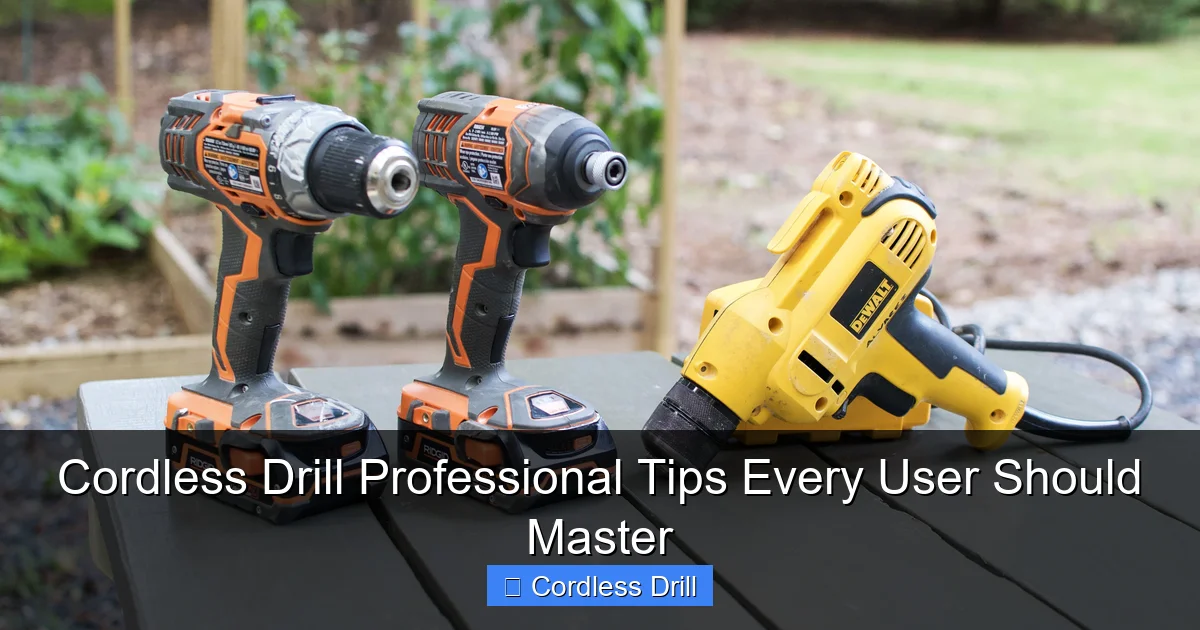
Understanding these features is crucial. For example, knowing what is the difference between impact driver and hammer drill can save you from buying the wrong tool. I made that mistake early on.
Step 7: Safety Practices That Actually Work
I know, I know—safety seems boring. But trust me, a trip to the ER is way less fun than wearing safety glasses. Always wear eye protection. Wood chips, metal shavings, and dust love to find your eyes.
Keep your workspace clean. Clutter causes accidents. I learned this after tripping over a extension cord while carrying a drill. Not my finest moment.
Unplug or remove the battery when changing bits. It’s easy to accidentally pull the trigger. I’ve done it. It’s startling and dangerous.
Use both hands when possible. One on the handle, one on the front grip. This gives you maximum control and reduces fatigue. For overhead work, use a right-angle adapter if your drill has one. It’s easier on your wrists.
When working on ladders, secure your drill. I use a tool belt or a lanyard. Dropping a drill from a ladder is expensive and dangerous. Our essential safety tips for climbing ladders cover this in detail.
Pro Tips & Common Mistakes to Avoid
Let me save you from my rookie errors. These insights came from years of fixing my own mistakes.
Visual guide about Cordless Drill Professional Tips Every User Should Master
Image source: buildingourrez.com
Pro Tip: Keep a piece of blue painter’s tape handy. Stick it over your drill mark. This prevents the bit from “walking” and gives you a cleaner start point.
One huge mistake I made constantly was using the wrong screwdriver bit. Using a #2 Phillips on a #3 screw is asking for trouble. Always match the bit size to the screw. The bit should fit snugly in the screw head.
Another classic error: ignoring the depth stop. This little rod lets you drill to an exact depth. It’s perfect for shelf pins, drawer slides, or any hole where consistency matters. I wish I’d discovered this sooner.
Don’t forget about reverse. Most people only use forward. But reverse is your best friend for backing out screws or clearing debris from deep holes. I’ve saved many stripped screws by hitting reverse at the first sign of trouble.
Battery management trips up so many people. They leave batteries on the charger 24/7. Modern chargers are smart, but it’s still better to remove them once charged. This extends battery life significantly.
And please, for the love of all that is holy, label your drill settings. I use small stickers on my drill to mark common torque settings: “Pilot Holes,” “Deck Screws,” “Drywall.” It’s a tiny thing that speeds up my workflow dramatically.
FAQs About Cordless Drill Professional Tips Every User Should Master
These questions come up constantly in my workshops. Let me answer them straight up.
Q: How long should cordless drill batteries last?
A: With proper care, 3-5 years is typical. I get about 4 years from mine before I notice significant runtime drop. Keep them cool, don’t overcharge, and swap them before they’re completely dead.
Q: Can I use my cordless drill for automotive work?
A: Absolutely! Just be mindful of torque settings. Automotive bolts often need precise torque. Use a low setting and go slow. A cordless drill is perfect for interior panels, light assembly, and general maintenance.
Q: Why does my drill bit keep getting stuck?
A: Usually two reasons: you’re pushing too hard, or you’re not clearing the bit often enough. Pull the bit out every few seconds to clear debris. Let the flutes do their job. And ease up on the pressure—let the drill cut at its own pace.
Q: What’s the best way to drill straight holes?
A: Use a drill guide or a speed square as a visual reference. Keep your eye on the angle, not just the trigger. Practice on scrap wood first. The more you drill, the more natural it feels. I still check my angle every few seconds on important holes.
Q: Should I buy an impact driver or a regular drill?
A: Get both if you can. They’re different tools for different jobs. A drill is versatile for holes and light driving. An impact driver excels at driving long screws and bolts. If you can only afford one, start with a drill. It’s more flexible for general use.
Q: How do I know if I’m using too much pressure?
A: If the motor sounds like it’s straining, you are. The drill should maintain consistent speed. If it bogs down, ease up. Let the tool’s weight do most of the work. Your arms will thank you, and your bits will last longer.
Q: Can I take my cordless drill on a plane?
A: Yes, but with rules. Batteries must be removed and carried in your carry-on luggage. The drill itself can go in checked baggage. I travel with mine regularly. Check out our guide on are cordless drills allowed on planes for the full TSA details.
Final Thoughts
Look, mastering your cordless drill isn’t about becoming a pro overnight. It’s about building confidence through small wins. Start with these cordless drill professional tips every user should master on simple projects. A bookshelf, a birdhouse, a new towel rack.
The key is practice. Drill some holes in scrap wood. Drive a dozen screws. Get comfortable with the weight, the balance, the sounds. Your drill should feel like an extension of your hand, not a mystery box of frustration.
Remember that stripped screw I told you about? That was my turning point. I stopped rushing, started reading the manual, and actually learned what my tool could do. The result? Projects that actually look good and hold up over time.
You’ve got this. Grab your drill, pick a simple project, and apply one tip at a time. Before you know it, you’ll be the person friends call when they need something hung or assembled. And that feels pretty darn good.
Now go make something. And if you run into trouble, you know where to find me. Happy drilling!