
This comprehensive guide reveals the essential hammer drill features you must know before buying or using one. We break down motor power, speed settings, hammer mechanisms, and safety features in simple terms. Discover how to select the perfect hammer drill for concrete, masonry, and DIY projects while avoiding common mistakes.
Key Takeaways
- Understand the core difference: Hammer drills combine rotation with a rapid hammering action that regular drills lack, making them essential for concrete and masonry work.
- Power matters: Look for 7-10 amps for corded models or 18V+ for cordless hammer drills to handle tough materials without straining the motor.
- Multiple speed settings: Variable speed triggers and 2-3 speed gears give you control for different materials, from delicate tile work to heavy-duty concrete drilling.
- Ergonomics are crucial: A comfortable grip, lightweight design, and auxiliary handle reduce fatigue during extended use and improve precision.
- Safety features protect you: Vibration control, overload protection, and depth stops prevent injuries and tool damage while ensuring professional results.
- Choose the right type: Corded hammer drills offer unlimited power for job sites, while modern cordless models provide freedom for most DIY projects.
- Proper maintenance extends life: Regular cleaning, lubrication, and battery care keep your hammer drill performing reliably for years.
Introduction: Your Complete Hammer Drill Roadmap
You’re holding a tool that can bore through concrete like butter. A hammer drill isn’t just another power tool—it’s your secret weapon for serious construction and DIY projects. But here’s the problem: without understanding its features, you’re probably underusing it or worse, risking injury.
This guide changes everything. We’ll decode every essential hammer drill feature in plain English. By the end, you’ll know exactly what to look for when buying, how to use each function safely, and which settings to choose for concrete, brick, wood, or metal. No technical jargon. Just practical knowledge you can use today.
Let’s transform you from a confused beginner into a confident hammer drill operator.
Understanding Hammer Drill Basics: What Makes It Special
What Exactly is a Hammer Drill?
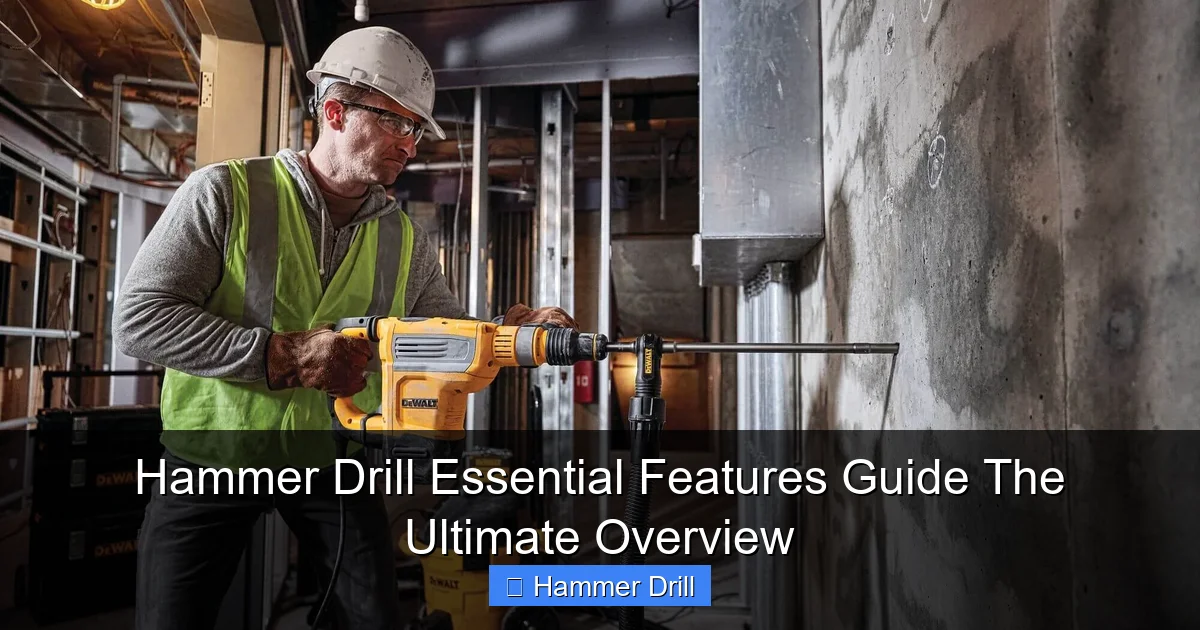
A hammer drill looks like a regular drill but works like a tiny jackhammer. The magic happens inside where a special clutch mechanism creates a rapid back-and-forth hammering motion while the bit spins. This dual action chews through concrete and masonry with ease.
Visual guide about Hammer Drill Essential Features Guide The Ultimate Overview
Image source: misterworker.com
Think of it like this: a regular drill pushes straight into material. A hammer drill punches the material thousands of times per minute while spinning. That’s why it demolishes concrete while a regular drill just bounces off.
Most hammer drills offer a switch that turns off the hammer function. This versatility lets you use one tool for both regular drilling and hammer drilling. You get two tools in one package.
How Hammer Drills Work: The Mechanics Simplified
Inside your hammer drill, an electric motor spins a gear that drives two plates together. These plates have teeth that click in and out rapidly, creating the hammering action. The faster the motor spins, the more hammer blows per minute.
This mechanism generates incredible force—typically 20,000 to 50,000 blows per minute (BPM). That’s why you feel that distinctive jackhammer vibration in your hands. Modern hammer drills include vibration dampening to make them more comfortable to use.
The best part? You don’t need to push hard. The hammer mechanism does the work for you. Just guide the drill and let the tool do the heavy lifting. This saves your arms and shoulders during long projects.
Hammer Drill vs Regular Drill: Critical Differences
Many people wonder when to use which tool. The answer is simple: if you’re drilling into concrete, brick, or stone, you need a hammer drill. For wood, metal, or plastic, a regular drill works fine.
Our detailed comparison of hammer drill vs regular drill explains this further. The key difference is that hammer drills have a special mode that creates that hammering action. Regular drills simply spin, which isn’t enough for hard masonry.
Another difference: hammer drills are generally more robust. They have stronger gears and bearings to handle the extra stress. Using a regular drill on concrete will likely burn out the motor and damage the tool.
Essential Features to Evaluate Before Buying
Motor Power: The Heart of Your Hammer Drill
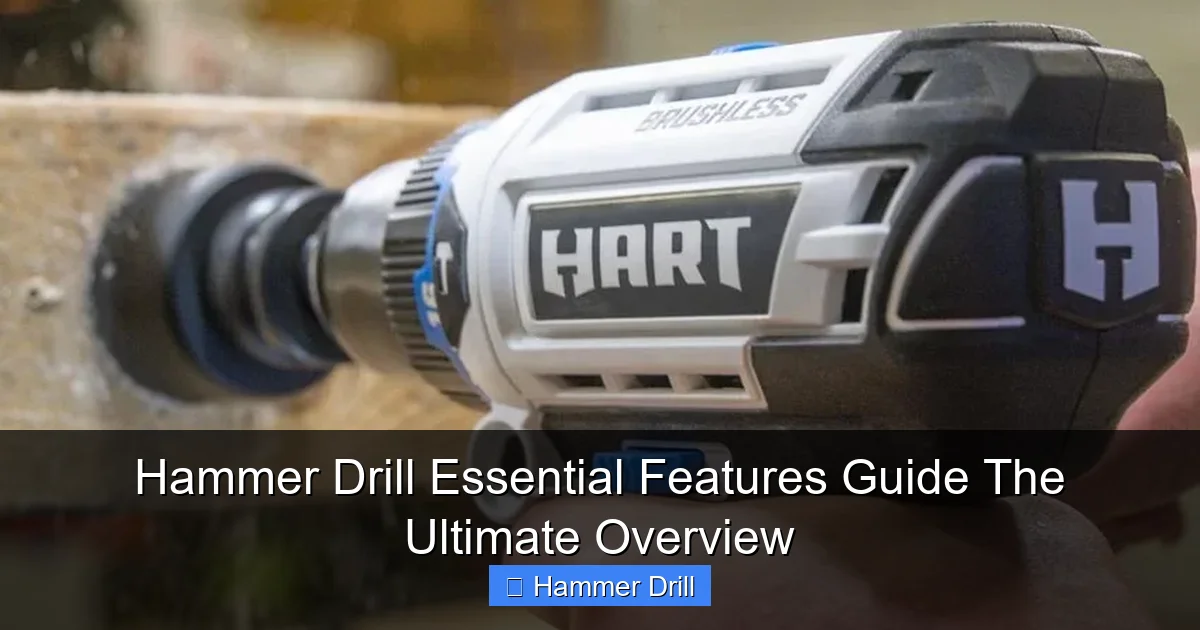
Motor power determines what your hammer drill can handle. For corded models, look at amp ratings. For cordless, check voltage. This is non-negotiable.
Visual guide about Hammer Drill Essential Features Guide The Ultimate Overview
Image source: protoolreviews.com
Corded hammer drills: 7-10 amp motors are standard for DIY use. Professional models go up to 15 amps. The higher the amp rating, the more resistance to overheating during extended use.
Cordless hammer drills: 18V is the sweet spot for most users. 12V models work for light tasks but struggle with thick concrete. 20V and 36V tools handle professional job sites but cost more and weigh more.
Pro tip: Don’t just look at peak power. Check the sustained power rating. Some manufacturers inflate numbers with short-term peak ratings that don’t reflect real-world performance.
Speed Settings and Control: Your Precision Knobs
Speed control separates good hammer drills from great ones. You need flexibility for different materials and bit sizes.
Variable speed trigger: This is essential. Pressing the trigger lightly gives you low speed for starting holes and precision work. Full pressure delivers maximum speed for tough materials.
Gear settings: Most hammer drills have 2-3 speed ranges. Low gear (0-500 RPM) provides high torque for large bits and tough materials. High gear (0-1500-2000 RPM) works for smaller bits and faster drilling in easier materials.
Why does this matter? Drilling a 1/4-inch hole in tile needs different settings than a 1-inch hole in concrete. Having multiple speeds prevents bit breakage and improves results.
Hammer Mechanism Types: Choose Your Action
Not all hammer mechanisms are created equal. Understanding the types helps you pick the right tool.
Cam-action hammering: Most common in DIY hammer drills. Uses a rotating cam to create the hammering motion. It’s reliable and affordable but creates more vibration.
Piston-action hammering: Found in professional rotary hammers. Uses a pneumatic piston for more powerful, efficient hammering. These tools last longer and work better for heavy-duty tasks but cost significantly more.
Electro-pneumatic: The gold standard for professional use. Combines electric motor with compressed air for maximum impact force. If you’re drilling dozens of holes daily, this is worth the investment.
For most homeowners, cam-action provides plenty of power. Contractors should consider piston-action for daily use.
Chuck Size and Compatibility: The Bit Holder
The chuck holds your drill bits. Hammer drills typically use three-jaw chucks, but size matters.
1/2-inch chuck: Standard for most hammer drills. Fits bits up to 1/2-inch diameter. This is the most versatile size for DIY projects.
3/8-inch chuck: Found on smaller, lighter hammer drills. Good for light tasks but limits you to smaller bits. Not ideal for heavy concrete work.
SDS chuck: Used on rotary hammers (a more powerful type of hammer drill). SDS bits lock in place better and handle more force. You cannot use regular bits without an adapter.
Check if the chuck is keyed or keyless. Keyless chucks tighten by hand but can loosen during hammering. Keyed chucks stay secure better for heavy-duty work.
Handle Design and Grip: Comfort is King
You’ll hold this tool for extended periods. An uncomfortable handle turns a simple job into a painful experience.
Ergonomic grip: Look for rubberized, contoured handles that fit your hand naturally. The best hammer drills balance weight so the tool doesn’t feel nose-heavy.
Auxiliary handle: This is critical. A second handle on the front gives you control and reduces vibration transfer to your hands. Most quality hammer drills include this. Make sure it’s adjustable for both left and right-handed users.
Trigger placement: The trigger should sit where your index finger naturally rests. Some models have paddle switches that are easier to control than traditional triggers.
Test the grip before buying. Your hand shouldn’t feel cramped, and you should be able to operate the trigger without changing your grip.
Depth Stop and Adjustability: Precision Tools
Drilling the perfect depth every time requires a good depth stop. This feature prevents you from drilling too far.
Adjustable depth rod: A metal rod that extends from the hammer drill’s body. You set it to stop at your desired depth. Essential for installing anchors, hanging fixtures, or any repetitive drilling.
Quick-adjust mechanism: Some models let you release and reset the depth stop with one hand. This speeds up work when you need multiple depths.
Depth gauge markings: Clear markings on the depth rod help you set measurements accurately. Look for large, easy-to-read numbers.
Without a depth stop, you’re guessing. That leads to inconsistent results and wasted time measuring each hole.
LED Lights and Accessories: The Little Helpers
Small features that make a big difference in real-world use.
LED work light: Illuminates your drilling spot. Crucial when working in dark corners, basements, or inside cabinets. The best lights activate automatically when you pull the trigger.
Battery indicator: For cordless models, a fuel gauge shows remaining charge. This prevents getting stuck mid-project with a dead battery.
Side handle: As mentioned earlier, this is essential for control. Some models include a 360-degree rotating handle for maximum versatility.
Bit storage: A small compartment on the handle to store bits or a chuck key. Handy but not essential.
These accessories seem minor until you’re in a tight spot with poor lighting and realize how much you need them.
Choosing Between Corded and Cordless Hammer Drills
Corded Hammer Drills: Unlimited Power
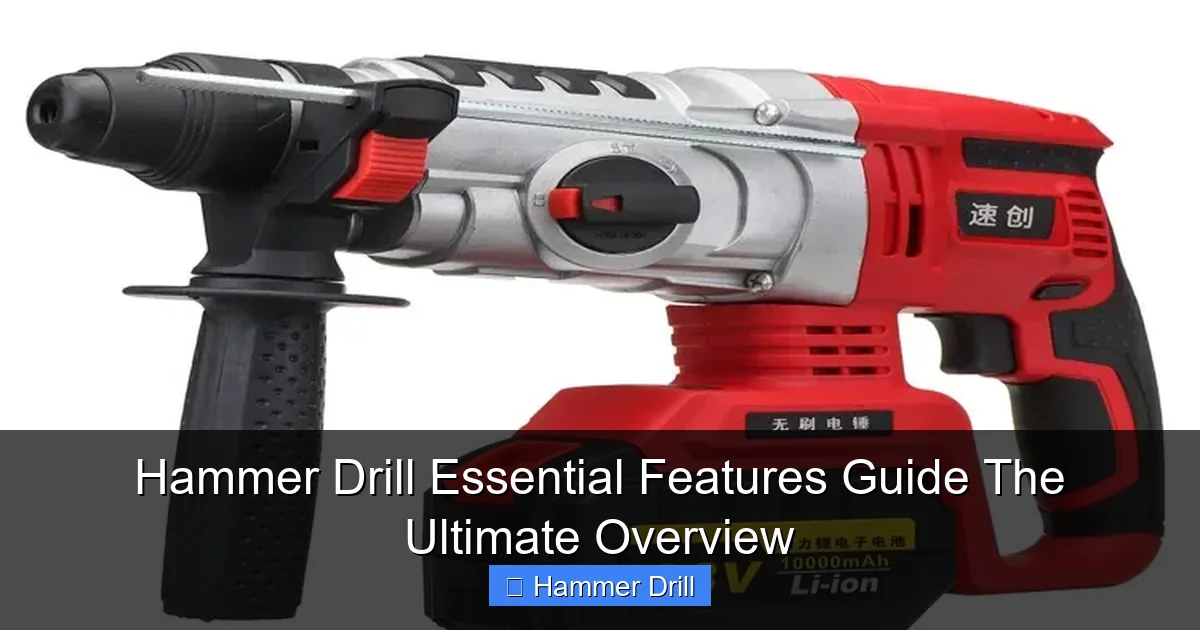
Corded models deliver consistent power without batteries dying. They’re lighter since they don’t carry battery packs. For job sites with power outlets, they’re unbeatable.
Visual guide about Hammer Drill Essential Features Guide The Ultimate Overview
Image source: toolsadvisers.com
The main advantage? Unlimited runtime. You can drill all day without stopping. They also typically deliver more power for the price. A $100 corded hammer drill outperforms a $150 cordless model.
Downsides include being tethered to an outlet. Extension cords add hassle and create tripping hazards. They’re also less portable for roof work or remote locations.
Best for: Workshop use, basement projects, and any situation where power is available.
Cordless Hammer Drills: Freedom to Move
Cordless hammer drills have improved dramatically. Modern lithium-ion batteries provide surprising power and runtime. The freedom to work anywhere is their biggest selling point.
Our guide to the best cordless drill covers battery technology in detail. For hammer drills, 18V lithium-ion is the standard. Brushless motors extend battery life and tool longevity.
Consider battery compatibility. If you already own other cordless tools from the same brand, you can share batteries. This saves money and reduces clutter.
Downsides: Battery weight makes the tool heavier. Runtime limits extended use. You need spare batteries for all-day work. Cold weather reduces battery performance.
Best for: DIY projects, home repairs, and job sites without power.
Battery Technology: What You Need to Know
Not all batteries are equal. Understanding specifications prevents disappointment.
Voltage: Higher voltage means more power. 12V for light work, 18V for most DIY, 20V+ for professional use.
Amp-hour (Ah): This measures capacity. A 2.0Ah battery lasts half as long as a 4.0Ah battery. For hammer drilling, get at least 4.0Ah for decent runtime.
Lithium-ion vs Ni-Cd: Lithium-ion is lighter, holds charge longer, and has no memory effect. Ni-Cd is cheaper but heavier and less powerful. Always choose lithium-ion for new purchases.
Charging time: Fast chargers can recharge in 30-60 minutes. Standard chargers take 2-3 hours. For frequent use, buy a fast charger.
Safety Features That Protect You and Your Tool
Trigger Lock and Safety Switch
A trigger lock lets you run the hammer drill continuously without holding the trigger. This reduces finger fatigue during long drilling sessions.
More importantly, a safety switch prevents accidental starts. You must press a separate button before the trigger works. This is crucial when changing bits or setting up.
Never disable these safety features. They exist to prevent serious injuries.
Vibration Control: Protect Your Hands
Hammer drills create intense vibration. Over time, this can cause hand-arm vibration syndrome (HAVS), a serious condition affecting blood vessels and nerves.
Modern hammer drills include vibration dampening systems. These use rubber mounts and counterweights to reduce vibration transfer to your hands by 30-50%.
Look for models advertising “low vibration” or “vibration reduction.” Also, wear anti-vibration gloves and take regular breaks. Never use a hammer drill for more than 15-20 minutes continuously without a break.
Overload Protection: Save Your Motor
Overload protection shuts down the motor if it works too hard. This prevents burnout when drilling extremely hard materials or using the wrong bit.
Some models use electronic sensors that detect motor strain. Others use thermal cutoffs that trip when the motor overheats. Both are valuable features.
Without overload protection, you risk destroying your hammer drill on tough jobs. It’s worth the extra cost for this feature alone.
Proper Ventilation and Dust Management
Drilling concrete creates silica dust, which is dangerous to breathe. Proper ventilation is essential.
Many hammer drills include dust ports where you can attach a vacuum or dust extractor. This captures dust at the source, keeping your workspace clean and safe.
Always wear a respirator mask when drilling concrete. Safety glasses are mandatory. Consider hearing protection too—hammer drills are loud, often exceeding 90 decibels.
Practical Applications: Using Your Hammer Drill Correctly
Drilling into Concrete Like a Pro
Concrete is the main reason you own a hammer drill. Here’s how to do it right.
First, choose the right bit. Masonry carbide-tipped bits are mandatory. Regular drill bits will shatter. Start with a small pilot hole if you’re drilling deep.
Set your hammer drill to hammer mode. Use low speed for large bits and high speed for small bits. Apply firm, steady pressure—let the hammer mechanism do the work. Don’t force it.
Clear dust frequently by pulling the bit out every few seconds. This prevents overheating and extends bit life. For deep holes, use the depth stop to avoid drilling too far.
Pro tip: Hold the hammer drill at a 90-degree angle. Angled drilling reduces effectiveness and can break bits.
Masonry Work: Brick, Block, and Stone
Masonry is slightly softer than concrete but requires the same approach. The key difference is speed.
Brick and block work best at medium speeds. Too fast creates excessive dust and can crack the material. Too slow generates heat that dulls bits quickly.
For stone, start slow and increase speed gradually. Some stones have hard spots that can shatter bits. Let the hammer drill find its rhythm.
Always check for hidden pipes or wires before drilling. Use a stud finder with AC detection for walls.
Wood and Metal Projects: Switching Modes
Your hammer drill isn’t just for masonry. Switching to regular drill mode opens up new possibilities.
For wood, turn off hammer mode completely. Use high speed and standard wood bits. Hammer mode will splinter wood and create messy holes.
For metal, use low speed, no hammer mode, and high-speed steel bits. Apply cutting fluid for thick metal. The hammer action will damage metal and ruin bits.
Remember: hammer mode is only for concrete, brick, stone, and tile. Everything else needs regular drill mode.
Home Improvement Tasks: Real-World Examples
Let’s see where your hammer drill shines in home projects.
Hanging heavy shelves: Drill anchor holes in drywall studs or concrete walls. Use the depth stop to match anchor length.
Installing TV mounts: Most mounts require 1/4 to 3/8-inch holes in concrete walls. A hammer drill makes quick work of this.
Bathroom tile work: Drill holes for faucet mounts and towel bars. Use masking tape on tile to prevent bit slippage.
Electrical projects: Run conduit through basement walls. Drill clean holes for wire pass-throughs.
Our guide on how to use a drill for screws into a wall provides additional techniques for home installations.
Maintenance and Care: Extend Your Tool’s Life
Cleaning Your Hammer Drill Regularly
Dust and debris are your hammer drill’s worst enemies. Clean it after every use.
Use compressed air to blow dust out of vents, the chuck, and the hammer mechanism. Hold the drill with the chuck pointing down so debris falls out.
Wipe the housing with a damp cloth. Never use solvents that can damage plastic. For stubborn grime, use mild soap and water, then dry thoroughly.
Check the air intake vents daily. Blocked vents cause overheating and motor failure.
Lubrication and Storage: Keep It Running Smooth
Some hammer drills require periodic lubrication. Check your manual. Most modern models are sealed and maintenance-free, but older models need grease in the gear box.
For the chuck, apply a small amount of drill bit oil every few months. Open the chuck fully, apply oil, then open and close it several times to distribute.
Store your hammer drill in a dry place. Use the original case if possible. Keep batteries separate from the tool and store at room temperature.
Never store a hammer drill with the battery inserted. This can cause accidental activation and battery drain.
Regular Inspections: Catch Problems Early
Before each use, inspect your hammer drill for damage.
Check the power cord for fraying or cuts. Look at the plug for bent prongs. Examine the chuck for cracks or excessive wear.
Test the trigger for smooth operation. Listen for unusual noises when running without load. Feel for excessive vibration that wasn’t there before.
If you notice any issues, stop using the tool immediately. Repair or replace damaged parts before continuing.
Troubleshooting Common Hammer Drill Issues
Overheating Problems: Why Your Drill Gets Too Hot
Overheating usually means you’re pushing too hard or the vents are blocked.
If your hammer drill gets hot quickly, stop using it. Let it cool for 15-20 minutes. Check that air vents are clear of dust and debris.
Using the wrong speed can cause overheating. High speed on tough concrete strains the motor. Switch to low speed and let the hammer mechanism work.
Older tools may have worn brushes that cause excess heat. If cleaning and proper use don’t help, take it to a service center.
Reduced Hammer Action: When the Punch Disappears
If your hammer drill stops hammering effectively, several things could be wrong.
First, verify the hammer mode is engaged. Some models have separate switches that are easy to miss.
Worn carbon brushes can reduce power to the hammer mechanism. This requires professional service.
Grease or oil in the hammer mechanism can gum up the action. This happens if you over-lubricate or use the wrong lubricant. Disassembly and cleaning may be necessary.
Using a dull bit can make it seem like the hammer action is weak. Always start with a sharp bit.
Chuck Issues: Bits Won’t Stay Secure
A loose chuck ruins accuracy and can be dangerous.
Clean the chuck threads regularly. Dust buildup prevents proper tightening. Remove the chuck if possible and clean with a brush.
Check if the chuck is cross-threaded. If you forced it on incorrectly, it won’t tighten properly. Remove and reinstall carefully.
For keyless chucks that won’t tighten, replace the chuck. Worn jaws can’t grip bits securely. This is a common failure point in hammer drills.
Always tighten the chuck with the included key for maximum security. Hand-tightening isn’t enough for hammer drilling.
Battery Problems: Cordless Drill Won’t Hold Charge
Battery issues plague cordless tools. Here’s how to diagnose them.
If your battery won’t hold charge, try cycling it—fully discharge, then fully recharge. Do this 2-3 times. Sometimes this resets the battery management system.
Check for corrosion on battery contacts. Clean with a cotton swab and rubbing alcohol if needed.
Batteries have limited lifespans. If your battery is 3-4 years old and won’t hold charge, it’s time to replace it. Lithium-ion batteries degrade over time regardless of use.
Store batteries at partial charge, not full. Storing at 100% charge accelerates capacity loss.
Conclusion: Your Hammer Drill Mastery Checklist
You now understand every essential hammer drill feature. Let’s recap what makes a hammer drill truly great:
First, power is foundational. Choose 7-10 amps or 18V+ based on your needs. Speed control gives you versatility. Multiple gears and variable speed triggers let you tackle everything from tile to thick concrete.
The hammer mechanism type determines longevity. Cam-action works for DIY. Piston-action serves professionals. Chuck size affects bit compatibility—1/2-inch is the sweet spot.
Safety can’t be compromised. Vibration control protects your health. Overload protection saves your investment. Depth stops ensure precision.
Remember the difference between impact driver and hammer drill—they’re not interchangeable tools. Impact drivers drive screws better but don’t hammer drill concrete.
Maintenance is simple but critical. Clean after every use. Store properly. Inspect before each job. These habits add years to your tool’s life.
Whether you’re hanging a TV, installing a shelf, or building a deck, the right hammer drill features make the difference between a frustrating experience and professional results. Choose wisely, use safely, and maintain diligently.
Now grab your hammer drill and put this knowledge to work. You’ve got this.