
From manual chisels to cordless powerhouses, this guide traces the hammer drill’s 150-year evolution. You’ll discover how these essential tools transformed construction work and DIY projects forever. We’ll explore the key innovations that made hammer drills indispensable for drilling into concrete, brick, and stone.
Key Takeaways
- Historical Roots: The hammer drill’s origins date back to the 1870s with pneumatic tools, evolving from manual chisels and rotary mechanisms.
- Bosch’s Innovation: Robert Bosch’s 1930s patent created the first practical electric hammer drill, revolutionizing construction work.
- Core Mechanism: Hammer drills combine rotational force with a rapid hammering action, typically 10,000-50,000 blows per minute.
- SDS Technology: Slotted Drive System (SDS) bits, introduced in the 1970s, allowed faster bit changes and better performance.
- Cordless Revolution: Lithium-ion batteries transformed hammer drills from heavy corded tools to portable powerhouses after 2000.
- Choosing Wisely: Select between corded, cordless, SDS-Plus, or SDS-Max models based on your specific masonry or concrete needs.
- Maintenance Matters: Regular greasing, carbon brush checks, and proper storage extend your hammer drill’s lifespan significantly.
Introduction: What Is a Hammer Drill?
A hammer drill is a specialized power tool designed to bore holes into hard materials like concrete, brick, and stone. Unlike regular drills that only rotate, hammer drills combine rotation with a rapid hammering action. This dual mechanism breaks up tough surfaces while the drill bit removes debris. These tools have become essential for electricians, plumbers, and DIY enthusiasts working on masonry projects.
In this comprehensive guide, you’ll travel through 150 years of hammer drill history. We’ll start with crude manual tools and end with today’s cordless marvels. You’ll learn exactly how the hammer mechanism works, discover key milestones in its development, and understand why modern hammer drills are so much more powerful than their ancestors. By the end, you’ll know how to choose the right hammer drill for your specific needs.
The Early Origins: Before Electric Power
Before electricity, workers used brute force and simple mechanics to create holes in hard materials. Understanding these early methods helps appreciate the leap to modern power tools.

Visual guide about Your Ultimate Hammer Drill History Guide and How It Works
Image source: pumpstech.com.fj
Manual Drilling Tools
Workers relied on hand-powered tools for centuries. The star drill was a common manual tool consisting of a hardened steel point mounted in a handle. Workers would strike it with a sledgehammer to crack stone. Another method involved the hammer and chisel technique. This required repeated strikes to create a hole. Both approaches were slow, labor-intensive, and produced limited results.
The jackhammer, introduced in the 1830s, represented the first powered improvement. Early versions used steam power, later evolving to pneumatic systems. These tools were massive and impractical for most construction sites. They remained confined to mining and large-scale demolition work.
The Rotary Hammer Concept Emerges
In the 1870s, inventors began experimenting with combined rotary and hammering actions. Early patents described tools that could rotate while delivering axial blows. These concepts laid the groundwork for future developments. However, manufacturing limitations and lack of portable power sources prevented widespread adoption.
The pneumatic rock drill, invented by Simon Ingersoll in 1871, marked a significant step forward. This tool used compressed air to drive a piston that hammered a drill bit. While still too large for typical construction, it demonstrated the effectiveness of combining rotation with hammering action.
The Birth of the Modern Hammer Drill (1870s-1930s)
The transition from industrial behemoths to practical construction tools began in the early 20th century. Several key innovations made this possible.
Visual guide about Your Ultimate Hammer Drill History Guide and How It Works
Image source: shirazee.co.in
The First Patents
In 1909, German inventor Wilhelm Fein created a portable electric drill with a hammering mechanism. His patent described a tool that could drill into concrete. This was the first commercially viable electric hammer drill concept. However, it remained heavy and expensive, limiting its adoption to specialized contractors.
Throughout the 1920s, manufacturers refined the basic design. They experimented with different hammer mechanisms, gear systems, and motor configurations. These early electric hammer drills weighed 20-30 pounds and required two hands to operate safely. They were primarily used for industrial applications and professional construction work.
Bosch’s Revolutionary Contribution
The real breakthrough came in 1932 when Robert Bosch GmbH patented the first modern hammer drill. This tool featured a robust design that could withstand job site abuse. Bosch’s engineers solved critical problems with heat dissipation and mechanical durability. Their hammer drill became the standard for professional construction work.
Bosch’s model weighed 15 pounds, making it the first truly portable electric hammer drill. It could drill holes up to 1 inch in diameter in concrete. This invention transformed how electricians and plumbers installed fixtures in masonry walls. The tool’s success established Bosch as a leader in power tools, a position they maintain today.
Post-War Evolution and Commercialization (1940s-1970s)
World War II and the post-war construction boom created massive demand for efficient tools. Manufacturers responded with improved designs and more affordable models.

Visual guide about Your Ultimate Hammer Drill History Guide and How It Works
Image source: championcommercialproducts.ca
Industrial Adoption
During the 1940s and 1950s, hammer drills became standard equipment on major construction sites. Manufacturers like Hilti, Makita, and DeWalt entered the market. They introduced models with improved motors and more efficient hammer mechanisms. These tools could drill larger holes faster than ever before.
The introduction of the three-speed gear train in the 1960s gave users more control. Workers could select different speeds for various materials and hole sizes. This innovation improved precision and extended tool life. Hammer drills became more versatile, handling light chipping tasks as well as drilling.
The Rise of Consumer Models
By the 1970s, manufacturers began targeting serious DIY enthusiasts and homeowners. They introduced lighter, less expensive hammer drill models. These tools typically had less power than professional models but were adequate for most home projects.
This era also saw the standardization of chuck designs. The introduction of the keyless chuck made bit changes faster and easier. However, these early consumer models still used standard drill chucks, which had limitations for heavy-duty hammer drilling.
The Cordless Revolution (1980s-Present)
The development of portable battery technology changed everything. Users gained freedom from power cords and outlets.
Battery Technology Advances
Early cordless hammer drills used nickel-cadmium batteries in the 1980s. These batteries were heavy and suffered from memory effect. Tools weighed 20-25 pounds, making them impractical for overhead work. Runtime was limited to 30-45 minutes of actual drilling.
The introduction of nickel-metal hydride batteries in the 1990s improved capacity and reduced weight. However, the real revolution came with lithium-ion technology around 2005. These batteries were lighter, more powerful, and had no memory effect. Modern cordless hammer drills can now outperform early corded models.
SDS and Other Innovations
In the 1970s, Bosch introduced the Slotted Drive System (SDS). This innovative chuck system allowed bits to move axially while rotating. The SDS-Plus system handled holes up to 3/4 inch, while SDS-Max handled larger applications. This design provided better power transfer and faster bit changes.
Variable speed triggers, electronic feedback systems, and LED work lights became standard features in the 2000s. Brushless motor technology, introduced in the 2010s, improved efficiency and durability. These innovations made modern hammer drills lighter, more powerful, and longer-lasting than ever before.
How Does a Hammer Drill Work?
Understanding the internal mechanics helps you use your tool more effectively and troubleshoot problems.
The Hammer Mechanism Explained
At the heart of every hammer drill is a piston-cylinder assembly. When you pull the trigger, the motor spins a crankshaft. This crankshaft converts rotary motion into linear motion. The piston moves back and forth inside a cylinder at high speed.
As the piston moves forward, it compresses air in the cylinder. This compressed air drives the hammer mechanism forward, striking the back of the drill bit. The bit then moves backward slightly, allowing the piston to reset. This cycle repeats 10,000-50,000 times per minute, creating the hammering action.
The combination of rotation and hammering fractures the material while the bit’s flutes remove debris. This dual action allows the hammer drill to bore through concrete efficiently. The impact energy is measured in foot-pounds or joules, indicating the tool’s power.
Key Components
Every hammer drill contains several essential parts. The motor provides the initial power, typically ranging from 5-15 amps for corded models. The gear train amplifies torque and controls speed. The hammer mechanism converts rotation to impact force. The chuck holds the bit securely.
Additional components include the trigger switch with variable speed control, the forward/reverse lever, and the depth gauge. Most modern hammer drills also feature vibration control handles to reduce user fatigue. Some models include electronic sensors that adjust power based on material hardness.
Modes of Operation
Modern hammer drills typically offer three operating modes. The first is drill-only mode, which rotates without hammering. Use this for wood, metal, and plastic. The second is hammer-drill mode, which combines rotation with hammering for masonry work. The third is hammer-only mode, which provides chipping action without rotation.
Some advanced models include an additional setting for precision drilling in delicate materials. This mode reduces hammering force to prevent cracking tiles or thin concrete. Understanding these modes helps you optimize your hammer drill for each specific task.
Types of Hammer Drills
Not all hammer drills are the same. Different designs serve specific applications.
Corded vs. Cordless
Corded hammer drills connect directly to electrical outlets. They provide consistent power for extended use. These tools are ideal for job sites with reliable power sources. Most professional models are corded because they can deliver maximum power continuously.
Cordless hammer drills offer portability and convenience. Modern lithium-ion models provide surprising power for their size. They’re perfect for overhead work, outdoor projects, and situations without nearby outlets. Runtime varies from 20 minutes to over 2 hours depending on battery capacity and usage.
When choosing between corded and cordless, consider your typical projects. If you frequently drill large holes for extended periods, a corded model makes sense. For most DIY projects and occasional professional use, a quality cordless hammer drill is more versatile.
SDS-Plus vs. SDS-Max
SDS-Plus is the standard for most DIY and light professional work. These tools handle holes up to 3/4 inch in diameter. They’re lighter and more maneuverable than their larger siblings. SDS-Plus hammer drills typically weigh 5-8 pounds, making them easy to control.
SDS-Max tools are designed for heavy-duty professional applications. They can drill holes from 3/4 inch to 2 inches in diameter. These tools weigh 10-15 pounds and deliver significantly more impact energy. They’re commonly used for installing anchor bolts and running large conduits through concrete.
Some manufacturers also offer Spline drive systems, which are compatible with certain rotary hammers. However, SDS has become the industry standard due to its versatility and widespread adoption.
Rotary Hammers vs. Hammer Drills
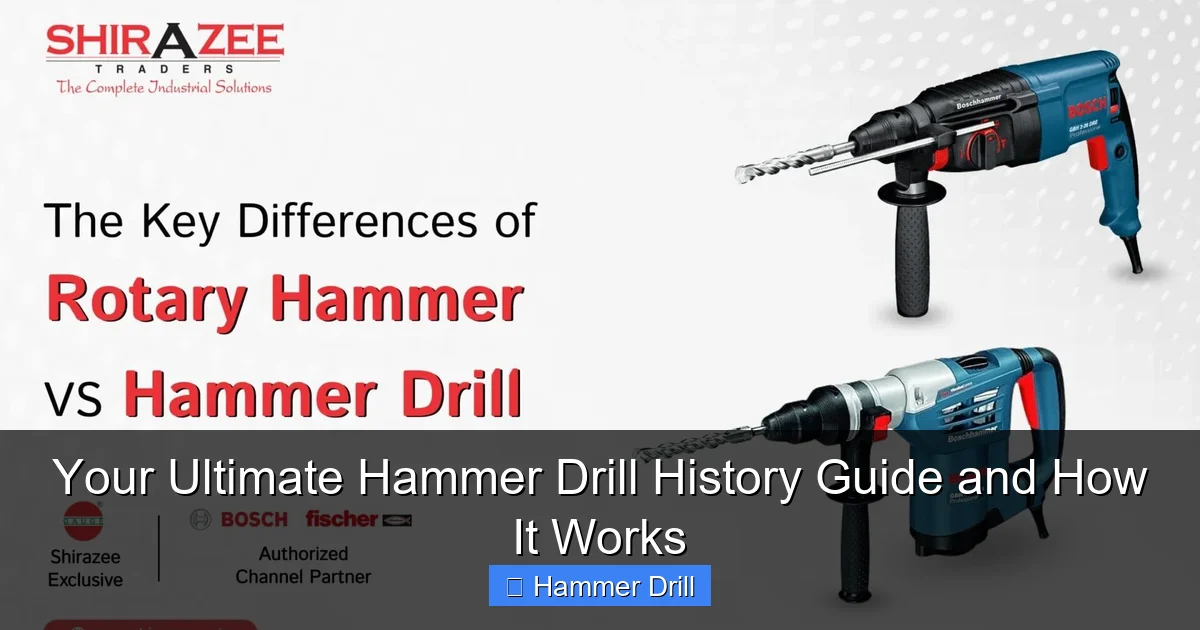
While often used interchangeably, these terms describe different tools. A hammer drill is essentially a heavy-duty drill with hammering capability. It’s designed primarily for making holes. A rotary hammer is a more powerful tool that can also function as a small demolition hammer.
Rotary hammers use a more robust hammer mechanism and typically have a chisel-only mode. They’re better suited for light chipping and breaking tasks. If you need a tool primarily for drilling, choose a hammer drill. If you need versatility for drilling and light demolition, consider a rotary hammer.
For a detailed comparison of these tools, check out our guide on the difference between a drill and a hammer drill. This will help you understand which tool suits your specific needs.
Practical Applications and Uses
Hammer drills serve countless purposes in construction and home improvement.
Masonry Work
The primary use of a hammer drill is creating holes in concrete, brick, and block walls. Electricians use them to run conduit and install junction boxes. Plumbers drill holes for pipes and pipe hangers. Contractors install anchor bolts and concrete screws. The hammer drill makes these tasks quick and precise.
Different drill bits are required for various materials. Carbide-tipped masonry bits work best for concrete and brick. Diamond core bits handle reinforced concrete and provide cleaner holes. For tile work, special diamond-tipped bits prevent cracking while drilling precise holes.
DIY Projects
Homeowners use hammer drills for numerous projects. Installing shelves on masonry walls requires drilling pilot holes for anchors. Hanging heavy mirrors or artwork on brick fireplaces needs secure mounting points. Building outdoor structures like pergolas often requires anchoring posts into concrete footings.
When working on DIY projects, start with a small pilot hole. This helps guide the larger bit and prevents wandering. Use masking tape on the surface to reduce chipping. Always wear safety glasses and a dust mask when drilling masonry. The dust created is harmful if inhaled.
For more guidance on specific applications, our article on how to use a drill for screws into a wall provides detailed instructions for various wall types.
Choosing the Right Hammer Drill
Selecting the perfect hammer drill requires careful consideration of your needs and budget.
What to Consider
First, determine your primary use. Light DIY projects need a 1/2-inch corded or compact cordless model. Medium-duty work benefits from a 3/4-inch corded or mid-size cordless hammer drill. Heavy professional use requires a full-size corded or high-voltage cordless model.
Consider the materials you’ll drill most often. For occasional concrete drilling, a basic hammer drill suffices. For daily use in reinforced concrete, invest in a more powerful model with SDS-Plus or SDS-Max. If you work overhead frequently, weight becomes a critical factor.
Top Features to Look For
Variable speed triggers provide better control for different materials. Look for a minimum range of 0-1,000 RPM and 0-20,000 BPM. Higher speeds work better for smaller holes in softer materials. Lower speeds deliver more torque for larger holes in hard concrete.
Active vibration control reduces user fatigue during extended use. This feature uses counterweights or dampeners to minimize tool vibration. Electronic feedback systems maintain speed under load, preventing motor bogging. LED work lights illuminate dark corners and improve accuracy.
For cordless models, consider battery platform compatibility. Many manufacturers offer interchangeable batteries across their tool lines. This can save money if you already own other tools from the same brand. Look for at least an 18-volt system for adequate power.
When researching options, our best cordless drill reviews can help you understand battery performance and overall tool quality.
Maintenance and Care
Proper maintenance extends your hammer drill’s lifespan and ensures consistent performance.
Regular Maintenance Tips
Clean your hammer drill after each use. Wipe away dust and debris from the housing, chuck, and vents. Use compressed air to blow out internal dust accumulation. Never use water or solvents directly on the tool.
Check the carbon brushes every 50 hours of use. Worn brushes reduce performance and can damage the motor. Replace them when they measure less than 1/4 inch in length. Most modern tools have brush wear indicators that alert you when replacement is needed.
Inspect the chuck regularly for wear or damage. Apply a light coat of lithium grease to the chuck mechanism every few months. This prevents corrosion and ensures smooth operation. For SDS models, clean the slots in the chuck with a small brush to remove debris.
Troubleshooting Common Issues
If your hammer drill isn’t hammering, the most common cause is worn carbon brushes. Other possibilities include a damaged hammer mechanism or stripped gears. Listen for unusual noises that might indicate internal problems. Stop using the tool immediately if you notice grinding or clicking sounds.
Overheating is another common issue. If your tool shuts off due to heat, allow it to cool for 15-20 minutes. Check that the ventilation slots are clear of debris. Overheating can also indicate excessive load or worn bearings.
Poor drilling performance often results from dull bits or incorrect speed settings. Replace worn bits regularly. Using the wrong mode can also cause problems. Ensure you’re in hammer-drill mode when working with masonry. Using drill-only mode on concrete will quickly burn out the motor.
For more detailed troubleshooting, especially when comparing different power tools, our guide on impact drivers vs hammer drills explains common issues and solutions.
Conclusion
The hammer drill has come a long way since its humble beginnings in the 19th century. From crude manual tools to sophisticated cordless marvels, this essential device has revolutionized how we work with concrete and masonry. Understanding its history helps appreciate the engineering behind modern models.
Today’s hammer drills offer unprecedented power, convenience, and versatility. Whether you’re a professional contractor or a weekend DIYer, there’s a hammer drill perfectly suited to your needs. By choosing wisely and maintaining your tool properly, you’ll enjoy decades of reliable service.
As battery technology continues to improve, cordless hammer drills will become even more powerful and portable. Future innovations may include smart sensors, improved ergonomics, and even greater efficiency. The hammer drill’s evolution continues, driven by the needs of users who demand performance and reliability.
🎥 Related Video: Working of a Bicycle Wheel Hub Explained
📺 kya
Working of a bicycle wheel hub explained which shows how the mechanism let you take a break from pedaling.
