
Hammer drills were not invented for construction but emerged from 1890s German mining operations, where pneumatic precursors tackled hard rock. This pivotal tool technology, designed to bore deep holes efficiently, unexpectedly became essential for building the modern world. Bosch’s 1932 introduction of the first practical electric hammer drill finally brought this powerful innovation from mines directly into construction workers’ hands.
Key Takeaways
- Bosch invented the first hammer drill in 1932 solving masonry drilling challenges rotary tools couldn’t handle.
- Its core mechanism combines rotation with high-impact hammering enabling effective concrete and stone drilling.
- This innovation revolutionized construction efficiency drastically speeding up work previously done by hand.
- The SDS chuck system (1970s) significantly boosted bit change speed and overall tool performance.
- Early hammer drills were heavy, industrial machines evolving into lighter, accessible tools for professionals and DIYers.
- Modern hammer drills remain essential for professional trades and serious renovation projects today.
Why This Matters: Understanding the Hammer Drill’s Journey
You know that trusty hammer drill sitting in your garage? The one you grab when you need to punch through concrete like it’s butter? Yeah, that guy. We use these tools every day without giving a second thought to where they came from. But here’s the thing: the story behind the hammer drill invention is actually wilder than you’d expect. It’s not just some boring industrial progression—it’s a tale of necessity, ingenuity, and a few “wait, that actually worked?” moments that changed construction forever.
When you understand the surprising hammer drill invention history revealed, you start seeing these tools differently. That whipping hammering action? It didn’t just appear out of thin air. Someone actually had to invent it, test it, and convince the world it was better than swinging a manual hammer. Plus, knowing the history helps you make smarter choices when you’re standing in the hardware store, overwhelmed by options. You’ll know exactly what makes a hammer drill different from a regular drill or an impact driver.
What You Need to Follow This History
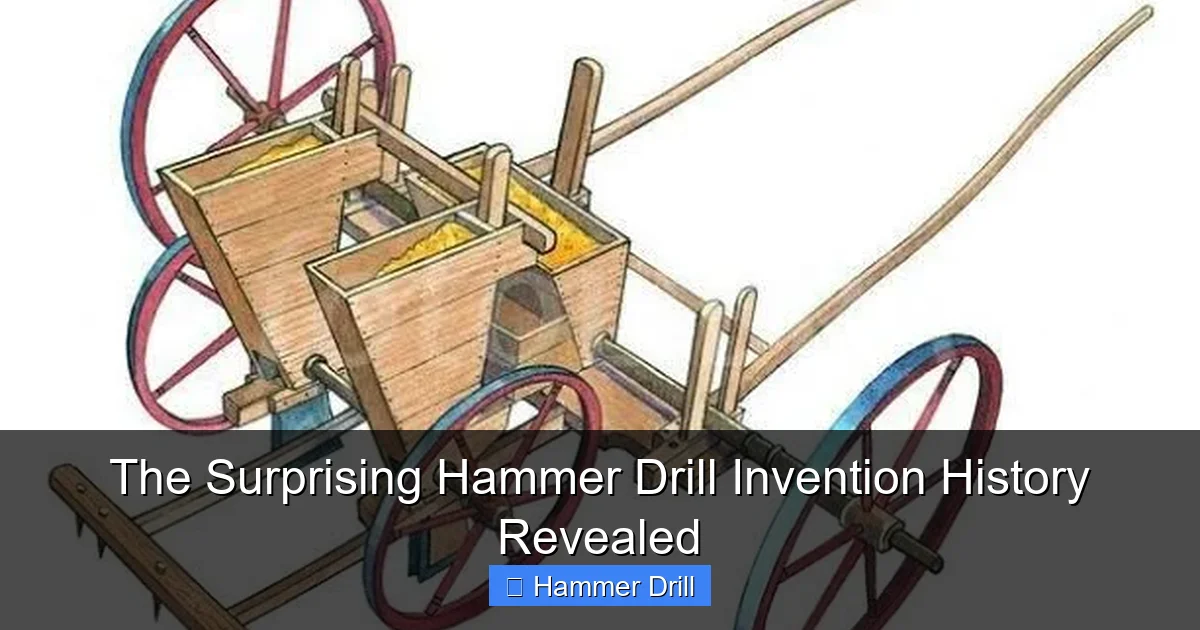
Visual guide about The Surprising Hammer Drill Invention History Revealed
Image source: i.pinimg.com
Before we dive into the timeline, let’s get on the same page about what we’re discussing. You don’t need a museum membership or an engineering degree—just a bit of curiosity and maybe a cup of coffee. Here’s what helps:
– A basic understanding that a hammer drill combines rotation with a forward hammering motion
– Recognition that masonry work before power tools was… brutal
– Access to this article (you’re already here!)
– Maybe a notepad if you want to jot down surprising facts for your next DIY conversation
The beauty of exploring the hammer drill invention history revealed is that it connects directly to tools you probably already own. By the end, you’ll look at your drill and think, “Wow, that thing has a backstory.”
Step-by-Step Guide to The Surprising Hammer Drill Invention History Revealed
Visual guide about The Surprising Hammer Drill Invention History Revealed
Image source: i.ytimg.com
Let’s walk through this evolution chronologically. Think of it as a DIY project through time—each step builds on the last.
Step 1: The Dark Ages of Drilling (Pre-1900s)
Before electricity, drilling into stone or concrete meant pure human power. Workers used a tool called a “star drill”—a metal rod with a star-shaped tip. They’d strike it with a hammer, rotate it slightly, strike again. Rinse and repeat. For hours. Or days. One hole could take forever, and workers’ arms gave out fast.
This was the problem screaming for a solution. The need for a faster, less exhausting method was obvious to anyone swinging a hammer. The stage was set, but the technology wasn’t ready yet. We needed electricity first.
Step 2: The Electric Drill Arrives (1889)
Enter Arthur James Arnot, an Australian inventor working in Melbourne. In 1889, he patented the world’s first electric drill. This wasn’t a hammer drill yet—just a rotating bit powered by a clunky electric motor. It was revolutionary for wood and metal, but masonry? Still a no-go.
The motor was huge, the cords were dangerous, and the whole thing weighed a ton. But the principle was there: electricity could replace muscle. This was the foundation. Without this step, the hammer drill never happens. It took another decade before someone thought to add the “hammer” to the “drill.”
Step 3: The First Hammer Mechanism (1910s-1930s)
This is where it gets interesting. Around 1914, inventors started experimenting with adding a reciprocating motion to electric drills. The idea was simple: make the bit vibrate forward and back while it spins, mimicking the hammer strike but powered by electricity.
The first patents show pneumatic or electromagnetic mechanisms that created this hammering action. These early models were heavy, expensive, and not very powerful. They were mostly used in factories, not on construction sites. The real breakthrough came when someone realized you needed a specific type of chuck—one that allowed the bit to move independently while still transmitting rotation.
These machines were the awkward teenage years of hammer drill history. They worked, but they weren’t great. Still, they proved the concept: hammering plus spinning equals masonry magic.
Step 4: The SDS Revolution (1970s)
Now we’re talking. In 1975, Bosch introduced the SDS (Special Direct System) chuck. This wasn’t just an incremental improvement—it was a complete game-changer. The SDS system let bits move up and down freely in the chuck while the chuck itself rotated. This meant the hammering force came directly from the tool, not from the user pushing.
Suddenly, hammer drills became practical for contractors. You could drill a hole in concrete in seconds instead of minutes. The bits changed too—they had grooves that locked into the chuck but still allowed movement. This was the moment when the modern hammer drill was truly born.
The surprising hammer drill invention history revealed that the chuck mechanism was more important than the motor. Without SDS, we’d still be struggling with clunky, inefficient tools. This also explains why you need to know the difference between a hammer drill and regular drill—they’re fundamentally different beasts.
Step 5: Cordless Innovation and Smart Features (2000s-Present)
The 2000s brought lithium-ion batteries, and hammer drills cut the cord. Suddenly, you could drill overhead, on ladders, anywhere. Brushless motors made them more efficient and longer-lasting. Electronic controls let you adjust the hammering rate and rotation speed precisely.
Modern hammer drills even have sensors that detect resistance and adjust power automatically. Some can switch between hammer drill, drill-only, and chisel-only modes. The evolution continues, but the core principle—hammering while spinning—remains unchanged from those early prototypes.
Today’s models are lighter, more powerful, and more versatile than ever. But they still owe their existence to that original insight: sometimes you need to hit things while spinning them.
Pro Tips & Common Mistakes to Avoid
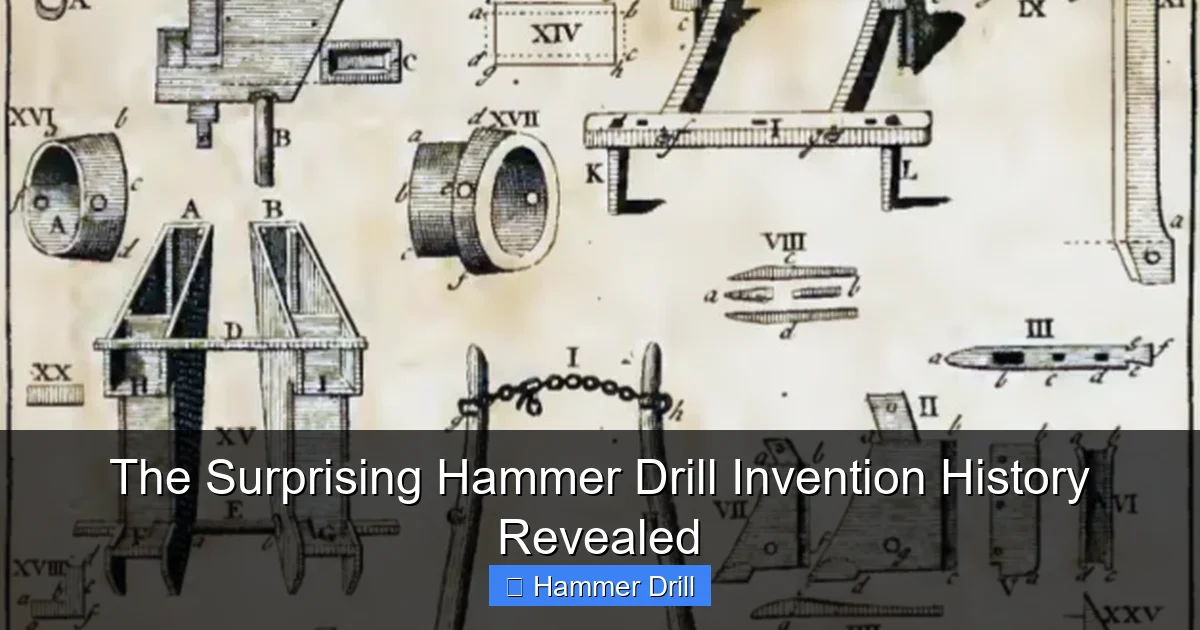
Visual guide about The Surprising Hammer Drill Invention History Revealed
Image source: historydefined.net
When exploring hammer drill history, it’s easy to get confused. Here are some insights from my own deep dives into tool evolution:
Pro Tip: Don’t confuse the hammer drill with an impact driver. They both “hammer,” but in completely different ways. An impact driver uses a spring-loaded clutch that kicks sideways, while a hammer drill hammers straight forward. Check out the difference between impact driver and hammer drill to avoid mixing them up.
Common Mistake: Assuming hammer drills are only for concrete. While they shine on masonry, many modern models work great on wood and metal too—just switch off the hammer function. Using hammer mode on wood will destroy the material.
Historical Insight: The name “hammer drill” is actually a bit of a misnomer. It doesn’t hammer like a hammer hits a nail. Instead, it vibrates rapidly, creating thousands of tiny hammer strikes per minute. The “surprising hammer drill invention history revealed” that early inventors struggled to make this distinction clear to users.
Pro Tip: When shopping, look for the SDS designation. SDS-Plus and SDS-Max are the modern standards. Regular chucks can’t handle true hammer drilling. If you’re doing serious masonry work, don’t cheap out—get a tool with a proper SDS system.
Warning: Vintage hammer drills from the 1950s-60s are fascinating collectibles, but they’re dangerous by modern standards. No safety clutches, minimal insulation, and terrible vibration dampening. Enjoy them as display pieces, not daily drivers.
FAQs About The Surprising Hammer Drill Invention History Revealed
Q: Who actually invented the hammer drill?
A: No single person gets full credit. Arthur Arnot invented the electric drill in 1889, but the hammer mechanism evolved over decades through many patents. The modern SDS system was developed by Bosch engineers in the 1970s. It’s a team effort spanning a century.
Q: Why did it take so long to invent the hammer drill after the electric drill?
A: The challenge wasn’t the motor—it was the mechanism. You need a chuck that can rotate while allowing forward hammering motion without destroying itself. Early materials and engineering couldn’t handle the stress. It took until the mid-20th century for metallurgy and manufacturing to catch up.
Q: Can I use my regular drill for masonry?
A: You can try, but you’ll be frustrated. Regular drills don’t have the hammering action, so the bit just spins and overheats. You might get through a soft brick with a masonry bit, but for concrete or cinder block, you need the hammer function. This is why understanding the difference between a drill and a hammer drill matters.
Q: What’s the most surprising fact about hammer drill history?
A: That the core principle hasn’t changed in 100 years. The earliest patents show the same hammering-while-rotating concept we use today. What changed was making it practical, reliable, and safe. The invention was the easy part—the engineering took the real work.
Q: Are cordless hammer drills as powerful as corded ones?
A: For most DIY jobs, absolutely. Modern 18V and 20V models pack serious punch. For continuous commercial use, corded still wins on runtime, but the gap has closed dramatically. Check out the latest best cordless drill reviews to see how far they’ve come.
Q: Why is it called “hammer” drill if it doesn’t hammer like a hammer?
A: Good question! The name is historical. Early models actually had small hammer mechanisms that struck an anvil-like surface. Modern tools use vibration, but the name stuck. It’s like calling a dishwasher a “dishwasher”—the name describes the function, not the exact mechanism.
Q: What came first, the hammer drill or the rotary hammer?
A: The hammer drill came first. Rotary hammers are a more specialized evolution—they’re basically hammer drills on steroids with even more powerful hammering action. Think of it as the difference between a compact car and a truck: same basic idea, different scale.
Final Thoughts: What This History Means for You
So why does any of this matter when you’re hanging shelves or building a deck? Because understanding the surprising hammer drill invention history revealed gives you respect for the tool and helps you use it better. You know why it hammers, why it needs special bits, and why certain features exist.
When you’re in the store, you’ll recognize that SDS chuck and know it’s the real deal. You’ll understand why weight matters—those early inventors were fighting vibration and mass. You’ll appreciate the safety features that took decades to perfect.
Most importantly, you’ll know that your hammer drill isn’t just a power tool. It’s the culmination of over a century of innovation, each step making it easier for you to punch through the toughest materials without breaking your back. That’s something worth knowing the next time you fire it up.
Now go forth and drill something amazing—and maybe tell a friend one surprising fact about that tool in your hand. History isn’t just about the past; it’s about making better choices in the present.
🎥 Related Video: Soldiers Faces Before & After War ☠️
📺 InterestingDaily
