Choosing the right hammer drill power prevents tool frustration and project failure. This guide breaks down the key specs—from voltage and amps to blows-per-minute (BPM)—and explains what they mean for your work on masonry, concrete, or brick. You’ll learn how to match the tool’s power to your specific project needs, ensuring you buy a drill that’s capable but not overkill.
Staring at a wall of hammer drills can be overwhelming. Ads promise brute force, but the specs sheets are full of confusing numbers: 20V, 5.0Ah, 30,000 BPM, 2.5 Joules. What does it all mean? Buying too little power means a slow, frustrating struggle. Buying too much means wasting money on a heavy, cumbersome tool you’ll dread using.
This guide will decode hammer drill power for you. We’ll walk through every major specification, explain what it really does, and show you how to match those numbers to your projects. Whether you’re installing a shelf, building a deck, or tackling a concrete foundation, you’ll finish this guide knowing exactly which hammer drill power is right for you.
Key Takeaways
- Voltage Indicates Potential Power: In cordless drills, higher voltage generally means more torque and ability to handle tougher materials, but also more weight.
- Amp Hours (Ah) Measure Runtime: Battery capacity (Ah) tells you how long the drill can run, not how powerful it is. A higher Ah battery lasts longer between charges.
- Impact Energy (Joules) is Key for Masonry: For hammer drills, the impact energy (in joules or ft-lbs) is a critical measure of how effectively it can smash through concrete and stone.
- BPM & RPM Define Drilling Speed: Blows Per Minute (BPM) is the hammering rate, while Rotations Per Minute (RPM) is the drilling speed. You need a good balance of both for efficient masonry drilling.
- Corded Models Offer Consistent High Power: For heavy, continuous work, a corded hammer drill provides unlimited runtime and often higher impact energy than most cordless models.
- Match the Tool to Your Most Common Task: Buying a massive SDS-Plus drill for occasional picture hooks is overkill. Choose power based on the majority of your projects to get the best value.
Step 1: Understand the Core Types of Hammer Drills
Before we dive into power specs, it’s crucial to know there are two main types of hammer drills. Their fundamental mechanisms are different, which directly affects the power you need.
The Standard Hammer Drill (Cam-Action)
This is the most common type for home use. Inside, two ribbed metal discs (cams) click against each other as the motor spins. This creates a rapid, pounding “hammering” action in line with the drill’s rotation. It’s great for light to medium masonry work: drilling into brick, hollow block, or soft concrete for anchors and small holes. It’s essentially a regular drill with a hammering add-on. For a deeper look at this distinction, our article on the difference between a drill and a hammer drill is a great resource.
The Rotary Hammer (SDS-Plus/Max)
This is the professional-grade tool. It uses a piston mechanism, like a miniature jackhammer, to deliver a much more powerful, dedicated hammer blow. The drill bit also moves in a chuck system (SDS) that allows for more hammer travel. Rotary hammers are for serious masonry: drilling large holes in poured concrete, chiseling, or demolition work. They often have a “hammer-only” mode for chiseling tasks.
Step 2: Decode Cordless Hammer Drill Power (Voltage & Batteries)
For cordless drills, power starts with the battery system. The two numbers you’ll see are Voltage (V) and Amp-Hours (Ah).
Visual guide about How to Choose the Right Hammer Drill Power Explained
Image source: polishperfect.co
Voltage (V): The Power Potential
Think of voltage like the size of a tool’s engine. A higher voltage system can deliver more power (torque) to the motor. This is essential for driving large bits through hard materials without stalling.
- 12V-18V: Perfect for general DIY, light framing, and drilling into wood or drywall. Many 18V models have enough power for occasional brick or block work.
- 20V-24V (Often marketed as 18V/20V Max): This is the modern sweet spot for serious DIYers and pros. They offer excellent power for most masonry tasks, driving large auger bits, and continuous use.
- 36V-60V (FlexVolt/Brushless Systems): These are heavy-duty systems. Choose this if you’re regularly drilling large-diameter holes in concrete or using the tool all day on a construction site. They are more powerful but also heavier and more expensive.
Tip: If you’re building a toolkit, consider investing in a brand’s 18V/20V Max platform. You can often use the same batteries for their other tools, like the models listed in our guide to the best cordless drill.
Amp-Hours (Ah): The Fuel Tank
Amp-hours measure battery capacity, not power. A higher Ah rating means the battery can run longer before needing a recharge.
- 2.0Ah-3.0Ah: Lighter, more compact. Good for short tasks and overhead work where weight matters.
- 4.0Ah-6.0Ah: The standard for all-day DIY projects. Provides a great balance of runtime and manageable weight.
- 8.0Ah+: For marathon sessions. These are large, heavy batteries best for high-drain tools like rotary hammers used constantly.
Simple Rule: Voltage tells you how strong the drill can be. Amp-hours tell you how long it can run at that power.
Step 3: Decode the Hammering Specs (The “Hammer” in Hammer Drill)
This is where hammer drills separate from regular drills. Pay close attention to these numbers when drilling into masonry.
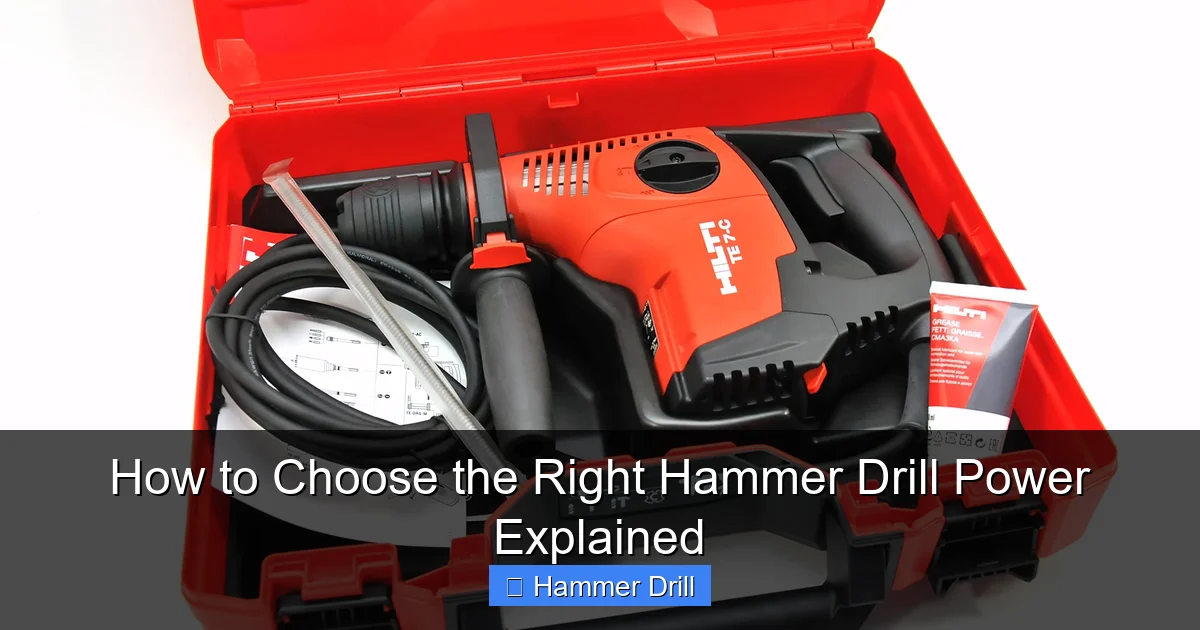
Visual guide about How to Choose the Right Hammer Drill Power Explained
Image source: m.media-amazon.com
Impact Energy (Joules or ft-lbs)
This is arguably the most important power spec for breaking masonry. It measures the force of each individual hammer blow.
- 1.0 – 2.0 Joules: Found on standard cam-action hammer drills. Sufficient for brick, block, and soft concrete up to about 1/2 inch.
- 2.0 – 5.0 Joules: Common for consumer-grade rotary hammers (SDS-Plus). Can handle poured concrete, drilling for anchors, and holes up to 1 inch.
- 5.0+ Joules: Professional-grade rotary hammer territory (SDS-Max). For core drilling, heavy chiseling, and demolition.
Blows Per Minute (BPM)
This is the speed of the hammering action—how many times it pounds per minute. A higher BPM, when combined with good impact energy, means faster drilling through brittle materials.
- 20,000 – 30,000 BPM: Typical for standard hammer drills.
- 1,000 – 5,000 BPM: Typical for rotary hammers. It seems lower, but each blow is significantly more powerful (higher joules).
Analogy: A standard hammer drill is like tapping a chisel very quickly with a small hammer. A rotary hammer is like swinging a sledgehammer slowly but with tremendous force. For the sledgehammer approach in hand tools, learn about the sledge hammer and how it’s used.
Step 4: Match Power to Your Project (The Practical Guide)
Now, let’s apply these specs to real jobs. This is the ultimate step in choosing the right hammer drill power.
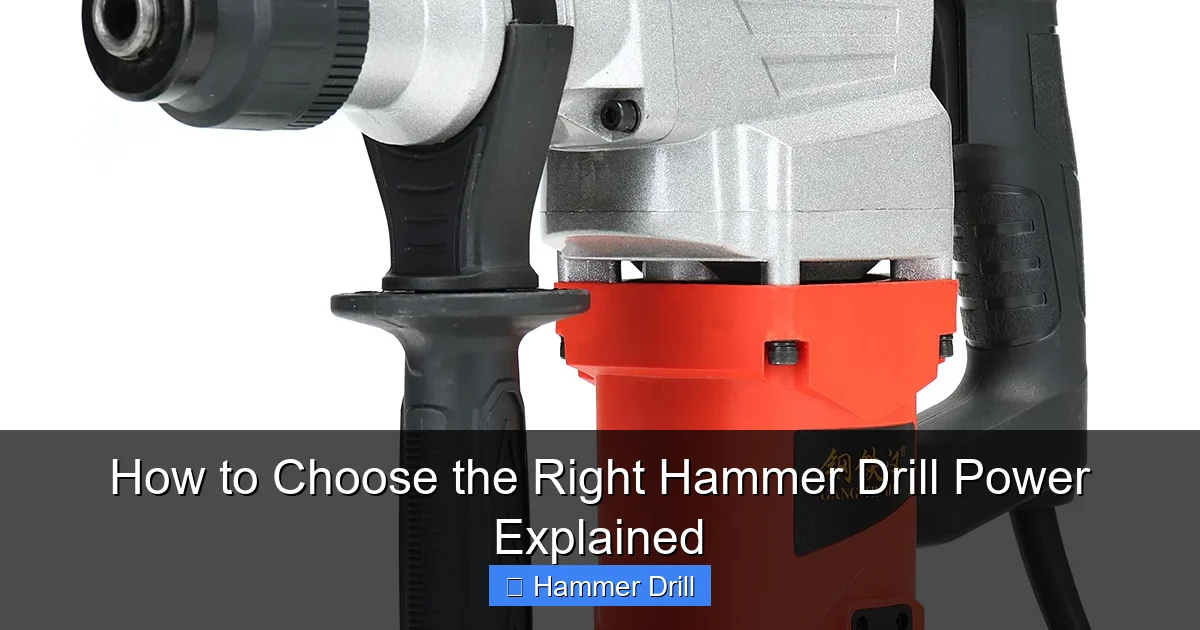
Visual guide about How to Choose the Right Hammer Drill Power Explained
Image source: alexnld.com
Light DIY & Home Tasks
Projects: Hanging pictures on drywall, assembling furniture, drilling small pilot holes in wood, occasionally drilling into a brick wall for a small anchor.
Recommended Power: A standard 18V/20V Max cordless drill/driver with a hammer function is perfect. Impact energy around 1.0-1.5 Joules is plenty. You likely don’t need a dedicated rotary hammer. For more on basic drilling technique, see our guide on how to use a drill for screws into a wall.
Moderate DIY & Renovation
Projects: Building a deck, installing shelves into studs, drilling multiple 1/4″ to 1/2″ holes in brick or concrete block for wall mounts, light tile removal.
Recommended Power: A robust 20V Max cordless hammer drill with good impact energy (1.5-2.0 J) OR a compact corded hammer drill (6-7 Amps). This provides the extra punch for masonry without being too heavy.
Serious Masonry & Construction
Projects: Drilling holes 1/2″ to 1″ in poured concrete for ledger boards or plumbing, installing concrete anchors, chiseling away old mortar, small demolition work.
Recommended Power: This is rotary hammer (SDS-Plus) territory. Look for a corded model (8+ Amps) for unlimited runtime or a high-performance cordless 20V/36V model. Aim for impact energy of 2.0 Joules or higher.
Heavy-Duty Professional Work
Projects: Core drilling for plumbing/electric, breaking up concrete slabs, continuous chiseling, drilling large-diameter holes in reinforced concrete.
Recommended Power: A large corded rotary hammer (SDS-Max or spline drive) or a high-voltage cordless system (36V+). Impact energy will be 5.0 Joules and above.
Step 5: Consider Other Factors That Affect Performance
Power specs don’t tell the whole story. These features determine how effectively that power is used.
Motor Type: Brushed vs. Brushless
Brushed Motors: Older, simpler technology. They are less efficient, generate more heat, and have shorter lifespans. Often found on budget tools.
Brushless Motors: Modern, more efficient. They deliver more power and runtime from the same battery, run cooler, and last much longer. They are a key feature in higher-end, powerful tools.
Chuck Type & Size
The chuck holds the bit. A secure grip is vital for transferring power.
- Keyless Chuck: Common on standard hammer drills. Convenient for quick bit changes.
- SDS-Plus Chuck: The standard for rotary hammers. Allows bit to slide back and forth for more powerful hammering. Uses special SDS-plus bits.
- Chuck Size (e.g., 1/2″): This indicates the maximum shank diameter the chuck can hold. A 1/2″ chuck is more robust and suitable for larger, more powerful bits.
Troubleshooting: Signs You’ve Chosen the Wrong Power
- The Drill Constantly Stalls or Stops: This is the clearest sign of insufficient power. The motor lacks the torque (twisting force) for the task.
- Drilling is Extremely Slow in Masonry: Your hammer drill’s impact energy (Joules) is too low for the material. You need a more powerful hammer mechanism, likely a rotary hammer.
- The Tool or Battery Gets Dangerously Hot: You are overworking a tool not designed for continuous, heavy-duty use. Either take frequent breaks or upgrade to a more powerful, professional-grade model.
- You’re Exhausted from Using It: The tool is too heavy and powerful for your light-duty tasks. You bought overkill. A smaller, lighter drill would be more efficient and comfortable.
Conclusion: Power is a Tool, Not a Trophy
Choosing the right hammer drill power isn’t about getting the biggest number. It’s about smart matching. The most powerful SDS-Max hammer on the market is a terrible choice for hanging curtain rods, just as a basic 12V drill is a nightmare for setting deck footings in concrete.
Remember the process: Identify your most common project type. Use that to guide your need for a standard hammer drill vs. a rotary hammer. Then, read the specs with understanding: Voltage and Amp-hours for cordless runtime and potential, and Impact Energy (Joules) for masonry-breaking force. Finally, consider the supporting features like brushless motors and chuck type that help deliver that power effectively.
By taking this informed approach, you’ll invest in a tool that feels like a capable partner, not an underwhelming toy or an exhausting burden. You’ll get your projects done faster, safer, and with more satisfaction. Now, go forth and drill with confidence!
🎥 Related Video: Drill vs Impact Driver vs Hammer Drill EXPLAINED | RYOBI Tools 101
📺 RYOBI TOOLS USA
LIKE & SUBSCRIBE for new tool announcements, DIY projects, and more! Not all tools were made equal and in this episode of …