
Master torque settings on your hammer drill to prevent stripped fasteners and material damage while maximizing performance. This complete power settings chart provides precise values for concrete, wood, metal, and plastic—your essential guide for professional results.
Key Takeaways
- Match torque to material hardness to prevent stripping and bit damage.
- Higher torque isn’t always better; excessive force ruins materials and fasteners.
- Use the lowest effective setting for precision work and delicate materials.
- Consult your drill’s torque chart before each project for optimal results.
- Start low and increase gradually until fasteners seat properly.
- Hammer mode needs unique torque settings separate from regular drilling.
- Over-tightening wastes battery and reduces drill lifespan unnecessarily.
Why This Matters / Understanding the Problem
Let me tell you about the time I ruined a perfectly good piece of oak. I was hanging shelves in my living room, feeling proud of my DIY skills. I grabbed my hammer drill, set it to what I thought was a reasonable torque, and pulled the trigger. The screw buried itself too deep, stripping the wood and leaving me with a repair job I didn’t plan for.
That’s when I realized something important. Hammer drills are powerful beasts. Without the right torque settings, you’re basically driving blind. You’ll either strip screws, damage your materials, or worse—injure yourself. That’s why a hammer drill torque guide complete power settings chart isn’t just another piece of paper. It’s your roadmap to perfect results every single time.
Think of it this way. Your hammer drill has more power than you probably need for most jobs. The torque guide helps you harness that power precisely. No more guesswork. No more frustration. Just clean, professional-looking work that makes you feel like a pro.
What You Need
Before we dive into the step-by-step process, let’s gather our supplies. Don’t worry—it’s not a long list.
Visual guide about Hammer Drill Torque Guide Complete Power Settings Chart
Image source: settingaid.com
- Your hammer drill (obviously)
- A printed or digital torque guide chart
- The screws or fasteners you plan to use
- A scrap piece of your target material
- Safety glasses and dust mask
- A notepad and pen for recording settings
Most hammer drills come with a basic torque chart in the manual. But let’s be honest—those are often confusing and hard to read. That’s why having a dedicated hammer drill torque guide complete power settings chart makes all the difference. You can find these online or create your own based on the material and screw combinations you use most.
Step-by-Step Guide to Hammer Drill Torque Guide Complete Power Settings Chart
Step 1: Understand Your Hammer Drill’s Torque Settings
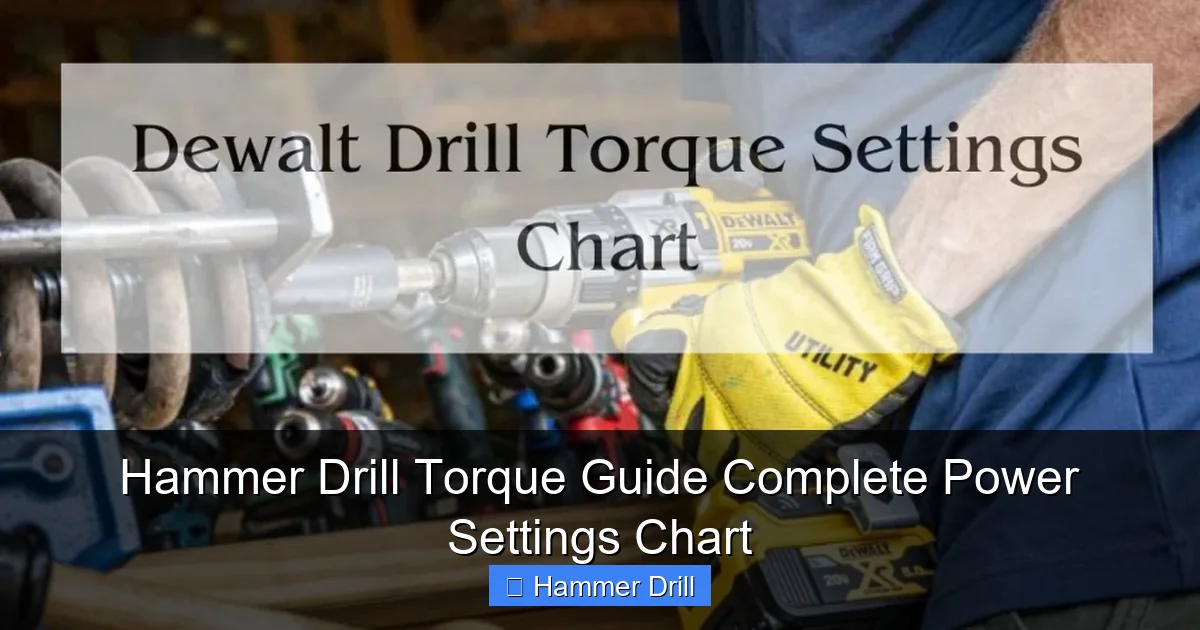
First things first. Let’s talk about what those numbers on your drill actually mean. Your hammer drill has a torque adjustment collar, usually right behind the chuck. Those numbers aren’t random—they represent different torque levels.
Visual guide about Hammer Drill Torque Guide Complete Power Settings Chart
Image source: settingaid.com
Lower numbers mean less torque. Higher numbers mean more force. It’s that simple. For soft materials like drywall, you’ll want a low setting. For hard materials like concrete or steel, you’ll need more torque.
Here’s a quick mental model I use. Think of torque like the pressure you apply when turning a doorknob. Gentle pressure for a light push. Firm pressure when you really need to get it open. Your drill works the same way.
Step 2: Read the Power Settings Chart Correctly
Now, let’s decode that hammer drill torque guide complete power settings chart. These charts typically have three columns: material type, screw size, and recommended torque setting.
Start by finding your material. Is it wood, metal, concrete, or drywall? Each material has different torque requirements. Wood needs less torque than concrete. That’s because wood is softer and more forgiving.
Next, look at your screw size. A #6 screw needs less torque than a #10 screw. The chart will tell you exactly which setting to use for each combination. I like to highlight the rows I use most often. It saves time on future projects.
Step 3: Match Material to Torque Settings
This is where most people go wrong. They assume more torque is always better. That’s a dangerous assumption.
Let’s say you’re working with soft pine. The chart might recommend torque setting 3-5. If you crank it to 10, you’ll strip the screw head or worse—split the wood. Been there, done that. It’s not pretty.
For harder materials like concrete, you’ll need higher settings, usually 8-12. But even then, you don’t always want maximum torque. The goal is to sink the screw flush without damaging the material or the screw.
Step 4: Adjust for Screw Size and Type
Not all screws are created equal. A wood screw needs different torque than a sheet metal screw. The thread pattern matters too.
Coarse threads need less torque because they bite into material faster. Fine threads need more torque to drive them in. The hammer drill torque guide complete power settings chart should account for this, but you need to pay attention.
I learned this the hard way when I tried using the same setting for deck screws and drywall screws. The deck screws were fine. The drywall screws? Total disaster. Now I always double-check the screw type before adjusting my drill.
Step 5: Test on Scrap Material First
Please, please, please do this step. I can’t stress it enough. No matter how accurate your chart is, your specific material might be different.
Take that scrap piece of wood, metal, or drywall. Set your drill to the recommended torque. Do a test run. Does the screw sink properly? Does it feel like it’s stripping? Adjust accordingly.
This five-second step saves hours of frustration. I keep scrap materials from every project. It’s become a habit. And honestly, it’s saved my bacon more times than I can count.
Step 6: Make Fine Adjustments
Your initial setting is just a starting point. You’ll likely need to tweak it. If the screw isn’t sinking deep enough, increase the torque by one or two clicks. If it’s stripping, decrease it.
These small adjustments make a huge difference. I usually work in increments of one or two settings. Going from 5 to 10 is too big a jump. You’ll overshoot and cause problems.
Listen to your drill too. A high-pitched whine usually means too much torque. A labored sound means not enough. Your drill is talking to you. Learn its language.
Step 7: Record Your Successful Settings
Once you find the perfect setting, write it down. Create your own personalized hammer drill torque guide complete power settings chart based on your actual experience.
I keep a small notebook in my toolbox. It has pages dedicated to different materials and screws. Over time, this has become more valuable than any generic chart. It’s tailored to my specific projects and materials.
Include details like material thickness, screw length, and even humidity. Yes, humidity affects torque too. Wood behaves differently on a damp day versus a dry one.
Pro Tips & Common Mistakes to Avoid
Pro Tip: Always start with the lowest possible torque setting. You can always increase it. Starting high means you’ll likely ruin your first few screws.
Visual guide about Hammer Drill Torque Guide Complete Power Settings Chart
Image source: settingaid.com
Let me share some hard-earned wisdom. One common mistake is confusing your hammer drill with a regular drill. If you’re not sure which tool you have, check out our guide on the difference between a drill and a hammer drill. Using a hammer drill on delicate materials like tile or thin metal can cause cracking or warping. The hammering action is too aggressive for these applications.
Another mistake is ignoring the clutch. Your drill’s clutch is what engages the torque setting. If it’s not clicking, it’s not working properly. Test it regularly by setting it to a low torque and pulling the trigger. You should feel it slip and click when you meet resistance.
Many people also forget that battery level affects torque. A low battery means less power, which means your torque setting won’t deliver consistent results. Keep your batteries charged. I learned this during a big deck project when my drill started stalling mid-way through. Not fun.
Here’s a tip that changed my life. Use painter’s tape on your material. Mark the spot where you want to drill. It prevents the drill bit from slipping and gives you a clean starting point. This is especially helpful when you’re using low torque settings and need precision.
Also, consider the angle. Holding your drill at a 90-degree angle to the material ensures maximum torque transfer. Angled drilling reduces effectiveness and can strip screws faster. I used to be lazy about this. My results were inconsistent. Now I take the extra second to get my stance right.
FAQs About Hammer Drill Torque Guide Complete Power Settings Chart
Q: What if my drill doesn’t have numbered torque settings?
A: That’s tricky. Some older models just have a dial without numbers. In that case, you’ll need to rely on sound and feel. Start with the dial at its lowest point. Slowly increase until you get the desired result. Take notes mentally or on paper. It’s not ideal, but it works.
Q: Can I use the same torque settings for corded and cordless hammer drills?
A: Generally yes, but with caveats. Corded drills typically deliver more consistent torque. Cordless drills can vary based on battery level and motor condition. I’d recommend testing on scrap material first. Also, check out our cordless drill category for specific recommendations on cordless models.
Q: Why does my screw keep stripping even at low torque?
A: Several factors could be at play. Your drill bit might be dull. Your material might be harder than you think. Or you might be using the wrong screw type. Try a fresh drill bit and double-check your material classification. Sometimes what looks like soft wood is actually a hardwood.
Q: How do I know if I need a hammer drill versus an impact driver?
A: Great question. Hammer drills are best for masonry and concrete. Impact drivers are better for driving long screws and fasteners. They work differently. Hammer drills hammer and rotate. Impact drivers just rotate with added impact force. For detailed projects like hanging shelves in drywall, you might not even need a hammer drill. Learn more about this in our article about the difference between impact driver and hammer drill.
Q: Should I use the same torque for pilot holes as for driving screws?
A: No. Pilot holes need minimal torque—just enough to drill the hole. Set your drill to its lowest non-hammer setting for drilling. Then switch back to the appropriate torque setting for driving the screw. I often forget to switch back and end up with stripped screws. It’s a habit worth developing.
Q: Does temperature affect torque settings?
A: Yes, especially for cordless drills. Cold batteries deliver less power. In winter, I keep my batteries in my pocket to keep them warm. This maintains consistent torque. Cold metal also behaves differently. It becomes more brittle. You might need slightly less torque in freezing conditions.
Q: Can I create my own torque guide chart?
A: Absolutely. Start with the manufacturer’s recommendations. Then test each combination on scrap material. Record what works. Over time, you’ll build a personalized hammer drill torque guide complete power settings chart that’s more accurate than any generic version. I’ve been doing this for years, and it’s incredibly useful.
🎥 Related Video: Knowing how the torque settings work #tipsandtricks #handytips #diy #usefultips #woodworkingtips
📺 Charlie’s Grandad
Final Thoughts
Using a hammer drill torque guide complete power settings chart isn’t about following rules blindly. It’s about understanding your tools and materials. It’s about working smarter, not harder.
Start simple. Use the chart as a baseline. Test on scrap. Make small adjustments. Record your results. These habits will transform how you approach projects. You’ll save time, money, and frustration. Plus, you’ll get that professional finish that makes DIY truly satisfying.
Remember, every project is different. A chart is a guide, not gospel. Trust your instincts, but also trust the process. And when in doubt, start low and work your way up. Your materials will thank you.
Now go tackle that project with confidence. You’ve got this. And if you need more specific guidance on using your drill for wall applications, don’t hesitate to read our comprehensive guide to using a drill for screws into a wall. Happy drilling!
