
Choosing between a hammer drill and an impact driver is a common DIY dilemma. This guide will clear up the confusion by explaining that a hammer drill is for drilling into hard materials like masonry, while an impact driver excels at driving long screws and bolts. You’ll learn their core functions, ideal use cases, and how to pick the perfect tool for your next project.
Key Takeaways
- Hammer Drills Are for Masonry: They combine rotation with a pounding action to break through concrete, brick, and stone.
- Impact Drivers Are for Fasteners: They deliver intense, sudden rotational force (torque) to drive long screws and lag bolts without straining your wrist.
- They Are Not Interchangeable: Using an impact driver on masonry will damage it, and a hammer drill is poor at driving screws.
- Chucks and Bits Are Different: Hammer drills use a keyed or keyless chuck for drill bits. Impact drivers use a quick-release hex chuck made for special impact-rated bits.
- The Best Choice Often is Both: For serious DIYers, a combo kit containing both tools is the most versatile and cost-effective solution.
- Know Your Project Needs: Match the tool to your primary task—building a deck? Get an impact driver. Installing a wall anchor in concrete? You need a hammer drill.
The Complete Hammer Drill vs Impact Driver Guide for DIYers
Walking into the tool aisle can be overwhelming. You see drills, drivers, hammers, and impacts. What does it all mean? Two tools that cause the most confusion are the hammer drill and the impact driver. They sound similar, but they are built for completely different jobs. Using the wrong one can ruin your project, your tool, or both.
This guide is here to help. We will break down exactly what each tool does, how it works, and when you should reach for it. By the end, you’ll be able to confidently choose the right power tool for any task on your DIY list. Let’s dive in and solve the hammer drill vs impact driver puzzle once and for all.
What is a Hammer Drill? The Masonry Master
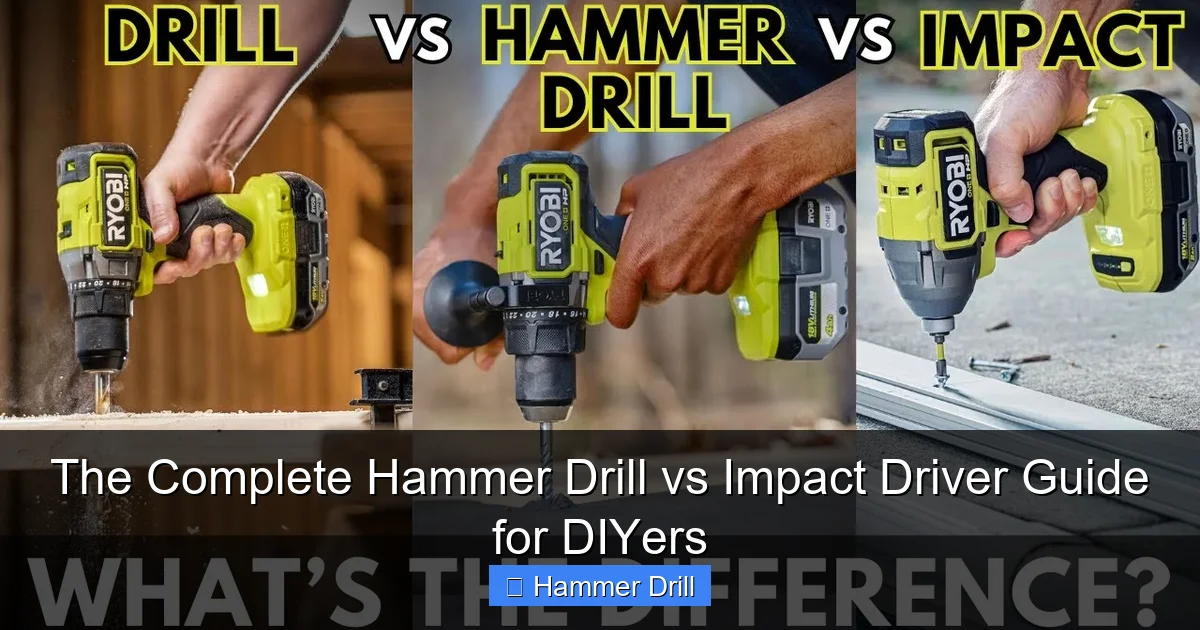
A hammer drill is a specialized power tool designed for one tough job: drilling into hard, brittle materials. Think concrete, brick, cinder block, and stone. If you need to install a wall anchor, mount a TV bracket on a concrete wall, or run cables through a masonry foundation, this is your tool.
Visual guide about The Complete Hammer Drill vs Impact Driver Guide for DIYers
Image source: i.ytimg.com
How a Hammer Drill Works
A standard drill only spins. A hammer drill does two things at once: it spins and hammers. Inside the tool, a mechanical mechanism pushes the drill bit forward in rapid, short pulses while it spins. This hammering action chips away at the material, much like a miniature jackhammer. This combination of rotation and percussion breaks through tough stuff that would quickly dull a regular drill bit. Most models have a selector switch to turn the hammer function on or off, allowing them to work as a standard drill for wood and metal when needed. For a deeper look at this distinction, see our guide on the difference between a hammer drill and regular drill.
When to Use a Hammer Drill
- Installing concrete anchors or sleeve anchors.
- Drilling holes for tapcon screws into brick.
- Creating pass-through holes in cinder block walls.
- Any drilling task involving concrete, stone, or masonry.
Pro Tip: Always use a masonry drill bit (with a carbide tip) when the hammer function is engaged. A standard twist bit will be destroyed.
What is an Impact Driver? The Screw Driving Champion
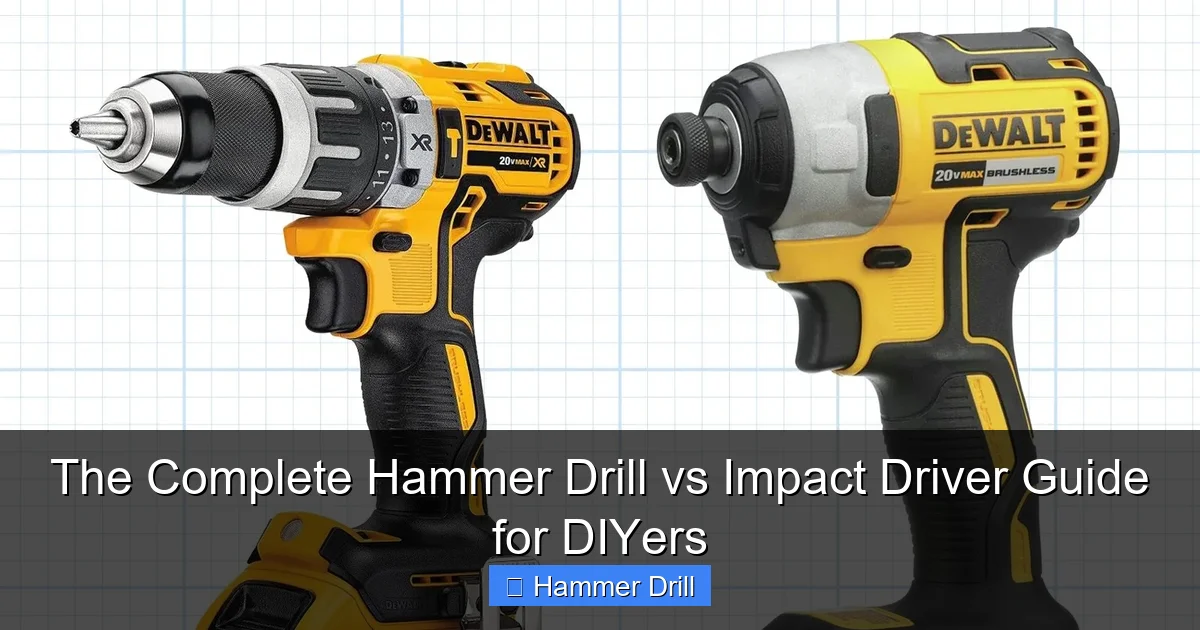
An impact driver is a torque monster built for driving and removing fasteners. Its primary job is to sink long screws, lag bolts, and stubborn bolts with incredible ease. If you’re building a deck, assembling furniture with tough hardware, or fastening lumber together, the impact driver is your best friend.
Visual guide about The Complete Hammer Drill vs Impact Driver Guide for DIYers
Image source: familyhandyman.com
How an Impact Driver Works
Instead of a constant twisting force, an impact driver stores energy in a rotating mass (a hammer) and then releases it in sudden, powerful “impacts.” You’ll hear a loud, rapid “rat-tat-tat” sound when it’s working. This mechanism delivers high rotational force (torque) without transferring the reactive twist back into your hand and wrist. This means you can drive a 4-inch lag bolt with one hand and without the bit slipping out of the screw head. It uses a quick-release hex chuck that only accepts bits with a 1/4-inch hex shank. You can learn more about this powerful mechanism in our article that explains the difference between impact driver and impact wrench.
When to Use an Impact Driver
- Driving long deck screws or structural wood screws.
- Installing or removing lag bolts and carriage bolts.
- Assembling projects that require lots of heavy-duty screws.
- Any task where a standard drill struggles or the bit keeps cam-out (slipping).
Pro Tip: Always use impact-rated driver bits. They are made from tougher steel and have a special design to withstand the intense pounding of the tool. Standard bits will snap.
Side-by-Side Comparison: Hammer Drill vs Impact Driver
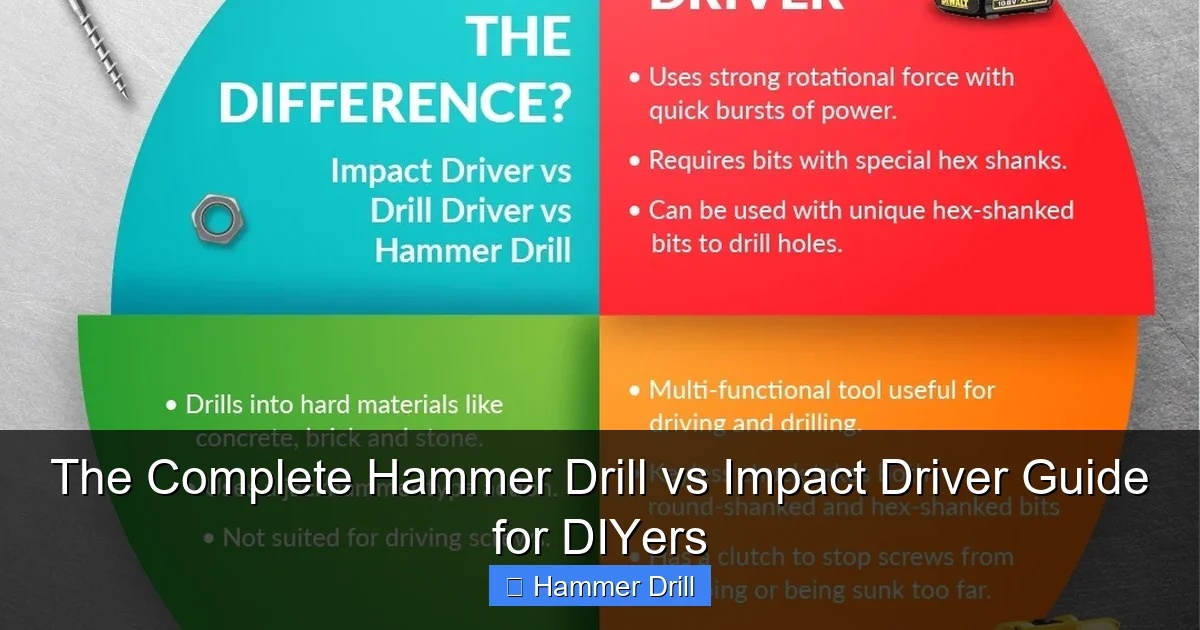
Let’s put these tools head-to-head to see their differences clearly.
Visual guide about The Complete Hammer Drill vs Impact Driver Guide for DIYers
Image source: 64.media.tumblr.com
Primary Function
- Hammer Drill: Drilling holes in masonry/concrete.
- Impact Driver: Driving and removing screws/bolts.
Key Mechanism
- Hammer Drill: Forward hammering (percussion) + rotation.
- Impact Driver: Rotational impacting (high torque pulses).
Chuck Type
- Hammer Drill: Keyed or keyless 3-jaw chuck (holds round shank bits).
- Impact Driver: Quick-release 1/4″ hex chuck.
Sound & Feel
- Hammer Drill: Loud grinding/pounding sound. You feel a forward vibration.
- Impact Driver: Loud, rapid “rat-tat-tat” sound. You feel a twisting pulse in the tool, not your wrist.
Best For…
- Hammer Drill: Concrete walls, brick, stone, tile (with correct bit).
- Impact Driver: Deck building, furniture assembly, automotive work, any heavy-duty fastening.
How to Choose the Right Tool for Your Project
Not sure which one you need? Follow this simple decision guide. Ask yourself: “What is the MAIN task for my upcoming project?”
Choose a HAMMER DRILL if you are…
- Mounting shelves or TV brackets on a concrete/brick wall.
- Installing a safe into a concrete floor.
- Running electrical conduit through a foundation wall.
- Doing any landscaping that involves drilling into stone.
For detailed steps on preparing for and executing a wall mounting project, check out our comprehensive guide on how to use a drill for screws into a wall.
Choose an IMPACT DRIVER if you are…
- Building a wooden deck, pergola, or fence.
- Assembling a shed, play set, or large furniture kit.
- Fastening subfloor or sheathing with many screws.
- Removing a rusty or over-tightened bolt.
The DIYer’s Dream: The Combo Kit
If your projects are varied (and most DIY projects are), the smartest buy is often a cordless combo kit. These kits include both a hammer drill/driver and an impact driver, two batteries, and a charger. This gives you the ultimate flexibility for almost any task at a much better value than buying each tool separately. When shopping for such a kit, researching the best cordless drill brands and models is an excellent place to start.
Troubleshooting Common Problems
Using the right tool is the first step. Using it correctly is the second.
Hammer Drill Not Drilling into Concrete?
- Check the mode: Is the hammer function switched ON?
- Check the bit: Are you using a sharp, carbide-tipped masonry bit? A dull bit or a standard bit won’t work.
- Apply steady pressure: Let the tool do the work, but you need to provide firm, forward pressure.
- Use a slower speed: High speed generates heat and dulls the bit. Use a lower speed setting with high torque.
Impact Driver Stripping Screw Heads?
- Use the correct bit: This is the #1 cause. Use a fresh, impact-rated bit that fits the screw head perfectly (e.g., PH2 for a #2 Phillips).
- Start slow: Don’t pull the trigger all the way immediately. Start at a low speed to seat the bit, then apply full power.
- Check screw quality: Cheap, soft-metal screws strip easily. Invest in higher-quality fasteners for important projects.
Conclusion: Build Your Confidence and Your Projects
Understanding the hammer drill vs impact driver debate is a game-changer for DIYers. You are no longer guessing in the hardware store. You know that the hammer drill is your masonry expert, and the impact driver is your fastening powerhouse. Remember, trying to use one for the other’s job leads to frustration and poor results.
For the home workshop, a cordless combo kit is the ultimate win. It covers 95% of the drilling and driving tasks you’ll ever encounter. Start with the right tool for the job. Your projects will be stronger, look better, and you’ll finish them faster and with less fatigue. Now, get out there and build something great!
