

Trenches are commonly used in construction, utility installation, and excavation work. While trenching is essential for various projects, it poses significant safety risks, especially for workers working in deep, confined spaces. One of the most critical aspects of trench safety is the requirement for ladders, which serve as a means of access and egress. In this article, we will discuss at what depth ladders are required in trenches, the regulations governing their use, and best practices for ensuring worker safety.
The Importance of Ladder Use in Trenches
Ladders in trenches are a vital part of trench safety. They provide workers with a way to safely enter and exit a trench, which reduces the risk of accidents and fatalities. According to safety guidelines, the use of ladders helps prevent workers from becoming trapped or unable to escape in the event of a collapse or other emergency. Without proper means of escape, the risk of injury or death in trenching operations increases significantly.
The Occupational Safety and Health Administration (OSHA) in the United States has specific regulations regarding ladder requirements in trenches. These regulations not only apply to workers’ safety but also aim to prevent injuries related to falls, slips, and entrapment. Compliance with these standards ensures that workers have safe, reliable access to and from the trench, regardless of its depth.
When Are Ladders Required in Trenches?
The requirement for ladders in trenches is governed by the trench’s depth. According to OSHA standards, a ladder is required in a trench under the following conditions:
- Trenches 4 feet or Deeper:
OSHA mandates that if a trench is 4 feet (1.2 meters) or deeper, a ladder or another form of safe access must be provided. This depth is considered the minimum threshold where workers may be at risk of becoming trapped or unable to escape in case of an emergency. The ladder or alternative means must be installed so that workers can quickly access the surface in the event of a problem. - Trenches Greater Than 5 Feet in Depth:
For trenches deeper than 5 feet (1.5 meters), OSHA guidelines become more specific. A ladder or stairway must be located within 25 feet (7.6 meters) of workers at all times. This ensures that, regardless of the worker’s location in the trench, they can quickly escape in the event of an emergency. For larger trenches, having multiple ladders or safe access points might be necessary. - Trenches Deeper Than 20 Feet (6 meters):
In trenches deeper than 20 feet, additional safety measures, such as ladder placement and trench shoring, become even more critical. While the basic ladder requirement remains, employers must also ensure that the trench is properly supported to prevent collapse, as deeper trenches present an even higher risk of cave-ins.
OSHA and Safety Regulations
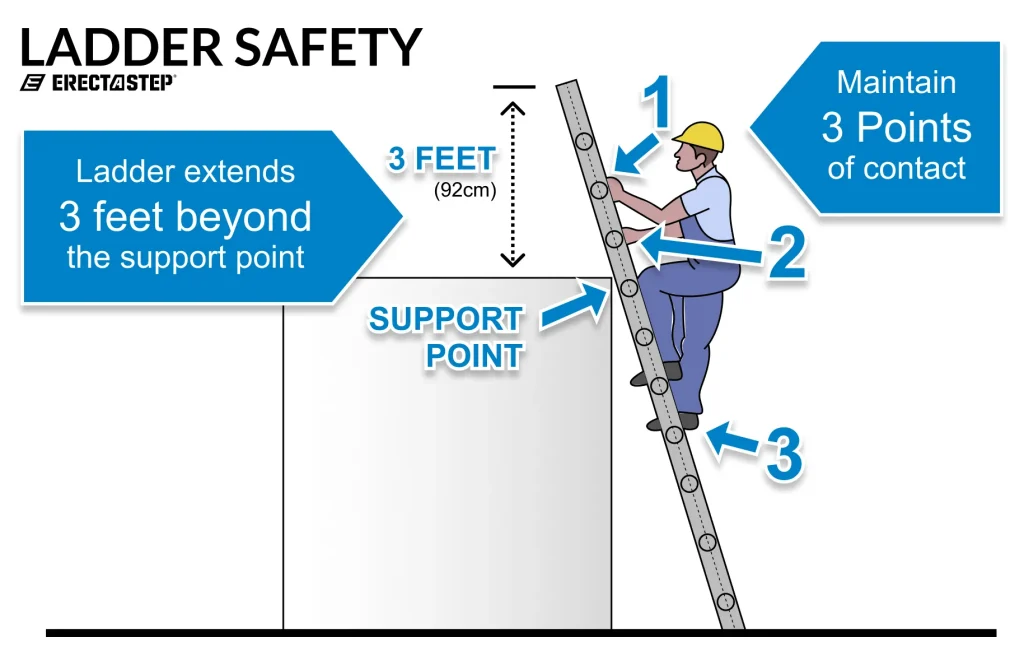
OSHA’s regulations regarding ladders in trenches can be found in 29 CFR 1926.1050-1926.1060 and are designed to ensure that workers can safely enter and exit trenches. Here are some specific details:
- Ladders must be stable and secure: The ladder must be positioned in such a way that it will not shift or move during use. This includes securing it at the top and ensuring that it is positioned against a solid surface.
- Minimum of 3 feet of ladder above the edge of the trench: The ladder should extend at least 3 feet (0.9 meters) above the trench’s edge to provide a stable handhold for workers when exiting.
- Proper angle and position: The ladder should be set at a safe angle to ensure stability. Typically, the ladder should be at a 75-degree angle from the ground.
- Alternative means of escape: In certain circumstances, such as when a ladder is impractical, other methods like ramps, stairways, or other safe access methods can be used as long as they meet safety standards.
Best Practices for Using Ladders in Trenches

Aside from following the basic regulatory requirements, there are several best practices to enhance the safety of workers when using ladders in trenches.
- Ladder Inspections:
Before use, ladders should be carefully inspected for damage, wear, and defects. Any damaged or weakened ladder should be removed from service immediately. - Correct Ladder Placement:
The ladder should be positioned in such a way that it is not obstructed by soil, debris, or other materials. It should provide an unobstructed and clear path for the worker to climb. - Maintain Proper Spacing:
Multiple ladders or safe access points should be spaced no more than 25 feet apart for trenches deeper than 5 feet. This ensures that workers always have a safe and accessible exit. - Training Workers:
Workers should be trained on how to properly use the ladder, including how to climb it safely, how to recognize hazards, and how to react in emergencies. This training can save lives in the event of an accident or collapse. - Additional Safety Measures:
In very deep trenches, using trench boxes or other protective systems can help prevent a cave-in, ensuring that workers are not trapped if a collapse occurs. These systems can be used in conjunction with ladders to further safeguard workers.
Other Safety Considerations in Trenching Operations
While ladders are essential for worker access and egress, other safety measures should also be implemented to reduce the risk of trench accidents:
- Shoring and Shielding:
For trenches deeper than 5 feet, shoring or shielding is often necessary to prevent cave-ins. Shoring involves the installation of support structures to keep the trench walls from collapsing, while shielding uses protective systems, like trench boxes, to provide a safe space for workers. - Proper Soil Classification:
Soil conditions play a significant role in trench stability. Workers should classify the soil based on its type and stability to determine the appropriate level of protection required. OSHA provides guidelines on soil types and the necessary safety measures for each. - Atmospheric Testing:
In some cases, trenches may pose additional hazards, such as the presence of harmful gases or insufficient oxygen. Air quality testing should be conducted before entry to ensure it is safe for workers. - Fall Protection:
If the trench is deep enough that workers could fall, fall protection systems such as guardrails or harnesses may be necessary to prevent injuries.
Conclusion
Ladders are an essential safety tool in trenching operations, ensuring that workers have a safe means of entry and exit. According to OSHA regulations, ladders are required in trenches 4 feet or deeper, with additional guidelines for trenches greater than 5 feet in depth. These requirements help prevent accidents, falls, and entrapment, ensuring a safer working environment. However, ladders should be seen as part of a comprehensive trench safety plan that includes proper soil classification, shoring, shielding, and training.
By following these regulations and best practices, employers can reduce the risk of trench-related accidents and protect their workers from harm. Safety should always be the top priority in any trenching operation, and the proper use of ladders is a crucial part of that effort.
RELATED POST
- Ways to Repurpose Old Wooden Ladders
- When in Use How Do You Move a Laddar
- When was the Ladder Invented
- The Articulated Ladder Safely
