Discover why saw blade direction is critical for safety and precision in every cut. This guide reveals step-by-step installation for table, circular, miter, and band saws, plus troubleshooting common issues. Stop ruining materials and risking injury – master blade orientation today!
Key Takeaways
- Direction is non-negotiable: Installing a blade backward causes dangerous kickback, poor cuts, and tool damage. Always verify rotation direction before powering on.
- Arrow is your guide: Every saw blade has a rotational arrow etched on its surface – this MUST match your saw’s drive direction. Never ignore it!
- Different saws, different rules: Table saws and miter saws spin clockwise (user perspective), while band saws and reciprocating saws have unique blade travel paths requiring specific orientation.
- Secure mounting prevents disaster: Properly tighten arbor nuts/flanges according to manufacturer specs. A loose blade can fly off at high speed.
- Maintenance affects direction: Dull or damaged blades increase kickback risk. Regularly inspect blades and learn how to tell if a diamond saw blade is dull to maintain safe cutting performance.
- When in doubt, STOP: If unsure about blade direction or installation, consult your saw’s manual or a professional. Never guess – safety first!
Why Saw Blade Direction Isn’t Just Important – It’s Critical
You’ve got the perfect project planned. You’ve measured twice, marked your cut line, and selected the ideal blade. But if you install that blade facing the wrong way? Everything goes wrong. Suddenly, you’re dealing with violent kickback, splintered wood, ruined materials, or worse – a serious injury. A saw blade direction guide isn’t just another boring manual page; it’s your essential safety net and the secret to flawless cuts. Getting this wrong isn’t a minor mistake; it’s a fundamental error that compromises everything.
Think of your saw blade as a precision tool, not just a spinning disc. Its teeth are meticulously designed to engage the material at a specific angle and direction. Install it backward, and those teeth become brutal scrapers, tearing through wood instead of cutting it cleanly. The result? Rough edges, burning, excessive vibration, and that terrifying, unpredictable kickback that can slam the material (or worse, your hand) back towards you. Understanding and correctly implementing saw blade direction is the absolute foundation of safe, effective, and enjoyable woodworking or construction. This guide cuts through the confusion, giving you the clear, step-by-step knowledge you need for perfect cuts every single time.
Decoding the Basics: What is Saw Blade Direction?
Simply put, saw blade direction refers to the rotational path the blade must follow when your saw is powered on. It’s dictated by two key factors: the design of your specific saw (how its motor and arbor spin) and the engineered cutting action of the blade itself. The golden rule? The blade’s rotational arrow MUST match the saw’s intended rotation direction.

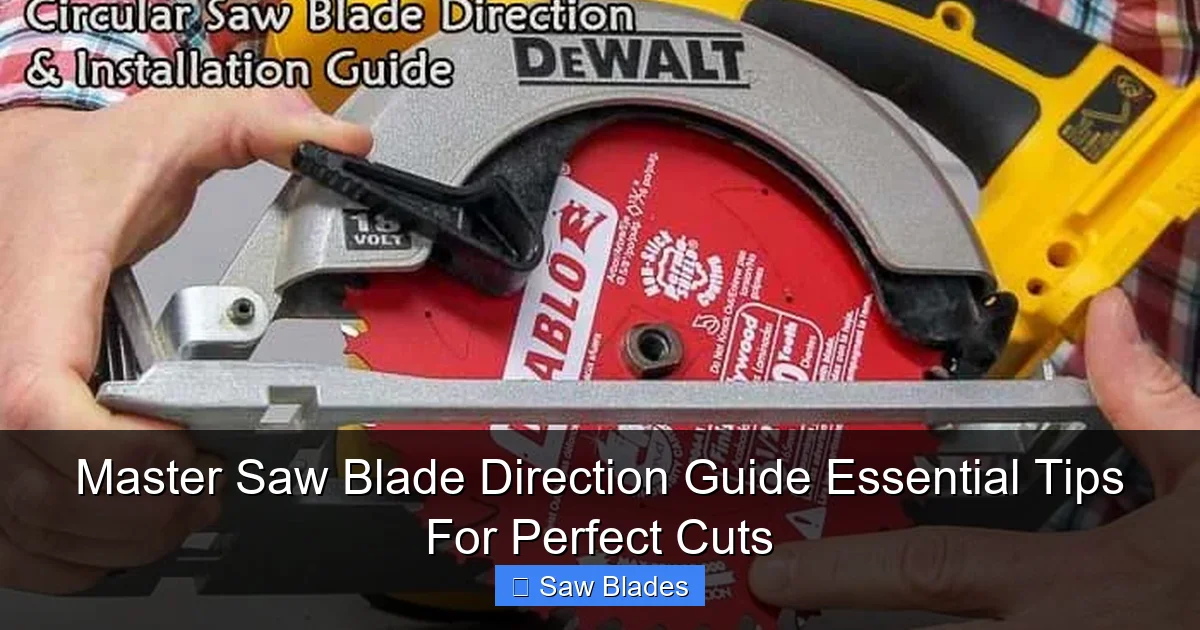
Visual guide about Master Saw Blade Direction Guide Essential Tips For Perfect Cuts
Image source: solvesonic.com
The Universal Language: The Rotation Arrow
Look closely at any quality saw blade. Etched or stamped onto the blade plate (the flat metal body), usually near the arbor hole, you’ll find a small arrow. This isn’t decoration; it’s the blade’s instruction manual. This arrow shows the direction the blade MUST rotate to cut correctly and safely. Ignoring this arrow is the #1 cause of blade direction errors. Always, always, ALWAYS check for this arrow before installing a blade.
Understanding Your Saw’s Rotation
Different saw types have standard rotation directions, but ALWAYS confirm with your specific saw’s manual, as variations exist:
- Table Saws & Miter Saws: From the operator’s perspective (standing where you normally cut), the blade spins clockwise. The top of the blade moves towards you, the bottom moves away. This is the most common setup.
- Circular Saws (Handheld): Also typically spin clockwise from the operator’s perspective. The blade rotates so the teeth at the front (closest to you) move downward into the material.
- Band Saws: The blade travels in a continuous loop. The cutting edge (teeth) MUST move downward through the material on the front (user-facing) side of the blade. The arrow on the blade will indicate this downward travel direction.
- Reciprocating Saws (Saber Saws): The blade moves back and forth (reciprocates). While rotation isn’t the factor, the tooth orientation MUST be correct for the cutting action. The arrow usually indicates the direction the teeth point during the cutting stroke (typically forward/downward).
Remember: The blade’s arrow tells you its required spin. Your saw’s motor determines its spin. They MUST align.
Step-by-Step: Installing Blades Correctly (The Saw Blade Direction Guide)
Follow these universal steps meticulously for ANY saw. Rushing this process is inviting disaster.
Visual guide about Master Saw Blade Direction Guide Essential Tips For Perfect Cuts
Image source: solvesonic.com
Step 1: Safety First – Power Down & Disconnect
This cannot be overstated. Before touching the blade, ensure the saw is completely powered off and unplugged from the electrical outlet. If it’s cordless, remove the battery. For table saws, engage the locking mechanism if available. Verify the switch is in the “OFF” position. This is non-negotiable. A moment of carelessness here can have lifelong consequences.
Step 2: Access the Blade & Remove the Old One
Consult your saw’s manual for the specific access method. This usually involves:
- Table/Miter Saws: Raising the blade guard, lowering the blade fully, and removing the arbor nut/lock knob. You may need a wrench (often included with the saw). Keep track of all parts (nut, washer, flange).
- Circular Saws: Engaging the spindle lock (a button or lever near the blade), then using the provided wrench to loosen the arbor nut. The lock prevents the spindle from turning while you loosen the nut.
- Band Saws: Releasing the blade tension, opening the upper and lower wheel covers, and carefully guiding the old blade off the wheels.
- Reciprocating Saws: Opening the blade clamp lever (often a quick-release mechanism) and pulling the old blade straight out.
Pro Tip: Take a photo with your phone before disassembly. It’s a huge help when reassembling, especially for remembering washer/nut order on table saws. If you’re working with a Ryobi table saw, our detailed guide on how to change the blade on a Ryobi table saw provides model-specific visuals.
Step 3: The Critical Check – Match the Arrow!
This is the heart of the saw blade direction guide. Hold the new blade up to the light. Locate the rotational arrow etched on the blade plate. Now, look at your saw’s arbor or drive mechanism:
- Table/Miter/Circular Saws: Imagine the blade installed. From your normal operating position, which way does the arbor spin? (Usually clockwise). The blade’s arrow MUST point in that same clockwise direction when mounted.
- Band Saws: Identify the direction the blade travels on the front (cutting) side. It should move downward. The blade’s arrow MUST point downward on the front side.
- Reciprocating Saws: Identify the direction the blade travels during the cutting stroke (usually forward/downward). The blade’s arrow MUST align with this stroke direction.
Double-Check! Place the blade loosely on the arbor or against the wheels. Does the arrow direction match the saw’s intended motion? If not, flip the blade over. Never force a blade that doesn’t align. If you’re changing a circular saw blade, our guide on how to change blade on circular saw includes clear arrow verification steps.
Step 4: Secure Mounting – Tighten Properly
Once direction is confirmed, install the blade:
- Table/Miter/Circular Saws: Place the blade on the arbor, ensuring the rotation arrow is correct. Replace any washers/flanges in the correct order (usually the larger flange against the blade). Hand-tighten the arbor nut. Then, using the wrench (and spindle lock for circular saws), tighten the nut securely according to your manual’s specifications – usually firm, but not excessively tight (over-tightening can warp the blade). The blade should be snug with no wobble.
- Band Saws: Carefully guide the new blade onto the upper and lower wheels, ensuring the teeth are pointing in the correct direction (downward on the front) and the arrow aligns with the wheel rotation. Apply proper tension according to the saw’s instructions.
- Reciprocating Saws: Insert the blade fully into the clamp with the correct orientation (arrow matching stroke direction), then securely close the clamp lever.
Pro Tip: A slightly loose blade can slip or cause vibration; an overly tight blade can distort. Find the “Goldilocks” zone – firm and secure.
Step 5: Final Safety Check Before Powering On
Before plugging in or inserting the battery:
- Ensure the blade guard is properly reinstalled and functional.
- Verify there are no tools or debris near the blade path.
- Do a final visual check: Does the blade’s rotational arrow still match the saw’s intended direction?
- For band saws, manually rotate the upper wheel to ensure smooth movement without binding.
Only after this checklist is complete should you reconnect power.
Troubleshooting Common Saw Blade Direction Problems
Even with careful installation, issues can arise. Here’s how to diagnose and fix them:

Visual guide about Master Saw Blade Direction Guide Essential Tips For Perfect Cuts
Image source: i1.wp.com
Problem: Violent Kickback or the Material Being Thrown
Likely Cause: Blade installed BACKWARD. This is the most dangerous scenario. The teeth are scraping instead of cutting, creating immense resistance that throws the material.
Solution: POWER OFF IMMEDIATELY. Disconnect power/battery. Double-check the blade’s rotational arrow against the saw’s rotation direction. Reinstall the blade correctly. Never attempt to cut with a backward blade.
Problem: Excessive Burning, Rough Cuts, or Splintering
Likely Cause: Blade direction is incorrect (often backward), OR the blade is dull/damaged, OR the feed rate is too slow for the material.
Solution: First, verify blade direction is 100% correct. If direction is right, inspect the blade for dullness or damage. Learn how to tell if a diamond saw blade is dull – the signs are similar for wood blades (burning, excessive force needed, rough edges). Replace the blade if necessary. Also, ensure you’re feeding the material at an appropriate speed – too slow causes burning.
Problem: Excessive Vibration or Wobbling Blade
Likely Cause: Blade not seated properly on the arbor, arbor nut not tightened sufficiently, warped blade, or damaged arbor/flange.
Solution: Power off and disconnect. Remove the blade. Check that the arbor and flanges are clean and undamaged. Reinstall the blade, ensuring it sits flush. Tighten the arbor nut to the correct specification. If vibration persists, the blade may be warped – replace it.
Problem: Blade Seems to be Cutting “Against” the Rotation
Likely Cause: Almost certainly the blade is installed backward.
Solution: Power off immediately. Re-examine the rotational arrow on the blade and compare it rigorously to the saw’s rotation direction. Reinstall correctly.
Essential Maintenance for Consistent Direction & Performance
Correct installation is only half the battle. Ongoing maintenance ensures your blade direction remains effective and safe:
- Regular Cleaning: Resin, pitch, and sawdust buildup on the blade plate can affect balance and performance. Clean blades periodically with a dedicated blade cleaner or a stiff brush and appropriate solvent (follow manufacturer advice).
- Sharpness is Paramount: A dull blade requires more force, increasing kickback risk and making direction errors more likely to cause problems. Sharpen blades professionally or replace them when they lose their edge. Knowing how to tell if a diamond saw blade is dull applies broadly – look for burning, excessive force, rough cuts, and visible wear on the teeth.
- Inspect for Damage: Before *every* use, check for cracked teeth, missing teeth, warping, or excessive wear on the blade plate. A damaged blade is unsafe, regardless of direction.
- Store Properly: Hang blades or store them flat in a protective case to prevent warping or damage to the teeth. Avoid tossing them in a toolbox where they can bang against other tools.
Conclusion: Direction is Your Foundation for Excellence
Mastering your saw blade direction guide isn’t about memorizing complex rules; it’s about respecting a fundamental principle of power tool safety and performance. That small arrow on the blade isn’t optional – it’s the key to unlocking clean cuts, preserving your materials, and, most importantly, keeping your fingers and eyes safe. By making the five-step verification process (Power Off, Access, Match Arrow, Secure, Final Check) an unbreakable habit, you transform a potential hazard into a reliable, predictable tool.
Remember, every great project starts with a safe and accurate first cut. Don’t let a simple oversight like incorrect blade direction turn your workshop into a place of frustration or danger. Take that extra minute to confirm the arrow. Double-check the rotation. Tighten that nut properly. These small actions compound into massive gains in quality, efficiency, and peace of mind. Your saw is a powerful ally – treat it with the respect its direction demands, and it will deliver perfect cuts, project after project. Now get out there and cut with confidence!
🎥 Related Video: Saw Blade Installation – Which Direction?
📺 Field Guide to DIY
If you’ve ever wondered what direction to install a saw blade, wonder no more. Installing the saw blade the wrong direction can be …