
Struggling with saw blade issues? This guide solves common problems like burning, vibration, and poor cuts. You’ll learn step-by-step fixes to keep your projects on track and blades lasting longer. Stop wasting time and materials—get cutting perfectly today!
Key Takeaways
- Check blade sharpness first: 80% of cutting issues start with dull blades—replace or sharpen immediately
- Proper installation prevents 90% of vibration: Always verify blade is seated flush and arbor nut is tightened correctly
- Match blade to material: Using wood blades on metal causes dangerous overheating and premature failure
- Clean sawdust buildup weekly: Clogged vents and gears cause overheating and motor strain
- Store blades vertically: Prevents warping and tooth damage that leads to rough cuts
- Listen for warning sounds: Grinding or screeching means STOP—check for binding or blade damage
Why Saw Blade Troubleshooting Matters
Ever watched perfect woodturn into splintered mess? Or felt your saw vibrate like a jackhammer? Saw blade problems waste time, ruin materials, and even cause injuries. The good news? Most issues are fixable in minutes with basic troubleshooting. This guide covers every common saw blade headache—from table saws to circular saws—so you can cut confidently. Whether you’re a weekend warrior or pro carpenter, these steps will save you money on replacements and keep projects on schedule. Let’s get your blade cutting like new!
Top 7 Saw Blade Problems & Quick Fixes
Before diving deep, here’s a snapshot of what we’ll fix:
Visual guide about Common Saw Blade Problems Troubleshooting Guide
Image source: toolcroze.com
- Burning wood/metal during cuts
- Excessive vibration or wobbling
- Rough or splintered edges
- Blade not cutting straight
- Premature blade dulling
- Strange noises (grinding, screeching)
- Blade breaking mid-cut
Most stem from just three causes: dull blades, incorrect installation, or material mismatch. We’ll tackle each systematically.
Problem 1: Burning During Cuts
That awful smell of burnt toast? It’s your saw blade screaming for help. Burning happens when friction overheats the material.

Visual guide about Common Saw Blade Problems Troubleshooting Guide
Image source: toolcroze.com
Step-by-Step Fix
- Stop cutting immediately to prevent further damage
- Check blade sharpness: Run your finger lightly along the teeth (carefully!). Dull teeth feel smooth—sharp ones feel rough
- Verify blade type: Wood-cutting blades on metal? Swap to a metal-cutting blade with fewer teeth (18-24 TPI)
- Adjust feed rate: Push material slower—rushing causes overheating
- Clean blade: Use a brass brush to remove pitch buildup (common with pine or plywood)
Pro Tip: For stubborn burning on hardwoods, spray a tiny bit of water on the cut line. Never use oil on wood—it ruins finishes!
Problem 2: Excessive Vibration or Wobbling
If your saw feels like it’s having a seizure, vibration is likely the culprit. This strains motors and ruins accuracy.
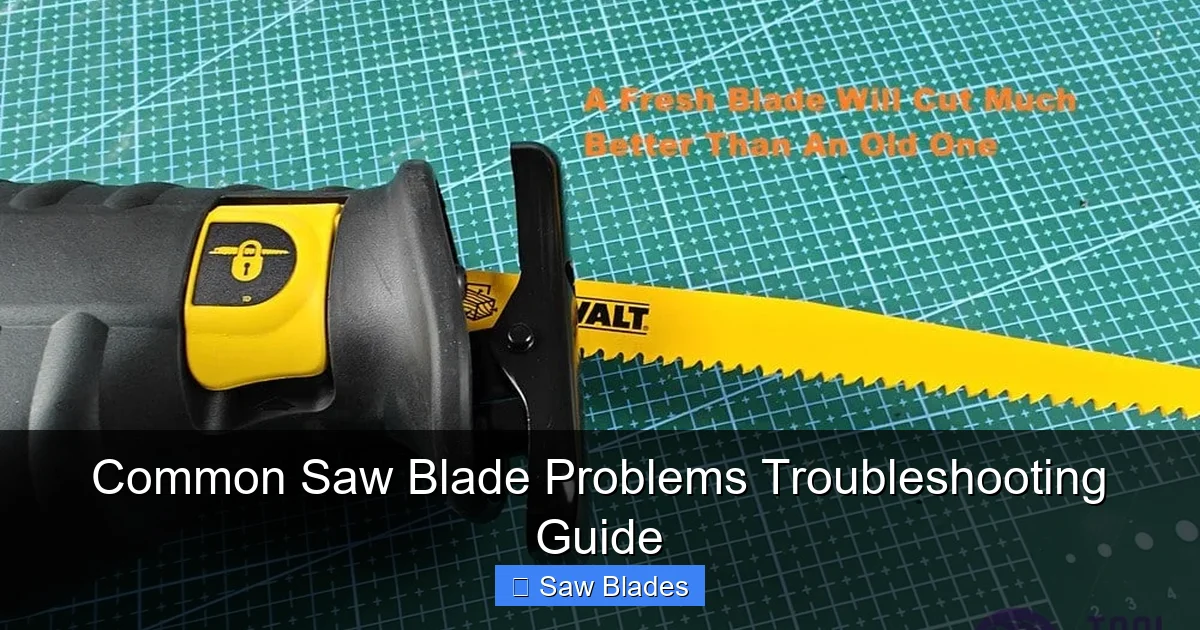
Visual guide about Common Saw Blade Problems Troubleshooting Guide
Image source: toolcroze.com
Step-by-Step Fix
- Power off and unplug the saw
- Inspect blade for damage: Look for missing teeth, cracks, or bent sections
- Check arbor nut tightness: Most wobble comes from loose nuts. Use the wrench that came with your saw—don’t overtighten
- Verify blade seating: Remove blade and check the arbor flange for burrs or debris
- Test with a different blade: Borrow a friend’s blade to confirm it’s not the saw’s fault
Real Example: Mike, a cabinetmaker, fixed his wobbling table saw by cleaning sawdust from the arbor flange—no parts needed!
Problem 3: Rough or Splintered Cuts
Tear-out makes projects look amateurish. It’s usually blade-related, not your skill.
Step-by-Step Fix
- Use a zero-clearance insert: For table saws, this supports wood fibers during cuts
- Apply masking tape: Place tape over the cut line on plywood or MDF
- Switch to a finer blade: Try a 60-tooth blade instead of 24-tooth for cleaner cuts
- Check blade alignment: Misaligned blades tear wood. Use a combination square to verify
- Reduce blade height: Set blade just 1/8″ above material—higher = more splintering
Pro Tip: Always cut face-down on plywood. The bottom surface splinters more, so put your “good side” down.
Problem 4: Blade Not Cutting Straight
Curved cuts? Your blade might be fighting you.
Step-by-Step Fix
- Check fence alignment: Loosen fence bolts and re-align parallel to blade
- Inspect blade for warping: Spin the blade by hand—look for wobble
- Verify material support: Use featherboards to keep wood flush against fence
- Replace worn blades: Warped blades can’t be fixed—they need replacing
Critical Note: If your table saw blade installation is incorrect, alignment fails. Always follow manufacturer steps!
Problem 5: Premature Blade Dulling
Blades shouldn’t go dull after one project. Here’s why it happens.
Step-by-Step Fix
- Avoid cutting nails: Even small nails destroy carbide teeth
- Use proper RPM: High speeds dull blades fast on hard materials
- Clean blades after use: Pitch and resin accelerate dulling
- Store vertically: Prevents tooth damage from stacking
How to test dullness: A sharp blade cuts effortlessly. If you’re pushing hard, it’s dull. For diamond blades, see our guide on spotting dull diamond blades.
Problem 6: Strange Noises (Grinding/Screeching)
Grinding sounds mean metal-on-metal contact—dangerous!
Step-by-Step Fix
- Stop immediately: Continuing risks blade breakage
- Check for binding: Material pinching the blade? Back out slowly
- Inspect for debris: Sawdust chunks between blade and guard cause noise
- Verify blade compatibility: Using a circular saw blade on a reciprocating saw? Never mix types!
Safety First: If noise persists after cleaning, the saw’s bearings may be failing. Consult a professional.
Problem 7: Blade Breaking Mid-Cut
Nothing halts a project faster than a snapped blade.
Step-by-Step Fix
- Never force cuts: Apply steady pressure—rushing causes breaks
- Check material thickness: Don’t exceed blade’s max depth rating
- Avoid twisting: Keep the saw base flat on material
- Replace old blades: Blades over 2 years old fatigue faster
Pro Tip: For reciprocating saw blades, use shorter strokes in tough materials to reduce stress.
Prevention: The 5-Minute Blade Care Routine
Stop problems before they start with this simple routine:
- After every use: Brush off sawdust with a brass brush
- Weekly: Clean arbor flange with a rag
- Monthly: Check arbor nut tightness
- When storing: Hang blades vertically—never stack
- Before big projects: Test blade on scrap material
Just 5 minutes a week adds months to your blade’s life!
When to Replace vs. Repair
Not all blades can be saved. Replace if:
- More than 3 teeth are missing
- Cracks visible in the plate
- Warping exceeds 1/16″ when spun
- Teeth are chipped beyond sharpening
Sharpening tip: Carbide blades can be sharpened 3-5 times before replacement. Use a professional service—DIY sharpening ruins tooth geometry.
Conclusion: Cut with Confidence
Saw blade problems don’t need to derail your projects. By mastering these troubleshooting steps—checking sharpness, ensuring proper installation, and matching blades to materials—you’ll spend less time fixing and more time creating. Remember: a well-maintained blade is the secret to professional results. Keep this guide bookmarked, follow the 5-minute care routine, and your blades will reward you with clean, safe cuts for years. Now grab that saw and make something amazing!
🎥 Related Video: For your safe woodworking/Diagnosing Table Saw Problems/Woodworking DIY
📺 Hammer Sound-Jig
woodworking #jig #diy #tools There are cases where the platen is distorted due to the vibration of the motor. It is safe to diagnose …