
Safety should be your top priority when using a ladder. Ladders are helpful tools but can be dangerous if not used correctly.
Accidents can happen easily. Understanding ladder safety is crucial to prevent falls and injuries. This blog post will guide you on essential steps to take when using a ladder. Whether you’re a DIY enthusiast or a professional, knowing these tips can save you from potential mishaps.
We will cover the basics, from choosing the right ladder to setting it up safely. So, let’s dive in and learn how to use a ladder safely and effectively.
Choosing The Right Ladder
Using a ladder safely begins with choosing the right one for your task. The right ladder ensures stability and safety. Let’s explore how to select the proper ladder.
Different Types
Ladders come in various types, each suited for specific tasks. Understanding these types helps you make an informed decision:
- Step Ladders: Ideal for indoor tasks like painting walls or fixing lights.
- Extension Ladders: Best for outdoor tasks such as cleaning gutters or reaching high places.
- Multi-Position Ladders: Versatile and can be configured in different ways for multiple tasks.
- Telescope Ladders: Compact and easy to store, suitable for various heights and tasks.
Weight Capacity
Weight capacity is crucial for ladder safety. Always check the ladder’s weight rating before use. Here’s a simple breakdown:
| Type | Weight Capacity |
|---|---|
| Type 1AA | 375 lbs (170 kg) |
| Type 1A | 300 lbs (136 kg) |
| Type 1 | 250 lbs (113 kg) |
| Type 2 | 225 lbs (102 kg) |
| Type 3 | 200 lbs (91 kg) |
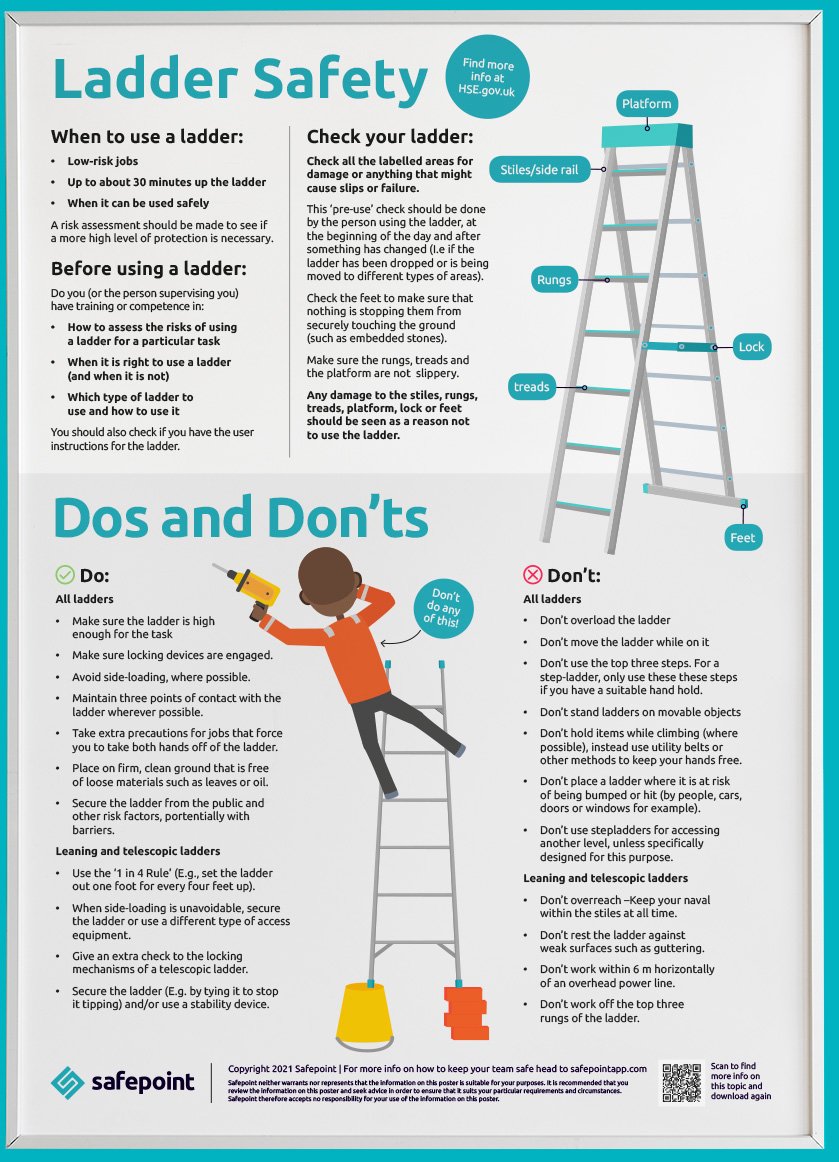
Choose a ladder that supports your weight and any tools or materials you carry. This reduces the risk of accidents and ensures a stable working platform.
Credit: www.safepointapp.com
Inspecting The Ladder
Before using a ladder, it is crucial to inspect it thoroughly. This ensures your safety and prevents accidents. Pay attention to the condition and stability of the ladder. Below are essential steps to follow when inspecting a ladder.
Check For Damage
Start by examining the entire ladder for any visible damage. Look for cracks, dents, or bends in the ladder’s frame. Inspect the rungs for wear and tear. Ensure all screws and bolts are tight and secure. If you find any damage, do not use the ladder. Replace or repair it before use.
Stability Test
After checking for damage, test the ladder’s stability. Place the ladder on a flat surface. Ensure all four feet are in contact with the ground. Gently shake the ladder to check for wobbling or instability. If the ladder wobbles, adjust its position or find a more stable surface. Safety first.
Setting Up The Ladder
Setting up a ladder correctly is the first step to ensuring safety. Poor setup can cause accidents and injuries. Follow these steps to set up your ladder properly.
Proper Angle
To ensure the ladder is at the proper angle, use the 4-to-1 rule. For every four feet of height, place the base one foot away from the wall. This angle keeps the ladder stable and secure.
Check the angle by standing with your toes at the ladder’s base. Reach your arms straight out. Your palms should rest on the rungs. If they do, the angle is correct.
Secure Placement
Place the ladder on a level, stable surface. Uneven ground can cause the ladder to tip. Use a ladder leveler if the ground is not even.
Avoid placing the ladder on slippery surfaces. If needed, use ladder mats to prevent slipping. Ensure the ladder’s feet are secure and will not move.
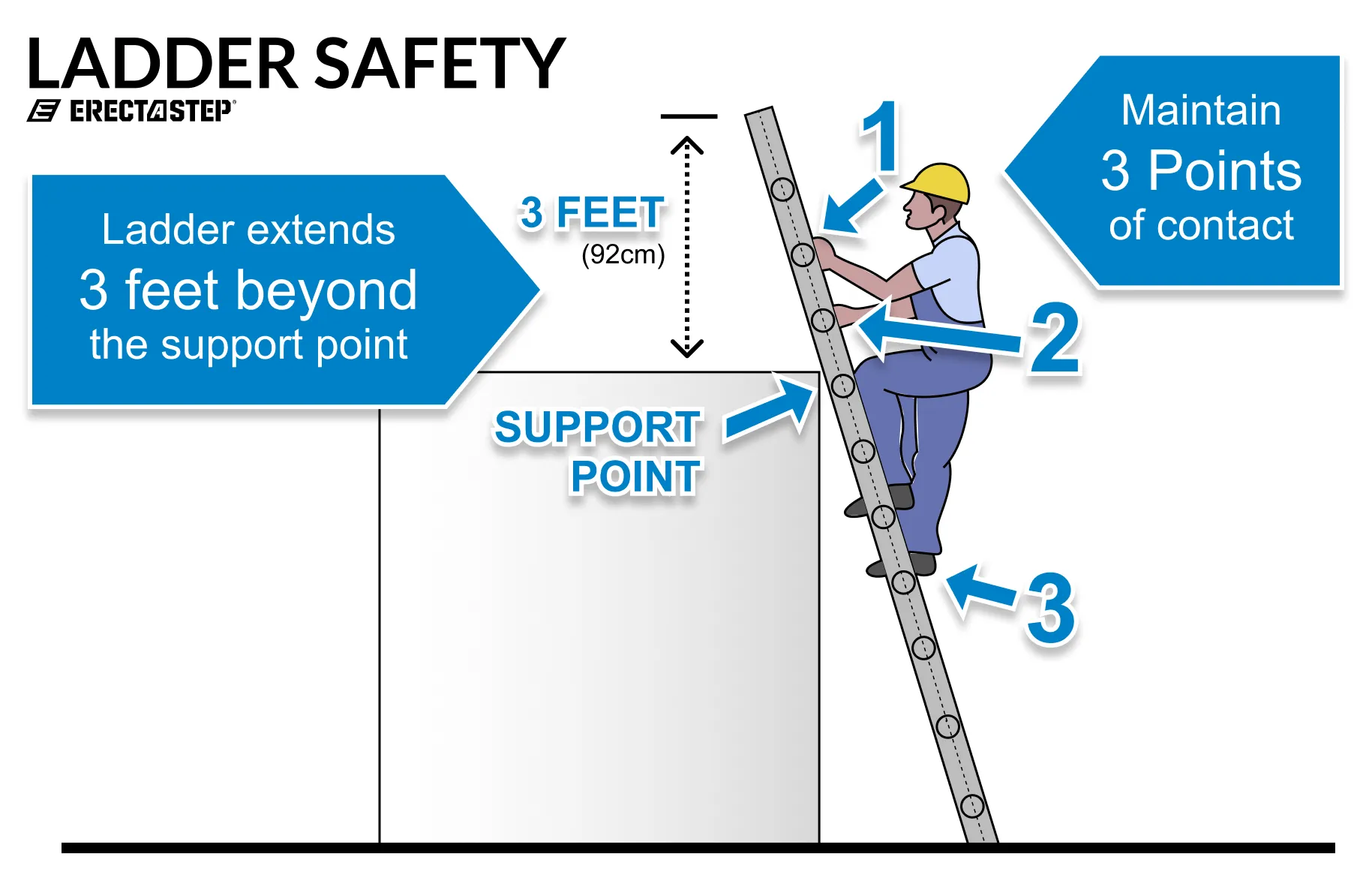
Extend the ladder three feet above the landing point. Secure the top of the ladder to prevent it from moving. Use ropes or ladder stabilizers to keep it in place.
Following these steps ensures your ladder is set up safely. Always double-check your setup before climbing.
Climbing Safely
Using a ladder can be risky if not done properly. Safety must be the top priority. Here are some essential tips to ensure your climb is safe and secure.
Three Points Of Contact
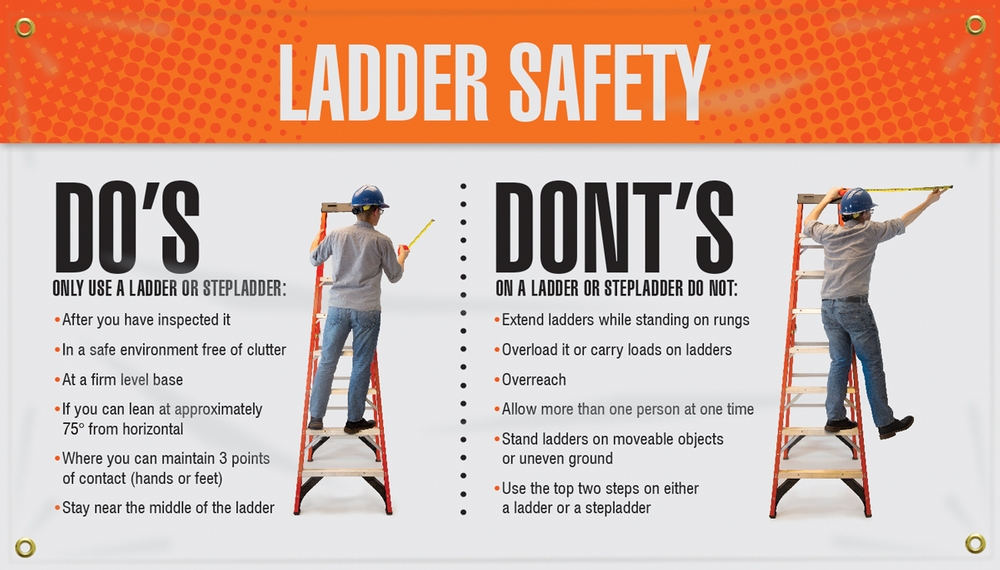
Always maintain three points of contact when climbing a ladder. This means two hands and one foot or two feet and one hand should always be in contact with the ladder. This rule helps to keep your balance and reduces the risk of falling.
- Ensure both feet are firmly on the rungs.
- Keep one hand holding the side rails or rungs.
- Move slowly and cautiously.
Avoid Overreaching
Avoid overreaching while on a ladder. Stretching too far can cause the ladder to tip over. Instead, move the ladder closer to your work area.
- Keep your belt buckle between the side rails.
- Move the ladder instead of stretching.
- Use a tool belt to keep tools within reach.
| Action | Why It’s Important |
|---|---|
| Three Points of Contact | Maintains balance and stability. |
| Avoid Overreaching | Prevents the ladder from tipping. |
Using Tools On A Ladder
Using tools on a ladder requires careful attention. Safety is the top priority. This guide will help you handle tools efficiently while on a ladder.
Tool Belt Usage
A tool belt can be your best friend on a ladder. It keeps your hands free and tools within reach.
Here are some tips for using a tool belt:
- Choose a belt with multiple pockets.
- Ensure the belt is secure around your waist.
- Distribute the weight evenly.
- Keep the most-used tools in the front pockets.
Handing Tools Safely
Handing tools safely is crucial. You don’t want to drop a tool from a height.
Follow these steps for safe tool handling:
- Use a tool lanyard to prevent drops.
- Pass tools handle-first to avoid accidents.
- Communicate clearly with your helper.
- Never overload your hands with tools.
By following these guidelines, you can use tools on a ladder safely and efficiently.
Credit: www.accuform.com
After Use
After using a ladder, proper care and handling are crucial. These steps ensure safety and longevity. Let’s explore the best practices for storing and maintaining your ladder.
Proper Storage
Always store the ladder in a safe place. Avoid areas with high traffic. Keep it away from extreme temperatures and moisture. These conditions can damage the ladder.
Store the ladder horizontally on racks. This prevents warping or bending. Use wall hooks if space is limited. Make sure the hooks are sturdy and properly installed.
Ensure the ladder is clean before storage. Dirt and debris can cause wear over time. Wipe down the ladder with a damp cloth. Dry it thoroughly to prevent rust.
Routine Maintenance
Regular checks are essential for ladder safety. Inspect the ladder for any damage. Look for cracks, bends, or broken parts. Replace damaged parts immediately.
Check the ladder’s hardware. Ensure bolts and screws are tight. Loose parts can lead to accidents. Use a wrench to tighten them if needed.
Lubricate any moving parts. This includes hinges and locks. Use a silicone spray for smooth operation. Avoid using oil-based lubricants. They attract dirt and grime.
Examine the ladder’s feet. Ensure they are in good condition. Replace worn or damaged feet. This provides better stability and grip.
Table Of Routine Maintenance Tasks
| Task | Frequency |
|---|---|
| Inspect for damage | Before each use |
| Tighten bolts and screws | Monthly |
| Lubricate moving parts | Quarterly |
| Check and replace feet | Annually |
By following these steps, you ensure your ladder remains safe and functional. Proper storage and routine maintenance extend the ladder’s life. They also protect you from potential accidents.
Credit: www.erectastep.com
Frequently Asked Questions
What Safety Precautions Should You Take When Using A Ladder?
Always ensure the ladder is stable. Wear non-slip shoes. Keep three points of contact.
How Do You Choose The Right Ladder For A Task?
Pick a ladder that can reach the height you need. Check the weight limit.
What Are Common Mistakes To Avoid When Using A Ladder?
Avoid overreaching. Do not place ladders on uneven surfaces. Do not climb too high.
How Should You Set Up A Ladder Correctly?
Place the ladder on a flat, stable surface. Ensure it’s fully extended and locked.
What Should You Do If A Ladder Feels Unstable?
Get off immediately. Reposition it on a stable surface. Make sure it’s secure before climbing again.
Conclusion
Using a ladder safely is crucial. Always check the ladder’s condition first. Place it on a stable, flat surface. Maintain three points of contact when climbing. Never lean too far to either side. Wear proper footwear for grip. Follow these tips to avoid accidents.
Stay safe while working at heights. Remember, safety first. Your well-being matters the most. Keep these guidelines in mind every time.
