
Stop throwing away old saw blades! This guide reveals creative, practical ways to repurpose dull circular, band, and reciprocating blades. You’ll learn safe handling techniques and transform worn-out tools into functional art, garden helpers, and unique household items—saving money and reducing waste.
Key Takeaways
- Safety first: Always wear cut-resistant gloves and eye protection when handling old saw blades. Never work on unstable surfaces.
- Clean thoroughly: Remove pitch, rust, and debris with vinegar or commercial cleaners before repurposing to ensure adhesion and safety.
- Match projects to blade type: Circular blades excel for wall art, band saw blades for garden stakes, and reciprocating blades for rustic hooks.
- Embrace imperfections: Rust and wear add character—don’t sand away history unless structurally necessary.
- Know when to recycle: Severely damaged or carbide-tipped blades should go to metal recyclers, not landfills.
- Start simple: Begin with no-drill projects like plant markers before tackling welding or complex builds.
Why Repurpose Old Saw Blades? (Hint: It’s Not Just About Saving Money)
That dull circular saw blade gathering dust in your garage? That bent reciprocating blade from your last demolition project? Before you toss them in the trash, pause. Old saw blades are treasure troves of creative potential. These hardened steel tools—often made from high-carbon or carbide-tipped materials—are incredibly durable. While they might not cut wood anymore, they’re perfect for DIY transformations that reduce waste and spark joy.
Every year, millions of saw blades end up in landfills simply because owners don’t know their repurposing potential. By giving your old blades new life, you’re not just decluttering your workshop—you’re embracing sustainability. Plus, these projects cost almost nothing (just your time!) and deliver satisfaction no store-bought item can match. In this guide, you’ll discover 10+ smart, creative hacks for circular, band, and reciprocating blades—all with clear, safety-focused instructions.
Essential Safety Prep: Handling Old Saw Blades Like a Pro
Before you unleash your inner artist, let’s talk safety. Old saw blades are razor-sharp hazards—even when dull. One slip can cause serious injury. Follow these non-negotiable steps:
Visual guide about What to Do With Old Saw Blades Smart Creative Repurposing Hacks
Image source: domino.com
Step 1: Gear Up Properly
- Wear ANSI-rated cut-resistant gloves (like Mechanic Gloves) at all times. No exceptions.
- Use impact-resistant safety glasses—metal shards can fly during cleaning or cutting.
- Work in a well-ventilated area if using chemical cleaners or paints.
Step 2: Clean Like a Pro
Grime and rust prevent paint adhesion and hide structural flaws. Here’s how to clean safely:
- Soak blades in undiluted white vinegar for 24 hours to loosen rust. For stubborn gunk, use a brass-bristle brush (never steel—it scratches).
- Rinse with water and dry immediately with a microfiber cloth. Moisture = instant rust.
- For pitch buildup, apply citrus-based solvent (like Goo Gone) and scrape gently with a plastic putty knife.
Pro Tip: Never use a wire wheel on a power tool—it can warp thin blades. Hand-cleaning preserves integrity.
Step 3: Inspect for Damage
Not all blades are repurpose-ready. Check for:
- Cracks or deep chips in the blade body (discard these—they can shatter).
- Bent teeth or warping (okay for decorative projects, but avoid structural uses).
- Carbide tips (handle with extreme care—they’re brittle and sharp).
If a blade fails inspection, recycle it responsibly. Most scrap metal yards accept saw blades for free. Call ahead to confirm!
Top 7 Creative Repurposing Projects for Old Saw Blades
Ready to transform? These projects range from beginner-friendly to advanced. All require minimal tools—most use what you already own.
Visual guide about What to Do With Old Saw Blades Smart Creative Repurposing Hacks
Image source: 2.bp.blogspot.com
Project 1: Rustic Garden Plant Markers (No Tools Needed!)
Perfect for herb gardens or flower beds, these markers add farmhouse charm while keeping your plants labeled.
What You’ll Need:
- Old circular or band saw blade (6–10″ diameter)
- Permanent marker or metal engraver
- Hammer and nail (optional)
Step-by-Step:
- Clean the blade as described in Safety Prep.
- Draw plant names directly on the blade with a marker. For permanence, use a nail and hammer to etch letters into the metal.
- Cut a 6″ section from the blade’s edge using tin snips (wear gloves!). Bend the bottom 1″ upward to create a stake.
- Push the stake into soil next to your plants. The curved shape catches sunlight beautifully!
Why it works: Steel withstands weather, and the reflective surface deters pests. Pro Tip: Spray with clear matte sealant to preserve etched words.
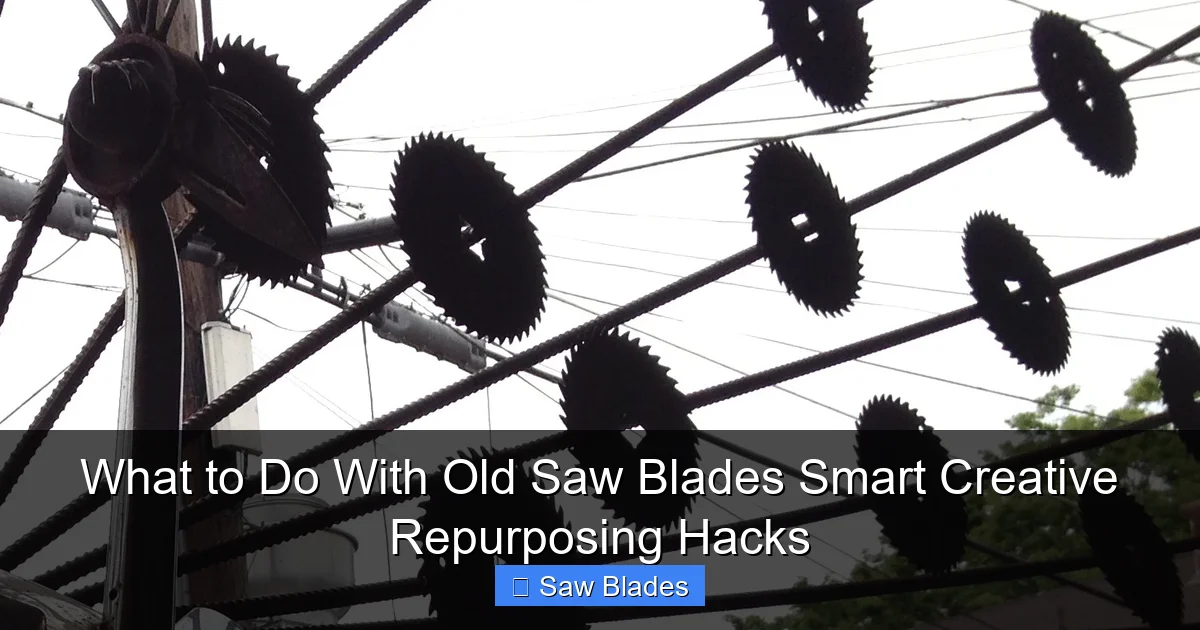
Project 2: Industrial-Chic Wall Art
Turn a dull blade into a conversation-starting focal point for your living room or workshop.
What You’ll Need:
- Old circular saw blade (10–12″ diameter)
- Spray paint (metallic or matte black)
- Wooden plaque or canvas (12″x12″)
- Heavy-duty adhesive (like E6000)
Step-by-Step:
- Sand the blade lightly to create a “tooth” for paint adhesion. Wipe away dust.
- Spray paint evenly in a well-ventilated area. Apply 2–3 thin coats, drying 15 minutes between.
- Arrange geometric shapes (triangles, circles) on the blade with painter’s tape for a modern look.
- Glue the blade to a wooden plaque using E6000. Let cure 24 hours before hanging.
Why it works: The blade’s natural curve adds dimension. Pro Tip: Add LED strip lights behind the plaque for dramatic nighttime effects.
Project 3: Heavy-Duty Tool Hooks
Reciprocating saw blades make ultra-strong hooks for hanging bikes, ladders, or garden tools.
What You’ll Need:
- Old reciprocating saw blade
- Angle grinder with cutoff wheel
- Drill and 1/4″ bit
- Wall anchors and screws
Step-by-Step:
- Cut a 4–6″ section from the blade using an angle grinder. Smooth edges with a file.
- Drill a pilot hole near the top of the curved section.
- Bend the blade into a “J” shape using vise grips. Heat with a torch for easier bending (optional).
- Mount to wall using heavy-duty anchors. Test with a 20-lb weight before hanging tools.
Why it works: Recip blades are designed for demolition—they won’t bend under load. Pro Tip: Wrap the hook tip in leather for scratch-free tool storage.
Project 4: Campfire Fire Starter
Striking steel against flint creates sparks to ignite tinder. A genius survival hack!
What You’ll Need:
- Old carbon-steel blade (carbide won’t spark)
- Ferrocerium rod
- Sticks and dry leaves
Step-by-Step:
- Hold the blade firmly in one hand, ferro rod in the other.
- Scrape the ferro rod downward against the blade’s edge at a 45-degree angle.
- Catch sparks in a nest of dry grass or birch bark.
- Blow gently to encourage flames.
Why it works: High-carbon steel throws hot sparks (up to 3,000°F!). Pro Tip: Keep blades dry—moisture reduces spark efficiency.
Project 5: Custom Knife Sharpener
Repurpose a worn blade into a quick edge-toucher for knives or chisels.
What You’ll Need:
- Old circular saw blade
- Clamp
- Sandpaper (220-grit)
Step-by-Step:
- Clamp the blade vertically to a workbench.
- Sand the blade edge lightly to remove burrs.
- Hold your knife at 20 degrees against the blade.
- Pull the knife toward you in smooth strokes—5–10 times per side.
Why it works: The blade’s hardness realigns micro-serrations. Pro Tip: Use only for maintenance—not primary sharpening. For deeper blade care, see our guide on how to sharpen band saw blades safely.
Project 6: Leather Stitching Groover
Band saw blades create perfect stitching channels in leather projects.
What You’ll Need:
- Old band saw blade
- Hammer
- Leather piece
Step-by-Step:
- Place the blade edge-down on your leather.
- Tap gently with a hammer along the desired stitch line.
- Lift the blade to reveal a clean groove.
- Stitch within the groove for professional results.
Why it works: The blade’s consistent thickness ensures even grooves. Pro Tip: Wrap the blade in tape to prevent leather scratches.
Project 7: Magnetic Parts Tray
Never lose screws again! A circular blade becomes a super-strong magnetic holder.
What You’ll Need:
- Old circular saw blade
- Epoxy glue
- Rare-earth magnets (1/2″ diameter)
Step-by-Step:
- Clean the blade thoroughly.
- Glue magnets to the bottom edge of the blade (spaced 2″ apart).
- Let cure 24 hours.
- Place on any metal surface—it holds dozens of screws securely.
Why it works: Steel blades amplify magnet strength. Pro Tip: Add felt pads to prevent surface scratches.
Troubleshooting Common Repurposing Issues
Even pros hit snags. Here’s how to fix them:
Visual guide about What to Do With Old Saw Blades Smart Creative Repurposing Hacks
Image source: i.pinimg.com
Problem: Paint Won’t Stick
Cause: Oil residue or insufficient sanding.
Solution: Degrease with rubbing alcohol, then sand with 80-grit paper. Apply rust-inhibiting primer before paint.
Problem: Blade Warps During Bending
Cause: Trying to bend hardened steel cold.
Solution: Heat the bend point with a propane torch until red-hot (not glowing). Bend slowly with vise grips. Cool in air—never quench.
Problem: Rust Returns Quickly
Cause: Incomplete drying or no sealant.
Solution: After cleaning, apply boiled linseed oil or a metal-specific sealant. Store projects indoors if possible.
Problem: Edges Are Too Sharp for Handling
Cause: Skipping the filing step.
Solution: Always file edges smooth with a mill file. Wear gloves during this step!
When to Recycle: The Responsible Approach
Not every blade can be saved. Recycle if:
- It has carbide tips (most recyclers accept these—call first).
- There are deep cracks or structural damage.
- It’s a specialty blade (e.g., diamond-coated) with no repurpose potential.
Find a recycler via Earth911.com or your local waste authority. Never throw blades in regular trash—they damage landfill equipment.
Conclusion: Your Blades Deserve a Second Act
Old saw blades aren’t trash—they’re raw material for innovation. From garden markers to fire starters, these projects prove that even the most worn tools can spark creativity. By repurposing, you honor the craftsmanship that went into making them while reducing landfill waste.
Start small: Pick one blade and try the plant marker project this weekend. As you gain confidence, tackle more complex builds like wall art or magnetic trays. Remember, imperfections tell a story—that rust spot? It’s a badge of honor from your last big project. So grab your gloves, fire up your imagination, and give those old saw blades the encore they deserve.
Ready to tackle more tool transformations? Explore our guide on creative ways to repurpose old ladders in the garden for more eco-friendly inspiration.
🎥 Related Video: How to make a scroll saw with an angle grinder #diy #tricks
📺 Tips Handy
How to make a scroll saw with an angle grinder #diy #tricks Space: Unlock Your Potential With These Hacks! Whether you’re a …
