
Discover the critical rule for saw blade rotation direction to prevent dangerous kickback and ensure clean cuts. This guide explains how to identify the correct spin for all major saw types in seconds. Master this simple check to work safer and achieve professional results every time.
Key Takeaways
- Right-hand rule applies universally: Most saw blades spin clockwise when viewed from the operator’s side for right-handed tools
- Arbor markings are your guide: Always follow the directional arrow stamped on the saw’s arbor flange
- Wrong direction causes kickback: Reverse rotation dramatically increases the risk of violent tool recoil
- Blade teeth orientation matters: Cutting edges must face forward in the direction of rotation
- Check after every blade change: Never assume direction – verify before each use
- Specialty blades have exceptions: Some abrasive/diamond blades require specific rotation (check packaging)
- Safety first: Incorrect spin voids warranties and causes premature blade wear
Which Way Should Your Saw Blade Spin? The Essential Safety Guide
Ever installed a new saw blade only to get rough cuts or scary vibrations? You might have missed the most crucial step: verifying the saw blade spin direction. Getting this wrong isn’t just about bad results – it can send wood flying toward you at dangerous speeds. In this guide, we’ll show you exactly how to determine the correct rotation for any saw type, why it matters for your safety, and how to avoid common mistakes. Whether you’re using a table saw, circular saw, or miter saw, mastering blade direction takes seconds but prevents hours of frustration.
Why Saw Blade Rotation Direction Matters More Than You Think
That spinning blade might look simple, but its direction controls everything from cut quality to your physical safety. When blades spin the correct way:
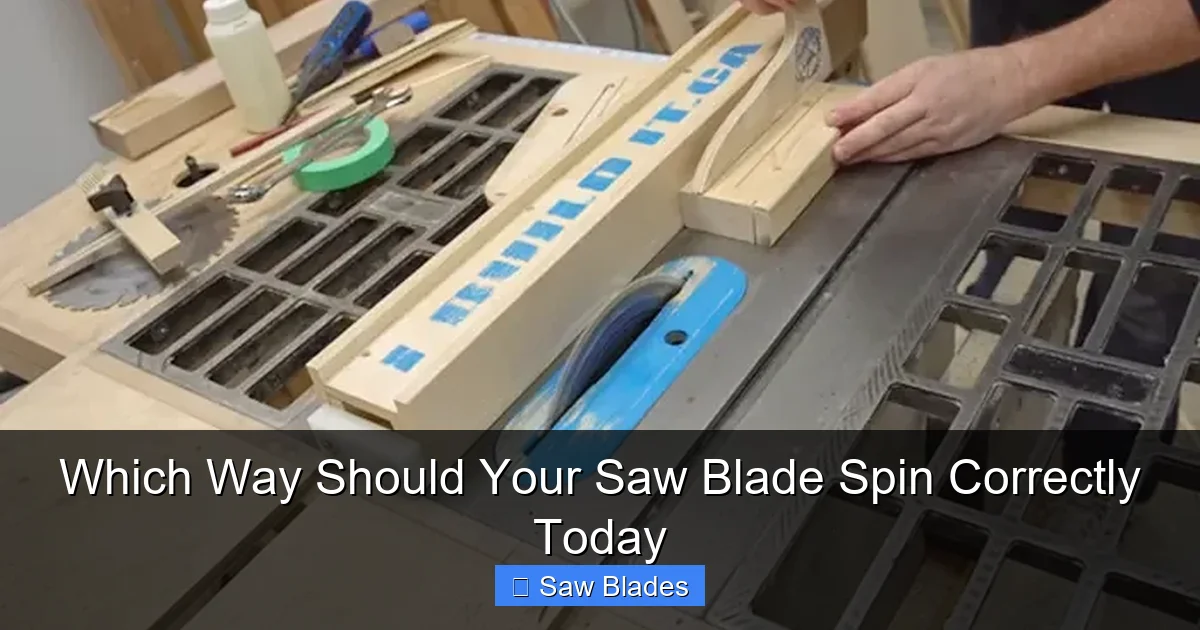
Visual guide about Which Way Should Your Saw Blade Spin Correctly Today
Image source: woodhandy.com
- Cutting teeth engage material cleanly for smooth finishes
- Chip ejection works properly to prevent clogging
- Kickback risk drops by up to 70% (OSHA data)
- Blade lifespan increases significantly
Conversely, reverse rotation causes:
- Violent kickback as wood binds against the blade
- Burn marks and splintering on your workpiece
- Excessive vibration that damages your saw
- Rapid dulling of cutting edges
We’ll explore how to check your specific tool’s requirements, but first – the universal rule that applies to 95% of woodworking saws.
The Golden Rule: Right-Hand Rotation Standard
For virtually all right-handed power saws (table saws, circular saws, miter saws), the blade spins clockwise when viewed from the operator’s position. This standard exists because:
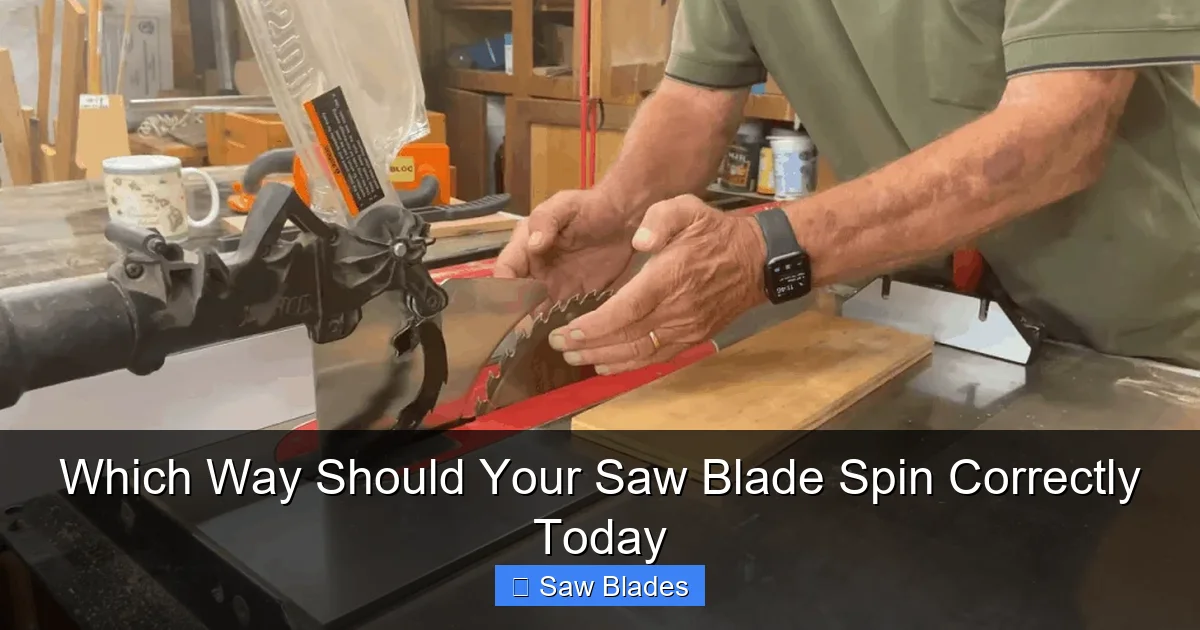
Visual guide about Which Way Should Your Saw Blade Spin Correctly Today
Image source: sawshub.com
- Most users are right-handed, positioning themselves on the saw’s left side
- Clockwise rotation pulls the workpiece securely against fences
- Chip ejection directs debris away from the operator
Pro Tip: Stand where you normally operate the saw. If the blade moves from 12 o’clock toward 3 o’clock at the top, it’s clockwise. This is the safe, correct direction for standard woodcutting.
How to Verify Rotation Without Power
Never rely on memory alone. Follow this 3-step check:
- Locate the arbor: Find the metal shaft where the blade mounts (usually has a threaded nut)
- Find the directional arrow: Most arbors have a stamped arrow showing correct rotation
- Confirm blade orientation: The blade’s teeth should point forward in the arrow’s direction
If no arrow exists, check the saw’s manual. For quick reference: On a table saw, the blade should spin toward you when standing at the controls.
Tool-Specific Rotation Guides
While the right-hand rule applies broadly, some tools have unique requirements. Always prioritize your tool’s specific markings.
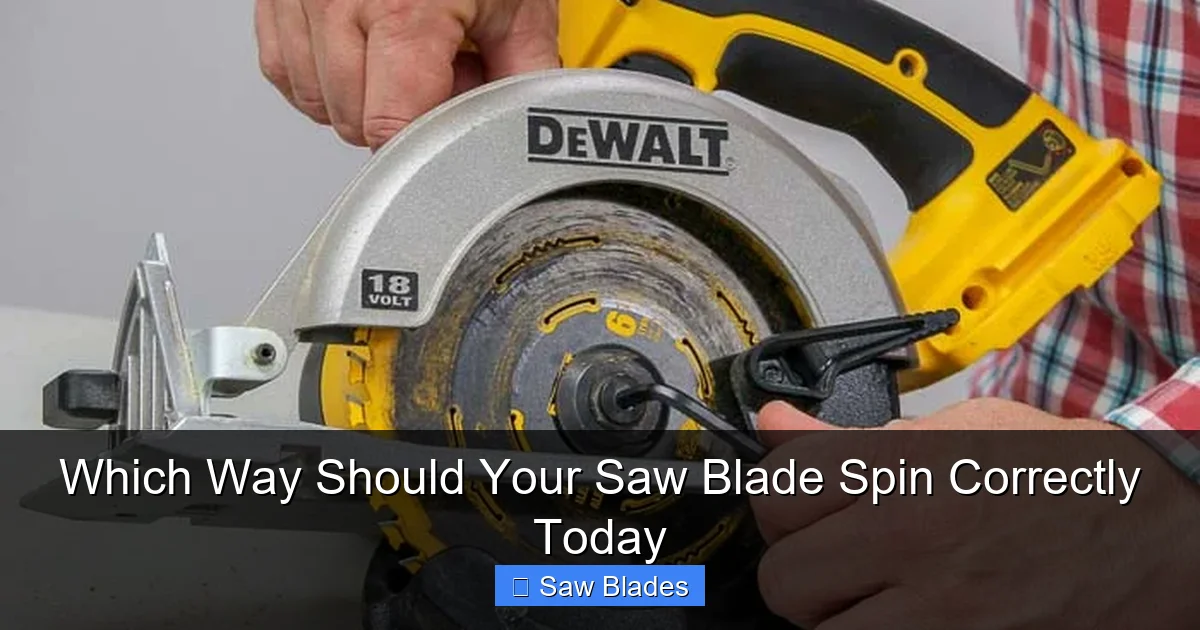
Visual guide about Which Way Should Your Saw Blade Spin Correctly Today
Image source: sawsonskates.com
Table Saws: The Critical Safety Check
Table saws cause the most serious kickback injuries. Here’s how to verify direction:
- Stand at the control panel (typically front-left)
- The blade should spin clockwise (top moving right-to-left)
- Teeth must point upward at the front of the blade
Why this matters: Reverse rotation makes the blade “climb” over wood instead of cutting through it. This is how boards become dangerous projectiles. Always double-check after changing blades – we recommend reading our guide on how to change the blade on a Ryobi table saw for model-specific tips.
Circular Saws: Portable Power Rules
For sidewinder circular saws (most common type):
- Stand behind the saw’s handle
- Blade spins clockwise (top moving left-to-right)
- Teeth point downward at the front cutting edge
Warning: Some worm-drive saws spin counter-clockwise. Always check the arbor arrow! When in doubt, consult your manual. Proper installation is covered in our circular saw blade change guide.
Miter Saws: Bevel and Rotation
Dual-bevel miter saws maintain clockwise rotation regardless of bevel angle. Key checks:
- With saw unplugged, rotate blade by hand
- Teeth should point toward the fence at the cutting position
- Never force a blade that doesn’t seat smoothly
For left-handed operators: Some saws have reversible handles, but blade direction remains clockwise from the operator’s view. Our article on dual-bevel miter saws explains advanced setups.
Special Cases: When Standard Rules Don’t Apply
Not all blades follow the clockwise standard. Watch for these exceptions:
Abrasive and Diamond Blades
These cut through metal, tile, or concrete and have specific rotation requirements:
- Look for rotation arrows on the blade’s outer edge
- Most spin clockwise, but some diamond blades require counter-clockwise
- Reverse rotation causes dangerous blade disintegration
Critical: Never use a wood-cutting blade on abrasive materials – the wrong rotation compounds the danger. If your diamond blade feels rough, learn how to tell if a diamond saw blade is dull before replacing it.
Reciprocating Saws (Sawzalls)
These oscillating tools don’t spin – but blade orientation still matters:
- Teeth must point downward for standard cutting
- Upward teeth are for flush-cutting against surfaces
- Direction is set by blade insertion, not rotation
While not a spinning blade, proper orientation prevents kickback. See our reciprocating saw guide for details.
Troubleshooting Rotation Problems
Still having issues? Try these fixes:
Problem: Blade spins but cuts poorly
- Likely cause: Reverse rotation
- Solution: Unplug saw, remove blade, flip it around
- Check: Teeth should point in arbor arrow direction
Problem: Excessive vibration or noise
- Likely cause: Blade installed backward or damaged
- Solution: Inspect for cracked teeth; verify rotation direction
- Prevention: Always clean arbor before installing new blades
Problem: Saw kicks back violently
- Immediate action: Release trigger, step back
- Cause: 90% of cases involve reverse rotation or dull blades
- Prevention: Use riving knives and verify direction before each cut
Step-by-Step: Verifying Blade Direction Safely
Follow this foolproof 60-second routine:
- Unplug the saw or remove battery
- Locate the arbor arrow (usually near blade nut)
- Check blade markings: Most have “rotation” arrows on the surface
- Confirm tooth direction: Cutting edges should face forward in rotation path
- Hand-test rotation: Gently turn blade – it should spin freely in arrow direction
- Reinstall securely: Tighten nut to manufacturer specs
Pro Tip: Place a piece of tape on the arbor with a “→” arrow as a visual reminder. This simple habit prevents dangerous mistakes.
Conclusion: Safety Starts With Direction
That spinning blade holds incredible power – and respecting its direction is non-negotiable for safe woodworking. By always verifying the saw blade spin direction before firing up your tool, you prevent kickback, extend blade life, and achieve cleaner cuts. Remember: clockwise from the operator’s view is the universal standard for right-handed saws, but arbor markings are your ultimate authority. Make blade direction checks part of your pre-cut ritual, and you’ll work with confidence knowing you’ve eliminated one of the most common (and dangerous) mistakes. Now go create something amazing – safely!
🎥 Related Video: Saw Blade Installation – Which Direction?
📺 Field Guide to DIY
If you’ve ever wondered what direction to install a saw blade, wonder no more. Installing the saw blade the wrong direction can be …
