
Saw blades burn wood when they’re dull, spinning too fast, or pushed too hard. This ruins your project and creates frustrating scorch marks. Luckily, simple fixes like sharpening blades, adjusting speed, and using proper technique stop burning instantly.
Key Takeaways
- Dull blades are the #1 culprit: Worn-out teeth generate excessive heat, scorching wood fibers instead of cutting cleanly.
- Wrong speed settings cause burns: High RPM on hardwoods or low RPM on softwoods creates friction heat that chars the material.
- Rushing your cut = burning: Forcing the blade through wood too fast prevents proper chip ejection, trapping heat against the surface.
- Blade type matters: Using a rip-cut blade for crosscutting (or vice versa) creates tear-out and heat buildup.
- Lubrication prevents scorching: Applying wax or soap to the blade reduces friction, especially crucial for dense woods like oak.
- Proper feed rate is non-negotiable: Let the blade cut at its own pace; pushing too slow also causes burning by dwelling in one spot.
Why Saw Blades Burn Wood And Stop Burning: Easy Fixes for Perfect Cuts
Hey there, fellow woodworker! Ever been deep into a project, making beautiful progress, only to pull your workpiece away and see ugly, dark burn marks ruining your clean cut? Yeah, we’ve all been there. That frustrating saw blades burn wood problem isn’t just annoying – it can ruin your wood, waste your time, and even damage your tools. But here’s the good news: it’s almost always preventable with a few simple adjustments. In this guide, we’ll dive deep into *exactly* why your saw blade is scorching your wood and, more importantly, give you the easy, actionable fixes to stop it for good. Whether you’re using a circular saw, table saw, band saw, or miter saw, these tips will save your projects.
Why Does My Saw Blade Keep Burning Wood? The Core Causes
Before we fix the problem, let’s understand *why* it happens. Burning occurs when excessive heat builds up at the point where the blade teeth meet the wood. This heat is generated by friction – and friction happens when the blade isn’t cutting efficiently. Think of it like dragging a dull knife through butter versus a sharp one; the dull knife just squishes and heats up the butter. Here are the main reasons your saw blades burn wood:
1. The Blade is Dull (The Most Common Offender)
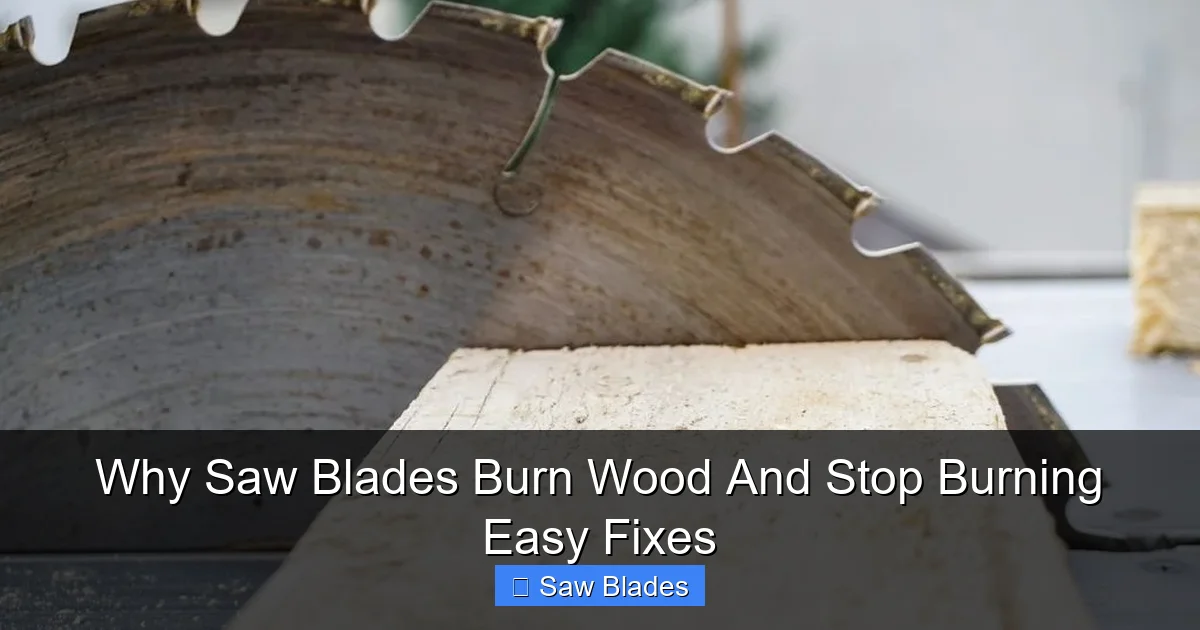
This is hands-down the biggest reason. Over time, blade teeth wear down from cutting wood, nails, and debris. Dull teeth don’t slice cleanly; they crush and tear the wood fibers instead. This crushing action creates massive friction, generating intense heat that literally chars the wood. A dull blade also requires you to push harder, making the problem worse. If you notice excessive sawdust (instead of fine chips), a burning smell, or visible scorch marks, your blade is likely crying for sharpening. Regular maintenance is key – learn how to sharpen band saw blades or get your circular saw blades professionally sharpened.
Visual guide about Why Saw Blades Burn Wood And Stop Burning Easy Fixes
Image source: i.pinimg.com
2. Wrong Cutting Speed (RPM Mismatch)
Saws have optimal speeds for different materials. Running a blade too fast for the wood type creates instant heat. Hardwoods like oak or maple need slower speeds to allow the teeth to clear chips effectively. Running them too fast (common on powerful circular saws) turns the blade into a wood-burning tool. Conversely, running a blade too slow on softwoods like pine can cause the teeth to “hog” the wood, creating friction and burning. Always check your saw’s manual for recommended RPMs based on blade diameter and wood type.
3. Incorrect Feed Rate (Pushing Too Fast OR Too Slow)
Your pushing speed is critical. Pushing too fast doesn’t give the blade time to eject sawdust, so chips get trapped between the blade and wood, acting like sandpaper and generating heat. Pushing too slow means the blade teeth are dwelling in one spot, grinding instead of cutting, which also creates intense localized heat. Finding that “sweet spot” where the blade cuts smoothly with minimal resistance is essential. Let the saw do the work – don’t force it.
4. Using the Wrong Blade Type
Not all blades are created equal! Using a rip-cut blade (fewer teeth, large gullet) for crosscutting (cutting across the grain) causes tear-out and excessive friction because the teeth aren’t designed to slice fibers cleanly. Similarly, a crosscut blade (more teeth, smaller gullets) used for ripping will clog instantly with long fibers, trapping heat. Always match the blade to the cut: rip blades for with-the-grain, crosscut blades for against-the-grain. For general work, a good combination blade (like 24-40 tooth for circular saws) is a solid choice.
5. Lack of Lubrication (Especially for Dense Woods)
Dense hardwoods like hickory, maple, or exotic species generate enormous friction. Without lubrication, heat builds up rapidly. Applying a simple lubricant like paste wax, candle wax, or even a bar of soap to the blade’s sides (not the teeth!) creates a slick barrier, reducing friction significantly. This is a game-changer for preventing burns on tough woods. Do this *before* you start cutting.
6. Poor Blade Alignment or Warped Table
If your saw’s table isn’t perfectly flat or the blade isn’t aligned correctly (like on a table saw with misaligned fences), the blade can bind against the wood. This binding creates intense, localized pressure and heat, causing burning right where the bind occurs. Regularly check and adjust your saw’s alignment.
Step-by-Step: Easy Fixes to Stop Saw Blades Burning Wood
Now that you know the “why,” let’s get to the “how.” Here’s exactly what to do to stop burning:
Step 1: Inspect and Sharpen Your Blade (The Foundation Fix)
This is non-negotiable. Before blaming anything else, check your blade. Look for:
- Chipped or broken teeth: Replace the blade immediately.
- Rounded or worn-down teeth: Time for sharpening.
- Glazing (shiny, smooth surface on teeth): Indicates extreme dullness from heat.
How to Fix: For most circular saw, table saw, or miter saw blades, professional sharpening is best (costs $10-$20 per blade). For band saw blades, you can learn how to sharpen band saw blades yourself with a file and jig – it’s simpler than you think! Replace blades when sharpening no longer restores a clean cut. A sharp blade cuts cleaner, cooler, and requires less force.
Visual guide about Why Saw Blades Burn Wood And Stop Burning Easy Fixes
Image source: woodsmithspirit.com
Step 2: Dial in the Correct Speed (RPM)
Don’t just crank it to max! Adjust your saw’s speed based on:
- Blade Diameter: Larger blades need lower RPMs (check saw manual).
- Wood Type: Softwoods (pine, fir): Medium-High RPM. Hardwoods (oak, maple): Medium-Low RPM. Exotic Hardwoods: Low RPM.
How to Fix:
- Circular/Miter Saws: If your saw has a speed control dial, start low for hardwoods and increase slightly until you get a clean cut without burning. If no dial, make multiple shallow passes instead of one deep cut.
- Table Saws: Most lack speed control. Use the correct blade (finer tooth count for hardwoods) and focus on feed rate (Step 3).
- Band Saws: Adjust the speed dial according to the wood type chart usually found near the controls. Slower for hardwoods/dense materials.
When in doubt, start slower. You can always make another pass; you can’t un-burn wood.
Step 3: Master the Perfect Feed Rate
This is where most beginners struggle. It’s not about muscle; it’s about rhythm.
- The Goal: A smooth, consistent cut where sawdust ejects freely, and you feel minimal resistance.
- The Feel: You should hear a steady “whirring” or “humming” sound, not a strained “grinding” or “screaming” noise. If it sounds like it’s struggling, SLOW DOWN.
How to Fix:
- Start Slow: Begin your cut at a moderate pace.
- Listen & Feel: Pay attention to the sound and vibration. If it gets louder/harsher or the saw bogs down, ease up slightly on the pressure.
- Let it Cut: Focus on guiding the saw straight, not forcing it forward. Imagine the blade is hungry – feed it steadily, not in bursts.
- Practice: Cut some scrap wood first to find the ideal speed for *that* blade and *that* wood.
Remember: Pushing too slow is just as bad as too fast! Find the Goldilocks zone.
Step 4: Choose the Right Blade for the Job
Using the wrong blade is like using a butter knife to chop wood – it just creates mess and heat.
- Rip Cuts (With the Grain): Use blades with fewer teeth (18-24 for 7.25″ circular saws), large gullets to clear long fibers. Good for dimensional lumber.
- Crosscuts (Against the Grain): Use blades with more teeth (40-60+), smaller gullets, often with alternate top bevel (ATB) or triple chip grind (TCG) teeth for clean slicing. Essential for plywood faces or fine furniture.
- General Purpose: A 24-40 tooth combination blade (ATB teeth) works decently for both on most circular saws.
How to Fix: Invest in at least two blades: one dedicated rip blade and one dedicated crosscut blade. Label them! When you switch from ripping lumber to cutting plywood for a cabinet, swap the blade. It makes a massive difference in cut quality and heat generation. Understanding what is a circular saw and why its used for specific tasks helps you choose wisely.
Step 5: Apply Lubrication (The Secret Weapon)
Don’t skip this, especially for hardwoods or long cuts.
- What to Use: Paste wax (like Minwax), candle wax, or even a plain bar of soap (Ivory works great). Avoid oils – they attract sawdust and gum up.
- How to Apply: Rub the wax/soap firmly along the *sides* of the blade (the flat part, not the cutting edge). Do this for 10-15 seconds per side before starting your cut. Reapply every 5-10 cuts for dense wood.
Why it Works: The lubricant reduces friction between the blade body and the wood fibers, allowing heat to dissipate much faster. You’ll notice less burning, smoother cuts, and even less effort required. It’s a simple trick pros use constantly.
Step 6: Ensure Proper Alignment and Support
A misaligned saw guarantees binding and burning.
- Table Saws: Check that the blade is parallel to the fence and miter slot. Use a reliable alignment tool. Ensure the table is clean and debris-free.
- Circular Saws: Make sure the base plate is flat on the wood and not warped. Use a straight edge guide for long cuts to prevent the saw from twisting.
- Band Saws: Check blade tension and guide alignment. A loose blade wanders and binds.
How to Fix: Consult your saw’s manual for alignment procedures. For table saws, how to change the blade on a Ryobi table saw often includes alignment checks. A well-tuned machine cuts cleaner and cooler.
Troubleshooting: When Burning Persists
You’ve tried the fixes, but you’re still seeing burns? Let’s dig deeper:
Visual guide about Why Saw Blades Burn Wood And Stop Burning Easy Fixes
Image source: i.pinimg.com
Problem: Burning Only on One Side of the Cut
Likely Cause: Blade binding due to misalignment (table saw) or the workpiece not being fully supported (causing it to pinch the blade). Fix: Re-check alignment meticulously. Use featherboards on table saws. Ensure the workpiece is fully supported on both sides of the cut line, especially on the outfeed side.
Problem: Burning at the Beginning or End of the Cut
Likely Cause: Pushing too hard at the start or stopping too abruptly at the end. Fix: Start the cut with light pressure, increasing smoothly to the ideal feed rate once fully engaged. At the end, maintain consistent feed rate until the blade clears the wood completely – don’t lift off early.
Problem: Burning Only on Plywood or MDF
Likely Cause: Blade clogging with glue/sawdust residue, or using a blade not designed for man-made materials. Fix: Use a blade specifically for plywood/MDF (often with a high tooth count and anti-friction coating). Apply extra lubrication (wax). Clean the blade frequently with a stiff brush and blade cleaner solution.
Problem: Burning Smell But No Visible Marks
Likely Cause: Early stages of burning, often due to slight dullness or marginal feed rate. Fix: Treat it as a warning! Stop immediately. Check blade sharpness, lubrication, and slow your feed rate slightly. Don’t ignore the smell – it’s the first sign.
Conclusion: Burn-Free Cutting is Within Reach
Stopping your saw blades burn wood isn’t about magic tricks; it’s about understanding the fundamentals and applying simple, consistent practices. Remember the core pillars: keep blades sharp, match speed to the wood, master your feed rate, use the right blade, lubricate when needed, and ensure your saw is aligned. It might seem like a few extra steps, but the payoff is huge – cleaner cuts, less sanding, saved wood, and projects you’re proud to show off.
Don’t get discouraged if you don’t nail it on the first try. Woodworking is a skill built on practice. Start by focusing on just *one* fix – maybe sharpening your main blade or slowing down your feed rate. Notice the difference? Then tackle the next one. Before you know it, burning will be a rare exception, not the norm. Your saw, your wood, and your finished projects will thank you. Now go make some clean, cool cuts!
🎥 Related Video: Burning wood with a table saw
📺 Stumpy Nubs (James Hamilton)
I hate scorch marks, but I know how to avoid them. I’ll show you how, too! Related video tutorials▻ Our comprehensive Table Saw …
