
Ever wondered why saw blades have those mysterious slots? These aren’t flaws—they’re clever engineering solutions that prevent dangerous warping, reduce heat buildup, and keep your cuts straight. Understanding this hidden feature transforms how you choose and use blades for cleaner, safer results on every project.
Key Takeaways
- Slots prevent blade warping: Metal expands when heated during cutting; slots absorb this expansion to keep blades flat and cuts accurate.
- Heat management is critical: Slots dissipate heat faster, reducing the risk of blade damage, kickback, and poor cutting performance.
- Sawdust ejection matters: Slots help channel sawdust away from the cut path, preventing clogging and maintaining cutting speed.
- Not all blades need slots: Thin kerf blades (like plywood blades) often omit slots, while thick-kerf general-purpose blades rely on them.
- Slot design varies by saw type: Circular saw blades have curved slots, band saw blades use straight slots, and reciprocating blades feature aggressive slot patterns.
- Damaged slots compromise safety: Cracks or broken slots in a blade can cause catastrophic failure—always inspect before use.
- Proper blade selection is key: Match slot-equipped blades to your material and saw type for optimal performance and longevity.
Why Saw Blades Have Slots: The Hidden Secret to Perfect Cuts
You’ve probably noticed those strange little gaps or slots cut into the surface of saw blades—especially on circular saws, band saws, and reciprocating saws. Maybe you thought they were manufacturing defects, or perhaps you barely registered them at all. But here’s the truth: these slots are intentional, critical design features, not mistakes. They solve fundamental physics problems that would otherwise make saw blades warp, overheat, or fail catastrophically during use. In this guide, you’ll discover exactly why saw blades have slots, how they work, and why understanding this can make you a safer, more efficient cutter. Whether you’re a weekend DIYer or a seasoned pro, this knowledge transforms how you select, use, and maintain your blades.
What Are Saw Blade Slots (And What They’re NOT)
First, let’s clear up a common misconception. Those slots aren’t “holes” or random cutouts—they’re precision-engineered expansion slots (sometimes called “kerf slots” or “relief slots”). Think of them as intentional weak points designed to absorb stress. Here’s what they’re not:

Visual guide about The Real Reason Why Saw Blades Have Slots Revealed
Image source: leuco.com
- Manufacturing errors: Every slot is laser-cut or stamped with exact measurements.
- Decorative features: Their placement follows strict engineering principles.
- Universal across all blades: Slot design varies wildly based on saw type and material.
Now, let’s explore the core problems these slots solve—starting with the biggest enemy of any cutting blade: heat.
The Physics Problem: Metal Expansion Under Heat
When a blade spins at high speed (like a circular saw’s 5,000+ RPM), friction generates intense heat. Metal expands when heated—a principle called thermal expansion. For a solid, unslotted blade, this expansion creates massive internal stress. The outer edge (where teeth cut) heats up fastest and expands more than the cooler inner hub. This uneven expansion forces the blade to warp or “cup”—like a potato chip bending. A warped blade doesn’t cut straight; it binds, kicks back, or shatters. Slots act as “pressure valves” that let the metal expand locally without distorting the entire blade.
How Slots Prevent Warping: A Step-by-Step Breakdown
Here’s how expansion slots keep your blade flat and your cuts precise:
- Heat builds up along the cutting edge during operation.
- Metal expands outward from the hot zone.
- Slots absorb the stress by widening slightly (like a gap in a sidewalk preventing cracks).
- The blade remains flat, maintaining consistent contact with your material.
- Cuts stay straight and clean—no binding or kickback.
Real-world example: Cutting a 2×4 with a circular saw. Without slots, the blade would warp within seconds, burning the wood and potentially kicking back. With slots? Smooth, controlled cutting every time.
The Heat Dissipation Superpower
Beyond preventing warping, slots are heat-management heroes. Here’s why that matters:
Visual guide about The Real Reason Why Saw Blades Have Slots Revealed
Image source: contractorsupplymagazine.com
- Blades overheat at 600°F+: At this temperature, steel loses hardness, teeth dull faster, and the risk of catastrophic failure skyrockets.
- Slots increase surface area: More metal exposed to air = faster cooling.
- They create airflow channels: As the blade spins, air rushes through the slots, acting like a natural fan.
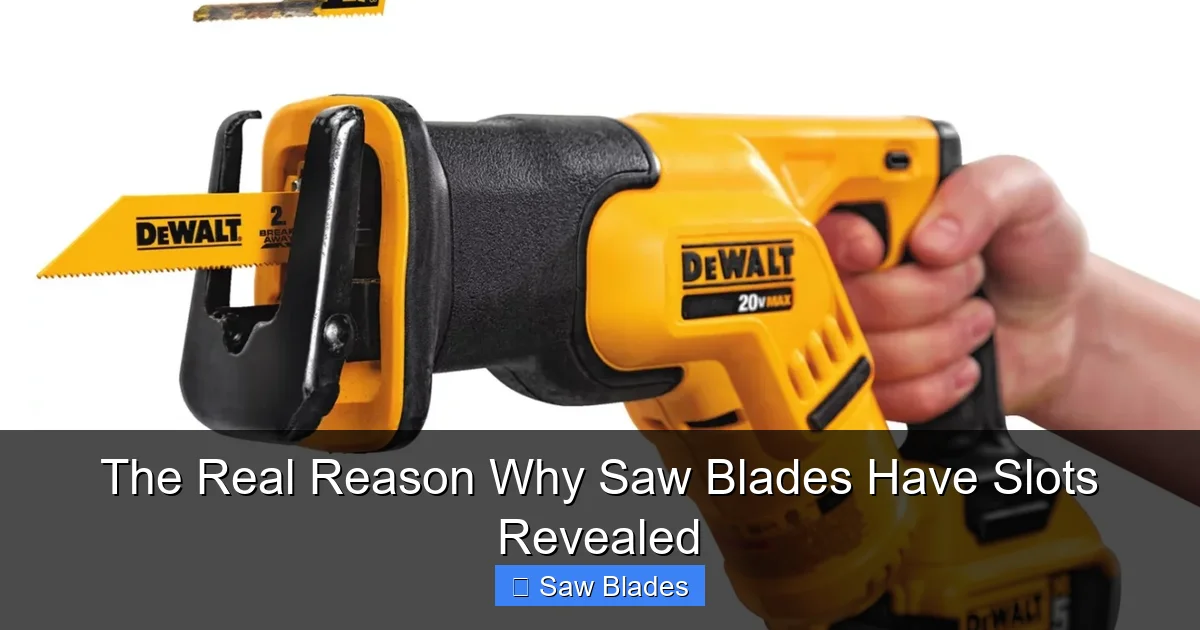
Pro tip: Ever notice how reciprocating saw blades (like those for reciprocating saws) have the most aggressive slot patterns? That’s because they generate extreme heat cutting through metal or dense wood—slots are non-negotiable for safety.
Comparing Blade Types: Slot Designs Explained
Not all slots are created equal. Here’s how they differ across common saws:
Circular Saw Blades
Feature curved, radial slots (often 4-8 per blade). These follow the blade’s rotation, maximizing airflow. You’ll see them on general-purpose and framing blades. Thin-kerf blades (for plywood) often omit slots since less material = less heat.
Band Saw Blades
Use straight, evenly spaced slots along the length. Critical for absorbing heat during long, continuous cuts. Damaged slots here can cause the blade to snap mid-cut—always inspect before use. Learn more about maintaining these in our guide to sharpening band saw blades.
Reciprocating Saw Blades
Boast large, irregular slots (sometimes called “gullets”). These eject sawdust violently while cooling the blade. Without them, sawdust would pack the cut, overheating the blade instantly.
Sawdust Ejection: The Silent Performance Killer
Here’s a lesser-known role of slots: managing sawdust. When cutting, sawdust gets trapped between the blade and material. If it builds up:

Visual guide about The Real Reason Why Saw Blades Have Slots Revealed
Image source: m.media-amazon.com
- The blade binds, slowing cutting speed
- Heat concentrates in clogged areas
- Kickback risk increases dramatically
Slots act as escape routes. As the blade spins, centrifugal force flings sawdust through the slots and away from the cut. This is especially vital in dense materials like oak or MDF. Try cutting without a slotted blade—you’ll see sawdust jamming the kerf within seconds!
Kerf Width: How It Relates to Slots
“Kerf” is the width of the cut a blade makes. It directly impacts slot necessity:
- Thick-kerf blades (1/8″ or wider): Generate more heat and friction → require slots for expansion/heat control.
- Thin-kerf blades (1/16″ or less): Remove less material → produce less heat → often omit slots (common in plywood blades).
Fun fact: A thick-kerf blade cuts slower but is more durable for rough work. A thin-kerf blade cuts faster with less waste but needs careful handling. Slots make thick-kerf blades viable!
When Slots Are Missing (And Why It’s Okay)
Not all blades have slots—and that’s intentional. Here’s when you’ll see slotless designs:
- Thin-kerf plywood blades: Minimal heat generation makes slots unnecessary.
- Specialty blades: Diamond blades for tile or concrete prioritize segment gaps over traditional slots.
- Vintage/antique blades: Older designs sometimes lacked slots (with mixed results!).
Warning: Never force a slotless blade into a high-heat application (like cutting pressure-treated lumber). It will warp or break. Always match the blade to the task—like choosing the right circular saw blade for framing versus finish work.
Troubleshooting Slot-Related Problems
Slots aren’t invincible. Here’s how to spot and fix issues:
Problem: Blade Warping Mid-Cut
Cause: Slots are cracked or clogged with pitch/sap.
Solution: Stop cutting immediately. Clean slots with a wire brush and solvent. If cracks exist, replace the blade—never use a damaged blade.
Problem: Excessive Vibration or Noise
Cause: Uneven slot wear or missing slots.
Solution: Inspect slots for symmetry. If one side is worn more, the blade is imbalanced—replace it.
Problem: Sawdust Packing the Kerf
Cause: Slots too small for the material (e.g., using a fine-tooth blade on green wood).
Solution: Switch to a blade with larger gullets/slots (e.g., a rip-cut blade for dense wood).
Choosing the Right Slotted Blade for Your Project
Now that you know why slots matter, here’s how to pick wisely:
- Match slots to material density: Hardwoods/metal need aggressive slots; softwoods/paneling need fewer.
- Consider cutting speed: High-speed jobs (like framing) demand maximum heat dissipation → more/larger slots.
- Check your saw’s RPM: High-RPM saws (e.g., circular saws) need better heat management than slower band saws.
Pro tip: For heavy-duty tasks, look for blades with “expansion slots” explicitly listed in specs. Avoid cheap blades with poorly cut slots—they’re a safety hazard.
Blade Maintenance: Protecting Your Slots
Slots degrade over time. Follow these steps to extend blade life:
- Clean after every use: Remove pitch and sawdust from slots with a brass brush.
- Store properly: Hang blades vertically to prevent warping (never stack them).
- Inspect before cutting: Run your finger along slots—cracks feel like hairline ridges.
Remember: A blade with damaged slots is a ticking time bomb. When in doubt, replace it.
Conclusion: Slots Are Your Secret Weapon
Those unassuming slots in your saw blades are engineering masterstrokes—solving heat, expansion, and sawdust problems that would otherwise make cutting dangerous or impossible. By understanding why saw blades have slots, you’re not just learning trivia; you’re gaining practical knowledge to:
- Choose blades that last longer and cut safer
- Avoid costly mistakes like kickback or warped cuts
- Maximize efficiency on every project
Next time you fire up your saw, give those slots a nod of respect. They’re working overtime to keep you safe and your cuts perfect. Ready to put this knowledge into action? Grab your next project—and remember: the right blade with the right slots makes all the difference.
🎥 Related Video: SawStop Table saw hotdog test in slow motion from IWF and Rockler event
📺 Lazy Guy DIY
The hotdog test from @sawstop Table Saws is one of those show stoppers at woodworking and tool shows just to show exactly …
