
This guide uncovers the complete history of the hammer drill, from ancient manual methods to today’s high-tech cordless models. You’ll learn about the key inventors, breakthrough technologies, and how this essential tool evolved to conquer masonry and concrete. Understanding its past reveals why it’s a powerhouse in modern construction and DIY.
Key Takeaways
- The Core Concept is Ancient: The hammer drill’s pounding action mimics age-old manual techniques like the hammer and chisel, proving some solutions are timeless.
- Electrification was the First Leap: The shift from muscle to motor in the early 20th century, pioneered by companies like Bosch, created the first true electric hammer drills and revolutionized worksites.
- The SDS System Changed Everything: The invention of the SDS (Slotted Drive System) chuck in the 1970s provided a secure, efficient way to transfer hammering force, making tools more powerful and user-friendly.
- Cordless Freedom is a Recent Revolution: The adoption of advanced battery tech, particularly Lithium-ion, freed the hammer drill from the outlet, enabling unprecedented portability and convenience.
- It’s Not the Same as an Impact Driver: A hammer drill is designed for drilling into hard, brittle materials like masonry, while an impact driver is for driving screws and bolts into wood and metal.
- Choosing the Right Tool is Crucial: Knowing the difference between a hammer drill and a regular drill ensures you select the correct tool for your material, saving time and preventing damage.
Uncover the Fascinating Hammer Drill History Guide
Have you ever looked at a concrete wall and wondered how we can so easily drill into it? The answer is the hammer drill. This powerful tool is a staple on construction sites and in DIY workshops. But its story is not a short one. It’s a tale of human ingenuity spanning centuries.
This guide will walk you through the complete history of the hammer drill. We will start with the basic problems ancient builders faced. We will meet the inventors who changed the game. And we will see how technology turned a tough job into a simple trigger pull. By the end, you’ll not only know its past but also understand how to think about this tool today.
The Ancient Problem: Breaking Rock Before Power Tools
Long before electricity, people needed to shape stone and brick. The core challenge was always the same: how to apply focused, percussive force to break hard, brittle materials.

Visual guide about Uncover the Fascinating Hammer Drill History Guide
Image source: cdn.historycollection.com
Early builders used the most direct method possible: a hammer and a chisel. A worker would hold a metal spike (the chisel) against the stone. Another worker would strike it with a heavy hammer. This manual “hammer and chisel” technique is the fundamental action that every modern hammer drill replicates. It’s a concept as old as civilization itself. You can see similar principles in other specialized hammers, like the brick hammer used for cutting and setting masonry.
This method worked, but it was painfully slow, required immense skill and strength, and was exhausting. The quest for a mechanical advantage had begun.
The First Steps: Mechanizing the Hammer Blow (Late 1800s – Early 1900s)
The Industrial Revolution brought steam and compressed air. Inventors began applying this new power to the old problem.

Visual guide about Uncover the Fascinating Hammer Drill History Guide
Image source: 3.bp.blogspot.com
The Pneumatic Pioneer
In the late 1800s, the first pneumatic rock drills emerged. These were large, stationary machines used in mining and quarrying. They used compressed air to drive a piston that struck a steel drill bit. This was a massive leap forward for industry, but these tools were huge, loud, and tethered to an air compressor. They were not for the workshop or home.
The Electric Spark
The real turning point came with the widespread use of electricity. In 1914, a company you likely know made history. Bosch, founded by Robert Bosch, patented the first portable electric drill. While not a hammer drill yet, this proved that a handheld, motorized drilling tool was possible. It laid the essential groundwork.
The Birth of the True Hammer Drill (1930s)
The 1930s saw the key innovation that defined the tool. Engineers needed a way to combine the rotating action of a drill with a hammering action.
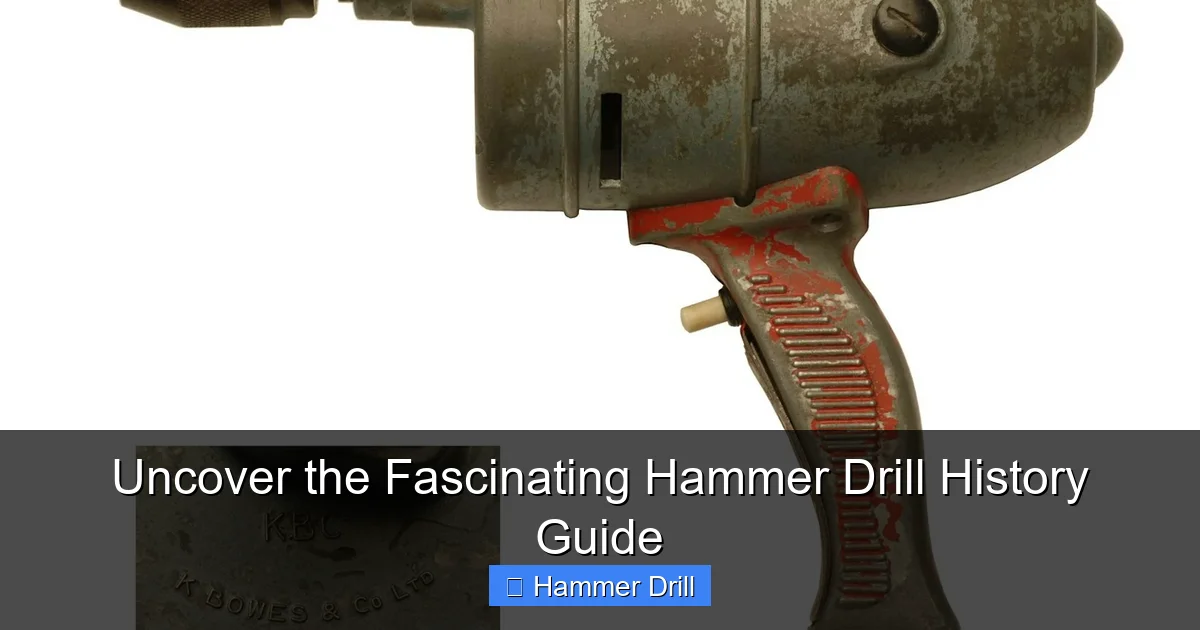
Visual guide about Uncover the Fascinating Hammer Drill History Guide
Image source: images.theconversation.com
The breakthrough was a mechanical mechanism inside the drill. Two ribbed metal discs (often called “cams” or “wheels”) were placed together. As the motor spun one disc, the ribs would catch and slip against the ribs of the other disc. This clicking, in-and-out motion was converted into a rapid series of hammer blows directed along the axis of the drill bit.
This “cam-action” or “percussion” mechanism was the heart of the first true hammer drills. They were heavy, corded, and primarily professional tools. But for the first time, a single worker could drill into masonry with a handheld electric tool. The era of the rotary hammer drill had begun.
The Revolution: The SDS Chuck System (1970s)
For decades, hammer drills used standard keyed or keyless chucks. This created a big problem. The hammering force would often cause the smooth-shank drill bit to slip or spin within the chuck. This wasted energy, wore out chucks, and reduced performance.
The solution arrived in 1975 from Bosch again. They introduced the SDS system. SDS stands for “Slotted Drive System” or “Steck-Dreh-Sitz” (Insert-Twist-Stay) in German.
Why SDS Was a Game-Changer
An SDS chuck doesn’t just grip the sides of the bit. The bit shank has special grooves that lock into the chuck. This allows the bit to:
- Move Back and Forth: It can slide in and out freely to absorb the hammer blows.
- Lock in Rotation: It transfers the turning force perfectly without slipping.
This dedicated system made hammer drills dramatically more efficient, powerful, and easier to use. Changing bits became a simple push-and-click action. The SDS system, and its more powerful variants like SDS-Plus and SDS-Max, remain the standard for serious hammer drilling today.
The March Toward Portability: Cordless Hammer Drills (1990s – Today)
Corded tools offered power but limited mobility. The dream was a cordless hammer drill. Early nickel-cadmium (Ni-Cd) batteries were too weak and heavy to deliver the intense power needed for hammering masonry.
The change came with better battery technology. The widespread adoption of Lithium-ion (Li-ion) batteries in the 2000s changed everything. Li-ion batteries pack more power in a lighter, smaller package. They also charge faster and don’t have a “memory effect.”
This finally made powerful, reliable cordless hammer drills a reality. Today, a top-tier cordless drill/driver combo kit often includes a hammer drill function, bringing professional-grade capability to DIYers. This cordless revolution meant you could now drill a hole for a concrete anchor on a ladder or in a backyard project without hunting for an extension cord.
How a Modern Hammer Drill Works: A Simple Explanation
Understanding the history is easier when you know how today’s tool operates. Most modern hammer drills have three modes, selected by a dial near the chuck.
- Drill Mode: The chuck just rotates. Use this for wood, metal, or plastic. It acts like a standard drill.
- Hammer Drill Mode: The chuck rotates AND hammers in and out rapidly (thousands of times per minute). This is for concrete, brick, and stone.
- Hammer-Only Mode: Some models offer this. The chuck doesn’t rotate; it just hammers. This is for light chiseling tasks, like removing tile.
The hammering action breaks up the masonry at the tip of the bit. The rotation then clears out the dust. Together, they grind their way through the material.
Practical Tips: Using Your Hammer Drill’s History to Your Advantage
Knowing this evolution helps you use the tool smarter.
Choose the Right Tool for the Job
Don’t use hammer drill mode on wood or metal. You’ll damage the material and the bit. Save it for hard, brittle surfaces. For most screw-driving tasks into studs, a regular drill or impact driver is better. Learn more about this in our guide on how to use a drill for screws into a wall.
Start Slow and Let the Tool Work
You don’t need to push hard. The hammer mechanism does the work. Apply steady, firm pressure and let the tool’s percussive action do the breaking. Pushing too hard can stall the motor or damage the bit.
Use the Correct Bits
Always use carbide-tipped masonry bits. For SDS chucks, you must use SDS-specific bits. Using a standard round-shank bit in an SDS chuck is dangerous and ineffective.
Troubleshooting Common Hammer Drill Issues
Even with a great tool, problems can happen. Here are simple fixes.
The Drill Isn’t Hammering
Check the mode selector. Make sure it’s turned to the hammer drill icon. If it’s in “drill only” mode, you’ll get rotation without impact.
Slow Progress or Overheating
You might be using a dull bit. Masonry bits wear down. A sharp bit makes a huge difference. Also, pull the bit out occasionally to clear dust from the hole. Compacted dust at the bottom prevents the bit from cutting.
Excessive Vibration or Chuck Wobble
Ensure the bit is properly inserted and tightened. In a standard chuck, tighten it firmly with the key. In an SDS chuck, push the bit in until it clicks and locks.
Conclusion: From Chisel to Cordless Powerhouse
The history of the hammer drill is a brilliant example of human progress. We took a simple, exhausting, two-person job—hammer and chisel—and refined it over centuries. Through pneumatics, electricity, clever mechanics like the cam-action and SDS chuck, and finally, battery technology, we compressed that labor into a safe, efficient, handheld tool.
It’s more than just a tool for concrete. It’s a symbol of how we solve persistent problems. The next time you use a hammer drill to hang a shelf or build a deck, remember the long journey it took to get that power into your hands. You’re not just drilling a hole; you’re using the culmination of generations of innovation.
🎥 Related Video: Magnet Claw Hammer, High Performance Hardware Tools Good Tools For Best Recommendations #shortsfeed
📺 Hardware Tools
Hardware tools encompass a wide range of equipment used for various tasks such as construction, repair, maintenance, and …
